How Often to Replace an Air Conditioner
Learn how often to replace an air conditioner by weighing age, efficiency, and repair costs. Practical guidance, cost considerations, and a step-by-step replacement framework from Air Conditioner Service.


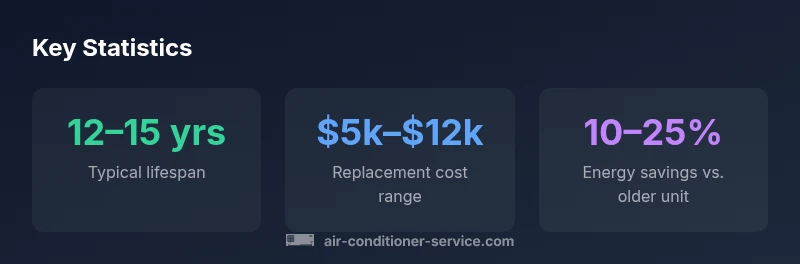
Most central air conditioners provide reliable cooling for about 12–15 years. Efficiency and costs typically begin to rise as the unit ages, with major repairs becoming less economical after roughly a decade. A practical rule is to consider replacement when annual repair costs approach or exceed half the price of a new unit, or when energy bills rise despite maintenance.
Why replacement timing matters
According to Air Conditioner Service, deciding when to replace an aging air conditioner is not just about the number of years. It’s a practical assessment of reliability, energy cost, and comfort. A unit that frequently breaks down or runs constantly will visibly raise electricity bills and reduce indoor comfort, especially during heat waves. Keeping a failing system could lead to more expensive repairs and uneven cooling. The goal is to balance the upfront investment of a new system against the ongoing costs of maintenance, high energy bills, and diminishing performance. The decision should consider age, maintenance history, and existing efficiency. In most homes, a long-lived, well-maintained unit remains cost-effective well into its second decade, but once inefficiency rises and repairs become routine, replacement becomes a prudent option. Use a structured approach: track repair costs over 12 months, compare to a replacement quote, and factor in available incentives. This is where Air Conditioner Service recommends starting with a transparent cost-benefit view.
Estimating lifespan and signals that replacement is near
Age is a rough guide, but the real signal is functional and financial. Modern air conditioners typically maintain acceptable cooling for about 12–15 years, though heavy use, extreme climate, and maintenance gaps can shorten that window. If the unit struggles to reach set temperatures, cycles on and off more frequently, or exhibits unusual noises and refrigerant leaks, consider professional assessment. A significant decline in SEER efficiency translates to higher electricity bills even if the thermostat settings are unchanged. Also watch for a sharp rise in repair frequency; when a single repair repeats within a 12-month period, the likelihood of subsequent breakdowns grows. Keep a repair log and calculate the annual repair costs; if those costs approach or exceed half the cost of a new unit, replacement becomes economically sensible. Air Conditioner Service emphasizes using an objective checklist rather than memory when weighing repair vs. replace decisions.
Cost considerations: repair vs replace
Replacement involves upfront costs for equipment and installation, but repairs can accumulate. Typical repair costs can range widely by problem and region; but the important point is to compare to the replacement cost. A good rule of thumb is to weigh annual repair costs against the price of a new, more efficient unit. In many cases, older units plus frequent repairs are less economical than a modern unit with a higher SEER rating and better efficiency. Consider life-cycle cost: include energy savings, maintenance, and potential rebates. A service technician may offer a maintenance plan that extends the life of your current system, which can be cheaper than a full replacement. However, if a compressor replacement or refrigerant leak appears, those costs can quickly add up. When estimating, request itemized quotes and compare the long-term energy use of a replacement unit vs continued operation of the existing one. This helps homeowners avoid shock bills after installation.
How to evaluate energy efficiency and incentives
Newer air conditioners offer higher SEER ratings and better energy performance. Upgrading may yield meaningful energy savings over the life of the system. Look at the SEER rating, proper sizing, and compatibility with existing ductwork. In many regions, utilities and manufacturers offer rebates, tax credits, or financing options for high-efficiency models. A conservative approach is to target at least a 15–20% improvement in efficiency when replacing an old unit, assuming adequate sizing and correct installation. Also evaluate warranty terms and service coverage; a strong warranty reduces long-term risk. When you plan a replacement, factor in ease of installation and any required ductwork or zoning updates. Getting multiple quotes helps you compare not just price but installed performance potential. Air Conditioner Service notes that the best long-term savings come from a correctly sized unit with a high SEER rating and solid local support.
Steps to a smart replacement: planning and selection
Create a short list of must-haves (quiet operation, size, SEER) and nice-to-haves (smart thermostat compatibility, inverter technology). Have a professional perform load calculations to ensure correct sizing. Verify ductwork integrity, refrigerant charge, and airflow. Compare two to three reputable HVAC contractors, request detailed written proposals, and check references. Ask about labor warranties and refrigerant requirements; ensure the installer follows local codes. Schedule installation for a cooler period of the year if possible, and plan for any potential temporary cooling arrangements. With a solid plan and multiple quotes, you can avoid overspending or missing critical installation steps. This stage also helps you understand potential tax incentives or rebates that you can apply during the purchase.
Maintenance strategies to extend life
Regular maintenance can push replacement timelines further. Schedule annual professional inspections, replace air filters every 1–3 months, clean coils, and check refrigerant levels. Keep the outdoor unit clear of debris and ensure proper drainage. Maintain thermostat programming to reduce unnecessary cycling. Indoor air quality and humidity control also impact comfort and efficiency. Document service visits and keep a maintenance calendar. A little preventive care, done consistently, reduces the risk of unexpected failures and helps your system operate closer to its original efficiency. Air Conditioner Service recommends a simple checklist to simplify maintenance tasks between professional visits.
Common myths and misconceptions
Many homeowners believe once a unit is older than 10–12 years, replacement is mandatory; others think cheaper repairs always justify repair instead of replacement. In practice, the right decision depends on usage, energy costs, and risk of sudden failure. Another myth is that an oversized unit will cool faster; an incorrectly sized system can lead to poor humidity control and short cycling. Finally, some owners assume warranties always cover major failures; read the warranty details, as exclusions apply. Address these myths with a cost-benefit analysis, referencing your current energy bills and expected efficiency improvements. A rational approach helps you plan for both comfort and budget.
A quick reference table for replacement timing by unit type
| Unit Type | Typical Lifespan | Common Replacement Age | Typical Repair Frequency |
|---|---|---|---|
| Central AC (split system) | 12-15 years | 10-15 years for replacement decision | 1-2 major repairs per decade |
| Ductless mini-split | 12-20 years | 12-15 years for replacement | 1-2 major repairs per decade |
Common Questions
How long does an air conditioner typically last?
Most central air conditioners last around 12–15 years with proper maintenance. Severe conditions or neglected service can shorten that lifespan. Regular inspections help you catch issues early and plan replacements before failure.
Most central AC units last about 12 to 15 years with good maintenance.
When should I replace rather than repair?
If annual repair costs approach or exceed the cost of a new unit, or if efficiency has significantly declined, replacement is often the smarter long-term choice. A break-even calculation over the expected life of the new unit is recommended.
If repairs cost as much as or more than a new unit, replace.
What factors influence replacement timing?
Age, repair frequency, rising energy bills, SEER rating, warranty status, and climate conditions all influence when replacement makes sense. Use a cost-benefit approach rather than age alone.
Age, repairs, energy costs, and efficiency guide the decision.
How do I estimate replacement costs?
Estimate depends on unit size, efficiency, and installation complexity. Obtain multiple quotes that detail equipment, labor, and any necessary ductwork. Compare long-term energy savings to the upfront investment.
Get several quotes and compare long-term energy savings.
Should renters replace a failing AC?
Typically the landlord is responsible for replacing a failing AC in a rental. If allowed by the lease, renters can explore temporary cooling alternatives while awaiting replacement or negotiation.
Talk to your landlord about replacement under the lease.
What warranty and tax credits apply?
New units often come with manufacturer warranties; some regions offer rebates or tax credits for energy-efficient models. Check local programs and warranty terms before purchasing.
Check manufacturer warranties and local rebates.
“Proactive replacement—before a unit fails—often saves homeowners money over repairs, especially when energy efficiency has fallen behind modern SEER ratings.”
The Essentials
- Replace when annual repairs near half the replacement cost.
- Typical central AC life is 12–15 years; efficiency declines after ~10–12 years.
- Higher SEER models offer meaningful energy savings over the life of the system.
- Get multiple quotes and check warranties to avoid overpaying.
- Regular maintenance can extend life and delay replacement.