How Much Is Air Conditioner? A Practical Price Guide
Discover realistic price ranges for window, portable, split, and central air conditioners, plus factors that drive cost and tips to save on installation in 2026.


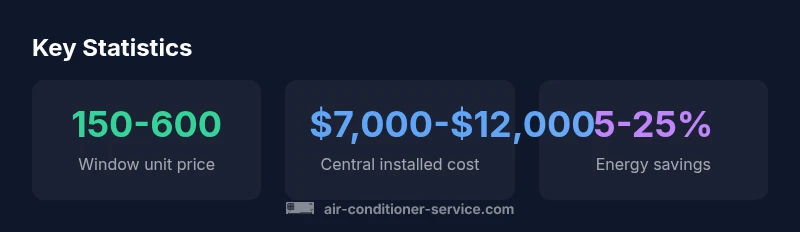
Prices for air conditioners vary widely by type and installation. A basic window unit typically runs about $150–$500, portable models around $300–$700, and central air systems (including installation) commonly fall in the $5,000 to $12,000 range. Costs vary by efficiency, tonnage, and contractor fees. If you’re budgeting, obtain multiple quotes and consider installation charges, permits, and potential rebates.
Price drivers for air conditioners
Pricing a new AC isn't just about the sticker price. The total cost depends on the unit type, capacity, efficiency, and the features you choose. Brand and warranty terms also play a role. Installation complexity can swing the price significantly, especially when ductwork, electrical upgrades, or refrigerant line runs are required. Climate, existing ventilation, and home layout influence both purchase price and labor time. The Air Conditioner Service team emphasizes thinking in terms of total cost of ownership, including potential energy savings, maintenance, and longevity. A careful comparison of models, installers, and financing options helps homeowners maximize value over the system’s life.
Price ranges by type (pre-installation estimates)
- Window units: typically $150–$600, best for single rooms or supplemental cooling.
- Portable units: $300–$700, flexible placement but usually less energy efficient.
- Split-system / mini-split (ductless): $2,000–$7,000 before labor, good for adding zones without ductwork.
- Central air conditioning (ducted): $5,000–$12,000 before installation, offers whole-home efficiency and performance.
Prices vary by tonnage (cooling capacity), SEER rating, and professional installation fees. Always confirm whether the quote includes permits, disposal of old equipment, and any required electrical upgrades.
Hidden costs to budget for
Beyond the unit price, expect costs for permits and inspections, electrical work, ductwork or duct sealing, refrigerant charges, line sets, and labor. Some homes require additional accessories such as smart thermostats, zoning controls, or air quality enhancements. Don’t overlook disposal fees for your old equipment and potential costs for attic or crawlspace access. Territorial differences, contractor travel charges, and seasonal demand can push total price up or down. Request a detailed, itemized estimate to avoid surprises.
How efficiency affects long-term costs
Efficiency, expressed as SEER, directly affects energy bills. Upgrading from a basic SEER 13 unit to a SEER 16–20 unit can reduce annual cooling costs by a meaningful fraction, especially in hot climates. Although high-efficiency models have higher upfront costs, energy savings accumulate over time, improving the total cost of ownership. The Air Conditioner Service team notes that incentives and rebates can improve payback periods.
Budgeting plan and steps to get quotes
- Step 1: Determine your cooling needs by measuring space and desired comfort levels.
- Step 2: Shortlist unit types that fit your space and budget.
- Step 3: Obtain at least three written quotes from licensed installers.
- Step 4: Compare total costs, including permits, ductwork, and warranties.
- Step 5: Check for rebates, financing options, and maintenance plans. This approach helps ensure you select a system that balances upfront price with long-term savings. Air Conditioner Service recommends working with a reputable contractor to guarantee proper sizing and installation.
When to replace vs repair
Whenever repairs exceed a reasonable share of the replacement cost, or the system is aging beyond its expected life, replacement becomes prudent. Typical lifespans range roughly 10–15 years for central or split systems with normal use; older units often require more frequent service, increasing downtime and costs. Consider current energy bills, refrigerant availability, and warranty coverage when deciding between repair and replacement. A professional assessment can provide a data-driven recommendation.
Financing, rebates, and incentives
Look for manufacturer rebates, utility programs, and tax incentives for high-efficiency models. Financing options from installers or credit unions can spread upfront costs. Ensure the quote clearly states what rebates or incentives apply and what documentation is required. Even with incentives, choose a system that meets your needs and climate, and plan for ongoing maintenance to protect your investment.
Quick tips to avoid price traps
- Demand a balanced quote that includes unit price, installation, ductwork, and permits.
- Verify proper sizing with a load calculation and avoid oversized units.
- Ask for energy-use estimates and expected operating costs based on your climate.
- Compare several contractors and look for warranties on both equipment and labor.
- Watch for seasonal promotions or rebates that can lower the total installed cost.
Typical price ranges by AC type (installed)
| Unit Type | Typical Installed Cost | Notes |
|---|---|---|
| Window AC | $150-$600 | Best for single room or supplemental cooling |
| Portable AC | $300-$700 | Flexible placement; venting required |
| Split-system/mini-split | $2,000-$7,000 | Ductless; good efficiency; professional install |
| Central AC (ducted) | $5,000-$12,000 | Whole-house cooling; highest upfront cost |
Common Questions
What factors most affect the price of an air conditioner?
The price is influenced by type, capacity (tons), efficiency (SEER), brand, features, and installation complexity. Additional costs include ductwork, electrical upgrades, permits, and potential site modifications. A professional load calculation helps set realistic expectations.
Prices change with unit type, size, efficiency, and install requirements. Get multiple quotes for a clear range.
Do I need permits or inspections to install a central AC?
Most jurisdictions require electrical and refrigerant line permits for central AC. Your installer should handle permits and inspections; check local codes. Permit fees vary by location and project scope.
Yes, permits are usually required—your installer handles them, but check local rules.
Are there rebates or incentives for energy-efficient units?
Yes, many utilities and government programs offer rebates or tax incentives for high-efficiency models. Availability depends on region and unit type. Ensure your contractor provides required documentation to claim benefits.
There are often rebates—check local programs before buying.
How long does installation take?
Window and portable unit installs are typically completed in a few hours, while central or multi-zone systems may take a day or two, depending on ductwork, permits, and site access. Proper planning reduces delays.
Most central installs take one to two days; window units are much quicker.
When should I replace rather than repair my existing AC?
If frequent repairs add up toward half the cost of a new unit, or the system is 10–15 years old with rising energy bills, replacement is often wiser. Consider warranty status and efficiency gains in your decision.
If repairs pile up or energy bills rise, replacement may be best.
“Pricing for air conditioners isn't a fixed sticker price. The total cost includes the unit, installation, and ongoing energy use. By comparing models, installers, and available incentives, homeowners can maximize value.”
The Essentials
- Estimate costs by unit type before shopping.
- Factor installation and permits into total price.
- Compare multiple quotes for the best value.
- Choose higher efficiency only if it fits budget.
- Look for rebates and financing options.