How Much for an Air Conditioner in 2026: Cost Guide
Explore realistic price ranges for air conditioners in 2026, covering central, window, and ductless options, plus installation, permits, and budgeting tips.


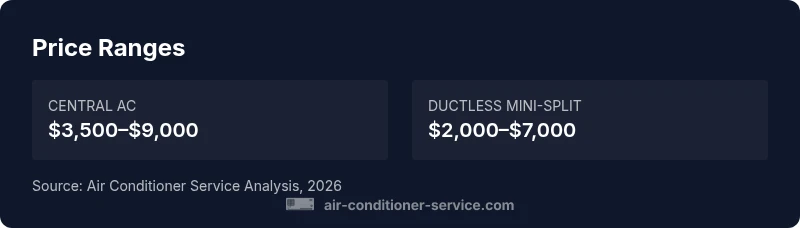
In 2026, a typical installed cost for a home air conditioner ranges from about $3,500 to $9,000 for central systems, with window units substantially cheaper and ductless mini-splits generally in the $2,000–$7,000 per unit range when installation is included. Prices vary by SEER rating, installer, and regional codes. Budget for permits and potential electrical upgrades.
Price Ranges by AC Type
In 2026, the most significant determinant of total cost is the type of cooling system you choose. Central air conditioning systems, which cool an entire home via a network of ducts, typically command higher installed prices due to equipment, ductwork adjustments, and labor. Window units are a fraction of the cost, best for cooling single rooms or small spaces, though they lack the capacity to handle whole-home loads. Ductless mini-splits offer a hybrid approach: moderate upfront costs but greater efficiency and zoning capabilities. The Air Conditioner Service Analysis, 2026, emphasizes that where you live, the home's insulation, and the local permit environment can swing price by thousands of dollars. Efficiency ratings (SEER) influence both upfront price and long-term operating costs—higher SEER models cost more upfront, but energy savings can offset the premium over time. When planning, list your cooling goals (one room vs. whole home), your climate, and how long you expect to stay in the home; these factors guide the price comparison and the expected return on investment. A thoughtful buyer will pair price with energy efficiency to avoid overpaying for unnecessary capacity.
Factors That Drive Total Cost
Beyond the base price of the equipment, several factors tilt the final bill. The sought SEER efficiency level is a major driver; higher efficiency units will generally cost more upfront but reduce monthly energy bills. The size and layout of your home determine tonnage—the cooling capacity needed—which can dramatically impact price. Too-large or too-small units underperform, causing wasted energy and longer runtimes, undermining value. The complexity of installation matters: homes with existing ducts, old electrical panels, or limited attic access require more labor, longer installation windows, and sometimes electrical upgrades. Local permits and building codes can add fees if an upgraded electrical service is required. Ductwork is a common hidden cost when moving from a non-ducted setup to central air; sealing and insulating ducts improves efficiency but adds to labor and materials. Finally, the installer’s experience and region can affect pricing; unexpected site issues, such as wiring in tight crawl spaces or concrete pads, can add to the total. A careful analysis should enumerate these items and compare apples to apples across quotes.
Hidden Costs and Add-Ons
Common hidden costs include permits, electrical upgrades, and potential panel or wiring changes to support a modern compressor and condenser. Ductwork modifications, sealing, and insulation can add tangible value but increase labor time. Thermostats, zoning systems, and remote monitoring require compatible wiring and sometimes additional controllers. Drainage and condensate disposal considerations arise in older homes, especially where crawl spaces are restricted. Smart upgrades—like wi-fi-enabled thermostats and app-based controls—can improve efficiency but add to upfront costs. Finally, consider extended warranties or service plans; while not always necessary, they can reduce out-of-pocket expenses for repairs during the unit’s first decade. Air Conditioner Service recommends documenting all add-ons and obtaining itemized quotes so you can compare “apples to apples” across installers.
Installation Timeframes and Process
A typical installation window for central air is 1–3 days, depending on ductwork, electrical upgrades, and existing infrastructure. Window units require less time—often a few hours to a day—while ductless mini-splits can take longer if multiple indoor units are installed. The process usually begins with an on-site assessment to determine tonnage and SEER requirements, followed by permit applications if necessary. Electrical work may require a licensed electrician, especially when upgrading circuits or panels. After installation, a thorough test run ensures proper refrigerant charge, airflow, and thermostat calibration. Expect some drywall or ceiling access work if duct changes are needed, and plan for temporary occupancy adjustments during the final commissioning. For larger homes, scheduling with the installer across multiple days can help manage worksite access and ensure quality control. In all cases, ensure the installer provides a detailed checklist and a written warranty.
Financing, Rebates, and Warranties
Financing options and rebates can substantially affect the total cost of ownership. Many utility programs offer rebates for high-efficiency units and smart thermostats, which can offset part of the upfront price. Warranties typically cover parts for a period and labor for a shorter window; extended warranties may provide peace of mind but add to the price. Before committing, compare manufacturer warranties, installer guarantees, and what is included in service plans. Check if the warranty covers compressor failures, refrigerant leaks, and pre-existing ductwork. Energy savings from higher SEER units also contribute to a shorter payback period, making it easier to justify a higher upfront cost. Air Conditioner Service encourages homeowners to request written estimates that clearly separate equipment, labor, permits, and any upgrade costs.
How to Budget and Get Accurate Quotes
Start with a needs assessment that defines the cooling load, climate, and occupancy patterns. Gather at least three written quotes from licensed installers to compare equipment brands, SEER ratings, and jumpstart costs for ductwork and electrical upgrades. Ask installers to break out the price for equipment, labor, permits, and possible add-ons, such as zoning or smart thermostats. Request references and verify contractor licenses and insurance. Compare energy-efficiency metrics and estimated energy consumption for each option; higher SEER units may offer long-term savings that offset higher upfront costs. Finally, consider financing offers, seasonal promotions, and manufacturer rebates. A well-documented quote set, combined with your budget and climate realities, helps you avoid overpaying and reduces the chance of costly change orders mid-project.
Operating Costs and Energy Savings Over Time
Annual operating costs depend on climate, usage, and unit efficiency. Higher SEER units reduce ongoing energy consumption, but the upfront premium should be weighed against expected savings over the unit’s lifetime. In milder climates, the difference between mid-range and high-efficiency models can be smaller, whereas hot climates with longer cooling seasons often see more pronounced energy savings. Regular maintenance, such as filter changes and coil cleaning, helps maintain efficiency and extends equipment life. In addition, proper insulation and sealing reduce cooling loads, further lowering operating costs. Air Conditioner Service notes that the long-term economics of upgrading to a more efficient system typically improve as energy prices rise and technology advances, especially when paired with smart-thermostat controls and zone-based cooling strategies.
Choosing the Right System for Your Home
Selecting the right system is a balance of upfront cost, energy efficiency, and comfort needs. For single-room cooling or rentals, window units may be a practical start, with the option to upgrade later. For whole-home efficiency and zoning, a central AC with ductwork or a ductless mini-split system can provide excellent comfort and energy savings. Start with a load calculation to determine tonnage and HVAC needs; avoid over-sizing, which wastes energy and money. Consider the local climate, occupancy patterns, and potential future plans for the home. Shopping with a central goal—minimizing total cost of ownership over 10–15 years—will help you select a system that meets comfort expectations while staying within budget. The Air Conditioner Service team recommends prioritizing energy efficiency, reliable warranties, and professional installation to maximize value over the system’s life.
Typical installed price ranges by AC type (2026)
| Unit Type | Installed Price Range | Notes |
|---|---|---|
| Central AC (1 system) | $3,500–$9,000 | Includes compressor, outdoor unit, ducts (if present) and labor |
| Window air conditioner (single unit) | $100–$1,000 | Size and BTU influence cost; no ductwork |
| Ductless mini-split (per outdoor unit) | $2,000–$7,000 | Indoor units added; installation complexity varies |
| Smart thermostat upgrade | $150–$400 | Often paired with new equipment for efficiency |
Common Questions
What factors drive the price of a new air conditioner?
The main drivers are the system type (central, window, or ductless), the SEER efficiency rating, unit size (tonnage), ductwork needs, electrical upgrades, installation complexity, and regional permit fees.
Prices vary based on system type, efficiency, and installation complexity.
Is it cheaper to install without a professional?
Installing an air conditioner involves electrical work, refrigerant handling, and correct ducting. DIY installation is not recommended for most homes and can void warranties or create safety risks.
Professional installation is recommended for safety and long-term performance.
Are there hidden costs after installation?
Yes—permits, electrical panel upgrades, ductwork changes, refrigerant charging, and potential thermostat or zoning upgrades can add to the bill after the initial quote.
Watch for permits and electrical upgrades that can pop up after you commit.
How long does installation typically take?
A typical central AC installation takes 1–3 days depending on ductwork and electrical upgrades; window units take only a few hours to a day.
Most central installs finish within a couple of days with proper scheduling.
Do rebates and financing help reduce upfront costs?
Many utility rebates and financing options are available for high-efficiency units and smart thermostats; compare programs and read eligibility requirements.
Check for utility rebates and financing options before buying.
How long will a new air conditioner last?
Most air conditioners last 12–15 years with regular maintenance; life can vary by use, climate, and maintenance practices.
A typical system lasts about a decade or more with good care.
“Choosing the right air conditioning solution means balancing upfront cost with long-term energy savings and reliability.”
The Essentials
- Benchmark total cost, not just unit price.
- Expect higher upfront costs for central or ducted systems.
- Seer rating matters: higher efficiency saves more over time.
- Obtain multiple quotes and verify permits.
- Plan for installation, electrical upgrades, and possible ductwork.