How Much Does an Air Conditioner Cost in 2026: A Guide
A practical, data-driven guide to air conditioner costs in 2026, covering unit prices, installation charges, labor, energy efficiency, and budgeting tips for homeowners.


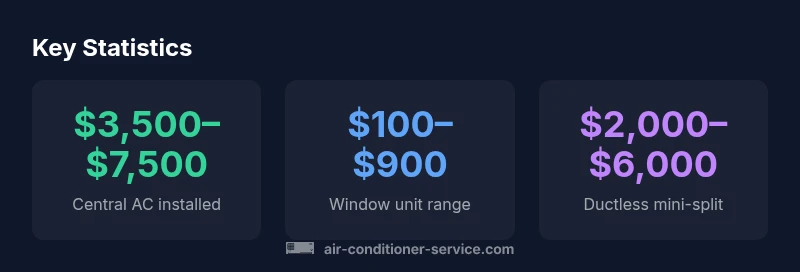
According to Air Conditioner Service, how much does air conditioner cost varies by system type and installation complexity. On average, a complete central air conditioner with installation runs roughly $3,500 to $7,500 in the United States, depending on home size and efficiency. Window and portable units start much lower, typically a few hundred to $2,000, with installation optional. Your exact price depends on system type, ductwork, and local labor costs.
How Costs Break Down: What's Included
Prices for air conditioning are composed of several moving parts, and understanding each helps you budget without surprises. The equipment itself is only part of the equation. Central air systems include the outdoor condenser, indoor air handler, and refrigerant lines. Labor accounts for the skilled installation work, which can involve electrical work, ductwork modifications, and potential system sizing checks. Permits or inspection fees may apply in some jurisdictions. In many cases, a professional load calculation (often using Manual J standards) determines the appropriate system size, which directly influences both the equipment price and the installation cost. Expect higher costs when ductwork needs modification or replacement, when new electrical service is required, or when energy-efficient, high-SEER models are chosen. From a budgeting perspective, plan for a bundled quote that includes the equipment, labor, and any conditional add-ons, rather than pricing a la carte components after the fact. According to Air Conditioner Service, setting aside a contingency for unexpected electrical or ductwork requirements can prevent sticker shock when the job starts.
Practical tip: Request itemized quotes that separate equipment, labor, permits, and cleanup. This makes it easier to compare apples to apples across contractors and to identify where you can save without compromising quality.
Cost by System Type
Costs vary significantly by system type, home layout, and performance goals. Window units and portable air conditioners are the most affordable upfront options, often suited for single rooms or small apartments. Central air conditioning typically requires a larger upfront investment but delivers whole-home comfort and can be more energy-efficient in the long run. Ductless mini-splits strike a balance, offering zoning flexibility without extensive ductwork. When evaluating, consider not just the sticker price but also long-term energy use, maintenance needs, and potential rebates. If your home already has ductwork, a central split system may be the most cost-effective on a per-square-foot basis. For homes without ducts, a ductless mini-split can be more economical than extending or retrofitting a full central system.
In practice, a typical window unit costs far less upfront than a central system, but it won’t cool an entire home. A central system costs more upfront but can deliver uniform comfort and savings on energy bills over time. Air Conditioner Service notes that the right choice depends on your space, usage patterns, and future plans for the home.
Regional Variations and Market Factors
Prices are not only system-dependent; they also swing with geography, labor markets, and regional code requirements. Urban areas with higher labor costs tend to see higher installed prices. Rural areas may offer more competitive bids, but accessibility issues can add travel or permit costs. Local building codes can also affect equipment choices and installation practices. Availability of rebates and energy-efficiency incentives varies by state and utility provider, which can shift the overall economics of a given option. Weather patterns and seasonal demand influence lead times and contractor availability, so timing your project during shoulder seasons can yield better pricing. Air Conditioner Service analysis highlights that 2026 pricing reflects ongoing labor market pressures and material costs, with a continued emphasis on energy-efficient models.
Tip: Always ask contractors for a range and explain any assumptions behind the quote, such as SEER ratings, duct upgrades, or smart thermostat integration.
Hidden Expenses That Catch Homeowners Off Guard
The biggest surprises tend to be non-equipment costs that show up during installation. Electrical upgrades, new circuits or upgraded breakers, and panel capacity can add to the price. Ductwork repairs, sealing, and insulation improvements can also be necessary if existing ducts are leaky or poorly insulated. If your home requires a permit or a city inspection, plan for additional fees. Old refrigerant lines may require flushing, and refrigerant charges should only be handled by licensed techs due to environmental regulations. Finally, disposal of an old unit and cleanup work can add modest costs that are easy to overlook when budgeting on a tight timeline. Air Conditioner Service consistently recommends a thorough site assessment to catch these items early and prevent budget creep.
Practical takeaway: ask for a pre-installation checklist and a written breakdown of potential add-ons so you can decide where to allocate funds for best value.
Budgeting Strategies and Savings
Smart budgeting starts with a clear baseline and a plan to recoup costs through energy savings. Look for a formal written estimate that includes equipment, installation, and any add-ons. Compare multiple quotes to understand market differences and identify any optional services that could reduce long-term costs, such as duct sealing, insulation upgrades, or smart thermostats. Energy-efficient models with high SEER ratings may qualify for rebates or tax incentives in your area, which can shorten payback periods. If financing is needed, choose transparent terms with clear APR and payoff timelines. Regular maintenance and a proactive repair plan can extend system life, reducing unplanned replacement costs. Air Conditioner Service’s guidance emphasizes the value of a refresh strategy: weigh up-front costs against long-term savings and comfort.
When to Repair vs Replace
Deciding whether to repair or replace an aging AC hinges on age, reliability, and efficiency. A unit older than about 10–15 years with frequent repairs and dwindling energy efficiency is often a candidate for replacement. If you’re consistently paying for repairs or the system is underperforming relative to your comfort needs, a replacement with an efficient model can deliver predictable performance and energy savings. A modest upgrade, such as duct sealing or thermostat modernization, can also improve overall efficiency without a full system replacement. Always perform a cost-benefit analysis that factors in maintenance history, energy costs, and any available rebates.
Final thought: larger upfront costs can be offset over the system’s lifetime through improved efficiency and reliability, particularly when aligned with a comprehensive home comfort plan.
Actionable Next Steps and a Quick Start Checklist
- Get a written, itemized quote from at least three licensed contractors.
- Confirm they perform a proper load calculation and duct assessment.
- Check for energy-efficiency rebates or financing options available in your area.
- Plan for potential electrical upgrades and permits if required.
- Schedule a post-installation check to ensure optimal airflow and refrigerant levels.
Quick start: assemble your space details (home size, number of zones, current insulation) and use them as prompts when requesting quotes. The Air Conditioner Service team recommends comparing quotes and asking about long-term energy savings to choose the best-value option.
Cost comparison by system type
| System Type | Installed Cost Range | Notes |
|---|---|---|
| Window Unit | $100–$900 | Low upfront cost; good for small spaces |
| Central Split System | $3,500–$7,500 | Whole-home cooling; includes equipment and installation |
| Ductless Mini-Split | $2,000–$6,000 | Zoned cooling; no ductwork required |
Common Questions
What factors influence the total cost of an air conditioner installation?
Total cost is influenced by system type, size, efficiency rating (SEER), ductwork needs, electrical upgrades, permits, and local labor rates. A proper load calculation helps ensure you’re not overpaying for an oversized unit or underpaying for insufficient capacity.
Costs depend on system type, size, efficiency, ductwork, and labor. A proper load calculation helps ensure value.
Are there rebates or tax credits for energy-efficient AC units?
Yes, many utilities and state programs offer rebates, and some regions provide federal or state tax credits for high-efficiency systems. Check with your utility provider and state energy office for current programs and eligibility.
Look for utility rebates and tax credits for efficient models.
How long does installation take?
Most installations take 1–3 days, depending on home layout, ductwork, and equipment. Complex duct changes or electrical upgrades can extend timelines.
Most installs take one to three days.
Should I repair or replace an aging AC unit?
If the unit is older than 10–15 years, shows frequent failures, or runs inefficiently, replacement often provides better long-term value than repeated repairs.
If it’s old and costly to fix, replacement may be more cost-effective.
Does improving insulation or duct sealing affect cooling costs?
Yes. Better insulation and sealed ducts reduce cooling load, which lowers energy use and can reduce the size of the system required.
Good insulation reduces cooling costs and improves efficiency.
“Choosing the right size and efficiency level is more important than sticker price when you want reliable cooling and lower energy bills.”
The Essentials
- Obtain a written estimate before committing.
- Size the system correctly to maximize efficiency and comfort.
- Consider energy-efficient models to reduce long-term costs.
- Shop around for rebates and financing options. The Air Conditioner Service team recommends getting a tailored quote.