Cost to Replace Air Conditioner Compressor: Practical Guide
Explore the cost to replace air conditioner compressor, including drivers, typical price ranges, and budgeting tips. Learn how to compare quotes, factor labor and parts, and decide between repair or replacement with guidance from Air Conditioner Service.


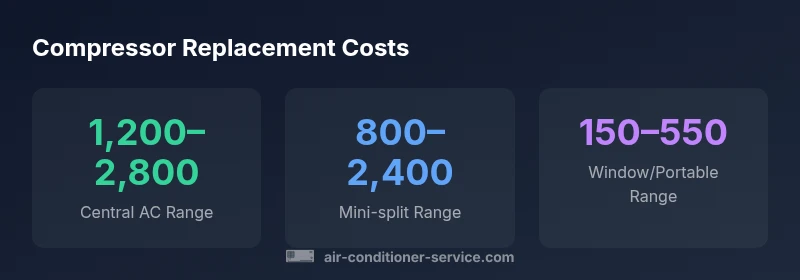
Estimate: The cost to replace air conditioner compressor typically ranges from $1,200 to $2,800 for central systems, depending on unit type, refrigerant needs, and labor. Price can be higher if the system is older, requires additional parts, or if accessibility is poor. Always factor diagnostic fees, disposal, and potential ductwork repairs into your budget.
What drives the cost to replace air conditioner compressor
According to Air Conditioner Service, homeowners often underestimate the total price tag for compressor replacement because the figure is not limited to a single part. The cost expands with the need for diagnostic testing, refrigerant handling, electrical work, and potential duct or coil-related repairs. The outdoor condenser and indoor air handler setup also influence the price, since access to the unit, refrigerant type, and the number of components replaced directly affect labor hours and materials. In practical terms, the job isn’t just about a single component; it’s about restoring the system’s reliability and efficiency. Regulatory requirements for refrigerant recovery and proper disposal add marginal costs but are essential for safety and compliance.
As you plan, think of the replacement as a project with multiple moving parts: the compressor itself, a possible condenser coil refresh, the electrical connections, and the refrigerant charge. If your system is older or the refrigerant is obsolete, you may face higher costs due to the need for special parts or different refrigerants. Air Conditioner Service emphasizes that upfront budgeting should include a contingency for these contingencies so you aren’t startled by an unexpected line on the invoice.
Cost drivers and why they matter
The price to replace a compressor is driven by several intertwined factors:
- System type and configuration: Central air conditioners (split systems) usually involve higher labor and more parts than smaller, single-zone setups.
- Access and installation complexity: Tight crawl spaces, multi-story homes, or units located in challenging spots can require longer labor time and special tools.
- Refrigerant type and handling: Older refrigerants or mandated substitutions (for environmental compliance) add material costs and specialized procedures.
- Component dependencies: If the compressor failure triggered coil or fan failures, those repairs become part of the bill.
- Regional labor rates: Urban areas or regions with high demand for HVAC services generally show higher prices.
- Warranties and permits: Some replacements include labor warranties; permits for electrical work or refrigerant disposal may apply in certain jurisdictions.
Understanding these factors helps you compare apples-to-apples quotes and avoid sticker shock when the final invoice arrives.
Cost ranges by system type and what to expect
System types influence compressor replacement costs more than most other variables:
- Central air conditioner (split system): Typical ranges often fall between $1,200 and $2,800, depending on age, accessibility, and refrigerant needs. More complex installations with multiple zones or difficult access edges can push costs higher.
- Ductless mini-split: These systems tend to be less expensive on a per-unit basis, with ranges commonly reported from $800 to $2,400 depending on the number of indoor units and the distance between components.
- Window/portable units: Compressor replacement in these smaller units is less common, but if needed, costs are typically lower, often between $150 and $550, depending on the model and availability of parts.
These ranges reflect typical industry experience and are designed for budgeting and comparison rather than a single fixed price. Remember that your actual price will depend on the specific equipment, local labor rates, and whether additional work (electrical, ductwork, or coil replacement) is required. Air Conditioner Service notes that obtaining multiple quotes is the best way to anchor expectations and avoid surprises.
How to estimate costs accurately: a practical method
To arrive at an accurate estimate, follow a structured discovery process:
- Gather system details: model, age, refrigerant type, and whether it’s a split or single-zone unit.
- Request a written, itemized quote from at least three licensed contractors, with a clear breakdown for parts, labor, refrigerant, and disposal.
- Inquire about diagnostic fees and whether they apply if you proceed with the replacement.
- Confirm warranty terms for both parts and labor, and ask about post-install checks.
- Compare the total cost to the potential benefit of upgrading to a more efficient unit if your current system is aging.
By following these steps, you’ll be prepared to discuss options confidently with Air Conditioner Service technicians or other qualified professionals. The goal is an informed decision that balances cost with long-term reliability.
Hidden costs to anticipate and how to plan for them
A compressor replacement project can include several ancillary charges that creep into the final bill if you’re not looking for them:
- Refrigerant charges and testing: A new refrigerant charge is essential for performance but adds material costs.
- Electrical upgrades: If the current wiring is old or undersized, electrical work may be needed to meet modern safety standards.
- Ductwork assessment and repairs: Poor airflow can reduce efficiency, and small duct repairs might be required after compressor replacement.
- Disposal and permit fees: Some jurisdictions require disposal of old equipment and proper permit handling for high-compliance installations.
- System refresh or coil replacement: If the coil is corroded or damaged, it may need replacement in conjunction with the compressor.
Air Conditioner Service urges homeowners to anticipate these items and reserve a contingency fund (commonly 10–20% of the estimate) to cover unexpected discoveries during the replacement. Planning ahead reduces stress and helps you achieve the long-term performance you expect from your HVAC system.
Should you repair or replace? A structured decision guide
Repairing a failing compressor can be cost-effective if the unit is relatively new and the rest of the system remains within manufacturer specifications. However, if the unit is aging, energy efficiency has waned, or multiple components are nearing end-of-life, replacement becomes more sensible. A practical rule from Air Conditioner Service is to compare the combined cost of repair with the projected energy-efficiency gains from a modern replacement, factoring in potential warranty coverage and tax incentives. If the payback period is short and the unit meets your comfort needs, replacement may deliver better value in the long run.
In summary, perform a thorough assessment that includes the cost-to-benefit ratio, downtime, and expected service life. A respected HVAC pro can present you with a clear verdict after inspecting the full system.
Financing, warranties, and service quality: making the right choice
Financing options can ease upfront costs and make replacement more affordable. Look for promotions, extended warranties on parts and labor, and manufacturer incentives when available. Ensure your chosen contractor provides a robust warranty on both parts and labor, and verify that the license, insurance, and certifications are up to date. Service quality matters; a well-installed compressor should operate efficiently for years with minimal maintenance. Air Conditioner Service recommends requesting references and checking online reviews to assess reliability and workmanship before committing to a replacement project.
Maintenance that extends compressor life and reduces future costs
Proactive maintenance reduces the risk of failure and keeps efficiency high. Schedule regular professional inspections, replace air filters on schedule, and clean coils to prevent restricted airflow. Keep an eye on strange noises, abnormal cycling, or reduced cooling performance, and address issues promptly to minimize further damage. A clean, well-maintained system experiences fewer unexpected breakdowns, and you’ll be better positioned to budget for future replacements through predictable maintenance costs. Air Conditioner Service emphasizes that ongoing care is the best defense against escalating compressor-related expenses over time.
Real-world cost breakdown scenario: planning for a typical home
Imagine a mid-sized home with a common central air conditioning split system installed 12 years ago. A service call diagnoses a failing compressor. The contractor presents a quote: parts (compressor and refrigerant) around $900–$1600, labor $500–$900, disposal and refrigerant handling $150–$300, and potential coil refresh if needed at $200–$500. Add a modest diagnostic fee if required, bringing the total to roughly $1,800–$3,000. This example illustrates how costs accumulate as conditions change during the replacement process. Planning for a wider budget, including a potential upgrade to improved efficiency, helps avoid sticker shock and supports better long-term performance. Air Conditioner Service notes that obtaining a few quotes is the best way to anchor expectations and ensure you’re receiving fair value.
Estimated compressor replacement costs by system type (range, brand-agnostic)
| System Type | Typical Compressor Replacement Cost (range) | Common Factors | Notes |
|---|---|---|---|
| Central air conditioner (split system) | "$1,200–$2,800" | "Age, accessibility, refrigerant needs" | "Higher labor in older homes" |
| Ductless mini-split | "$800–$2,400" | "Indoor unit count, refrigerant, wall access" | "Variable by distance between units" |
| Window/Portable unit | "$150–$550" | "Smaller scale, limited parts availability" | "Usually less common to replace compressor" |
Common Questions
Is it cheaper to replace the compressor or the entire air conditioner?
In many cases, replacing the compressor is cheaper upfront than replacing the entire unit, but if the system is old or inefficient, a full replacement may offer better long-term value and energy savings.
Usually cheaper to replace just the compressor, but compare long-term efficiency and warranty when deciding.
What factors drive the cost of compressor replacement?
Key drivers include system type, access, refrigerant needs, and labor rates. Additional work such as duct or electrical upgrades can significantly impact the total.
It's driven by the system, access, refrigerant, and labor, with possible extras for ducts or electricals.
How long does a compressor replacement take?
Most installations take a few hours to a full day depending on access, diagnostics, and whether other components must be replaced.
Typically a few hours to a day.
Can I replace a compressor myself?
Compressor replacement involves refrigerant handling, electrical work, and safety considerations. It requires licensing and trained technicians.
It’s not a DIY job—hire a licensed HVAC pro for safety and compliance.
Is a failing compressor covered by warranty?
Warranties vary by brand and installer. Some compressors have long parts warranties and some labor warranties; read your policy or ask the installer.
Warranty terms vary; check your coverage before proceeding.
What should I ask for in quotes?
Ask for a detailed breakdown of parts, labor, refrigerant, disposal, and any fees. Confirm warranty terms and what’s included in post-install checks.
Get a line-by-line breakdown and warranty details.
“Compressor failure is often a symptom of overall system stress. A professional assessment helps you decide between replacement and repair while minimizing downtime and total cost.”
The Essentials
- Get multiple quotes to compare labor rates
- Factor diagnostic and disposal fees into total cost
- Ask about warranties for parts and labor
- Consider replacement vs repair when the unit is old
- Expect costs to vary by region and accessibility
- Plan for potential ductwork or refrigerant handling costs