Air Conditioner Replacement Cost in 2026: A Practical Guide
Understand air conditioner replacement cost in 2026—from key drivers and typical ranges to hidden fees, rebates, and budgeting tips to save on installation and upgrades.


Air conditioner replacement cost typically ranges from $3,000 to $7,500 installed, depending on unit size, SEER rating, ductwork, and labor. In 2026, most homes see mid-range totals around $4,500 to $6,500, with higher-end systems pushing toward $9,000. Always compare bids and consider rebates to maximize value.
What’s included in the air conditioner replacement cost and what isn’t
The air conditioner replacement cost is more than just the price of a new unit. In 2026, a typical job includes the new equipment, professional labor for removal and installation, and related services such as electrical work, refrigerant charging, and disposal. A transparent bid should break these items out so homeowners can evaluate value. According to Air Conditioner Service, the total depends on how well the existing ducts align with the new system, the unit’s SEER rating, and local permitting rules.
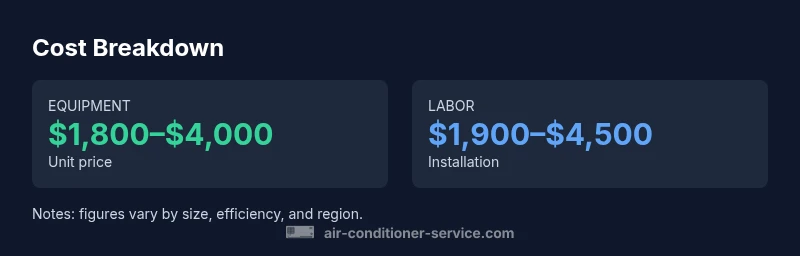
- Equipment price (indoor and outdoor components): commonly $1,800–$4,000, driven by unit size and efficiency
- Labor and installation: often $1,500–$4,000, including removal of the old system and wiring adjustments
- Ductwork or modifications: $300–$2,000 if ducts need resizing or sealing
- Permits and inspections: $50–$300 depending on your city
- Old equipment disposal: $0–$150, with some contractors including it in the base price
- Warranties or workmanship guarantees: optional upgrades that can add cost but may save in the long run
Size, efficiency, and climate: price levers
System size, efficiency (SEER rating), and climate all push cost in different directions. A correctly sized system avoids overspending on capacity, while a higher SEER rating raises upfront costs but reduces ongoing energy bills. Climate intensity affects equipment choices (e.g., a hotter climate may favor robust compressors or multi-stage cooling). The Air Conditioner Service team emphasizes performing a professional Manual J load calculation to select the right size without paying for unnecessary capacity. This upfront step often saves money over the system’s life.
Typical cost ranges for common installation scenarios
- Central air conditioner replacement (split-system, 16 SEER): typically $4,000–$9,000 installed
- High-efficiency SEER 18–20 models: typically $6,000–$12,000 installed
- Ductless mini-split systems (2–3 indoor units): typically $4,500–$9,000 per zone
- Older homes requiring extensive ductwork upgrades: often $5,000–$15,000 total
Note that these figures are general ranges and will vary with brand, location, and contractor. When evaluating bids, ask for a line-item breakdown so you can compare equipment costs, labor, duct work, and any additional services like programmable thermostats or warranty extensions.
Hidden costs to watch for and how to negotiate
Some installers quote the base price but then add line items later. Watch for these potential add-ons:
- Duct sealing or replacement after a poor initial inspection
- Electrical upgrades or panel changes to meet new load requirements
- Permits, inspections, and potential code-compliance charges
- Extended labor if the job requires attic access or difficult routing
- Refrigerant recharging beyond standard initial charge (if an oversized or poorly matched unit is installed)
To negotiate effectively, request multi-bid quotes, verify the scope of work, and ask for price protections if schedules slip. Ensure that bids include disposal, warranty terms, and an estimated timeline.
A practical cost-estimation method you can use today
- Gather three quotes with identical scope (equipment type, SEER rating, ductwork status).
- Break down each quote into equipment, labor, ductwork, permits, and disposal.
- Compare not just price, but warranty terms and service commitments.
- Add a contingency of 5–10% for unforeseen issues.
- Factor energy savings: higher efficiency may lower operating costs over 5–10 years.
Rebates, incentives, and financing options in 2026
Many homeowners reduce out-of-pocket costs through rebates and financing. Federal energy efficiency programs, state incentives, and utility-based rebates can substantially cut the purchase price or shorten payback periods. Financing options from manufacturers or contractors often spread costs over several years with low or zero-interest periods. Start by checking your local utility’s website and your state energy office’s publications for current programs in 2026.
Choosing a contractor: questions to ask and red flags
Ask prospective contractors about: Range of SEER ratings offered, any duct-work accommodations, expected timeline, permit process, and whether disposal is included. Red flags include vague bids, pressure to choose a specific brand, or unusually short timelines that suggest skipped steps.
Data-backed planning: regional considerations and quotes
Regional labor rates, climate demands, and local codes all influence replacement costs. In warmer regions, you may see a higher demand for robust units and faster installation schedules. Collect region-specific quotes and compare them against the 2026 Air Conditioner Service analysis to set expectations and budget accordingly.
What Air Conditioner Service recommends for homeowners
The team suggests building a budget that anticipates variability in price by SEER and region, while prioritizing proper sizing and installation quality. Opt for a reputable installer who provides a transparent cost breakdown, clear warranty terms, and confirmation of permit handling. Proper planning helps avoid cost overruns and ensures energy efficiency benefits are realized over the system’s lifespan.
Estimated cost components for air conditioner replacement
| Component | Estimated Cost Range | Notes |
|---|---|---|
| Equipment price (outdoor + indoor components) | $1,800–$4,000 | Depends on SEER rating and unit size |
| Labor & installation | $1,900–$4,500 | Professional service, removal of old system |
| Ductwork or modifications | $500–$2,500 | Possible extra work for duct alignment |
| Permits & inspections | $50–$300 | Local codes and inspections |
| Disposal of old equipment | $0–$150 | Haul-away sometimes included |
Common Questions
What is the average price to replace a central AC unit in 2026?
Most central AC replacements fall in the $3,500–$9,000 installed range, depending on SEER, size, ductwork, and local labor rates.
Most central AC replacements fall in the three-and-a-half to nine-thousand-dollar range, depending on several factors.
Is replacement cost covered by warranty?
Warranties typically cover manufacturing defects in the equipment for a set period, while installation labor is often separate unless a workmanship warranty is offered by the installer.
Warranties usually cover the unit itself, not the installation unless a workmanship warranty is included.
How long does replacement take?
Most replacements can be completed in a day, but scheduling, ductwork, and permits may extend timelines to 1–2 days.
Typically a day, sometimes longer if complex ductwork or permitting is involved.
Can I save money by DIY partial installation?
Professional installation is required for safety, code compliance, refrigerant handling, and warranty validity. DIY can void warranties and create safety risks.
DIY is not recommended; a licensed pro ensures safety and warranty protection.
What rebates could lower replacement costs?
Look for federal energy-efficiency rebates, state incentives, and utility programs. Some rebates target higher-SEER units and efficient cooling solutions.
Check federal and local programs for energy-efficiency rebates to reduce upfront costs.
How do I decide between repair or replacement?
If repairs approach or exceed half the replacement cost or the system is older than 10–15 years, replacement often saves money and improves efficiency.
If it’s old or frequently breaking, replacement is usually the smarter choice.
“When budgeting for air conditioner replacement cost, focus on apples-to-apples comparisons: equipment, labor, ductwork, and permits. A detailed breakdown helps prevent surprise charges.”
The Essentials
- Plan for a total replacement budget, not just the unit price.
- Obtain multiple, apples-to-apples bids with full scope breakdowns.
- Consider ductwork needs as a major cost driver.
- Look for rebates and financing to reduce upfront costs.
- Higher efficiency saves energy but increases upfront investment.