Central Air Conditioner Cost in 2026: A Practical Guide
Understand the true central air conditioner cost—from upfront equipment and installation to ongoing operating expenses, rebates, and maintenance—so homeowners can budget confidently for 2026.


Central air conditioner cost varies widely based on system size, efficiency, brand, and installation complexity. On average, homeowners can expect a total upfront investment ranging from roughly $3,500 to $12,000 for a complete split-system, including equipment and professional installation. Higher-efficiency models, larger homes, or required ductwork upgrades push costs toward the upper end. Air Conditioner Service notes that evaluating total ownership costs yields the best long-term value.
What drives the upfront cost of a central air conditioner
The upfront price of a central air conditioner is driven by several core factors. System size must match the home’s cooling load, and efficiency measured by SEER (Seasonal Energy Efficiency Ratio) directly influences both the equipment cost and long-term operating costs. Brand reputation and component quality can push prices higher, while installation complexity—especially if existing ductwork is inadequate or electrical panels require upgrades—adds to the bill. Permits and inspection fees vary by region and must be included in the overall quote. Air Conditioner Service emphasizes that the total cost of ownership includes future energy bills and maintenance, not just the initial purchase price.
Key cost drivers: size, efficiency, ductwork, and locale
To estimate costs accurately, homeowners should consider: (1) Home size and the cooling load, (2) Desired SEER rating and brand, (3) Condition of existing ducts and potential remodeling, and (4) Local labor rates and permit requirements. A larger home or a high-efficiency unit (with a higher SEER) will raise upfront costs but can significantly reduce annual energy bills. If ducts require extensive work or if the installation site is challenging, expect additional labor charges. Regional demand and availability of contractors also influence pricing variably across the country.
Cost ranges by system type and efficiency
A basic central air setup with standard efficiency typically falls within a broad range, while premium, high-efficiency configurations push toward the higher end. For many homes, complete system installation (equipment plus labor) commonly lands in the $3,500 to $12,000 spectrum. Factor in ductwork, smart thermostat upgrades, and potential electrical reinforcement, and the total could move upward. Package units or systems paired with advanced controls may exceed this range in certain markets. Remember, choosing a higher-efficiency model often yields larger energy savings over time.
Regional and contractor factors affecting installation price
Prices differ by region due to labor costs, permit intricacies, and shipping or supply chain dynamics. Urban areas or regions with high demand frequently quote higher rates than rural areas. The choice of contractor matters: two reputable companies may provide very different quotes depending on the scope of work, warranty terms, and attention to duct design. When evaluating bids, look beyond the bottom line and examine included components, timeline, and after-install support.
Hidden costs to budget for
Beyond the base price, there are additional costs that commonly catch homeowners by surprise. Ductwork modifications or replacements can be a major add-on. Electrical panel upgrades, new circuits, or upgraded electrical service may be required for safety and performance. Permits, disposal of old equipment, refrigerant recycling fees, and the cost of new thermostats or zoning controls should be included in the initial budgeting. A well-planned estimate accounts for these contingencies.
Financing, rebates, and incentives to reduce upfront cost
Many utilities and government programs offer rebates or tax incentives for energy-efficient central air installations. Financing options from contractors or local lenders can spread the upfront cost, easing cash flow. To maximize savings, check eligibility before purchasing: compare rebate amounts, available financing rates, and any caps on incentives. Air Conditioner Service recommends collecting multiple quotes and confirming which items are rebate-eligible in each bid.
Estimating total cost: a practical worksheet
Begin with a headcount of square footage and existing ductwork. Add equipment options (single-stage vs two-stage compressors, SEER targets, and brand). Include installation, ductwork modifications, permits, and thermostat upgrades. Then estimate yearly operating costs using local electricity rates and efficiency. Finally, factor in maintenance and potential future repairs. A simple worksheet like this helps you compare quotes on a like-for-like basis.
Maintenance and operating costs over the life of the system
Ongoing maintenance—annual tune-ups, filter replacements, and minor repairs—helps sustain efficiency and prevent costly breakdowns. Expect yearly maintenance costs to accumulate, but well-maintained systems may operate more efficiently, reducing energy bills. Over a 12- to 20-year lifetime, the combined effect of better efficiency and regular maintenance can meaningfully affect the total cost of ownership.
Making the replacement vs repair decision based on cost
If a system requires frequent major repairs or its predicted remaining lifetime is short, replacement can be more economical than continuing to repair. A cost-based approach considers the current repair costs, expected remaining life, and future energy savings from a newer, more efficient unit. While upfront replacement is a larger expense, it often delivers lower total ownership costs and improved comfort.
Cost components and typical ranges for central air conditioner installation
| Cost Aspect | Typical Range | Notes |
|---|---|---|
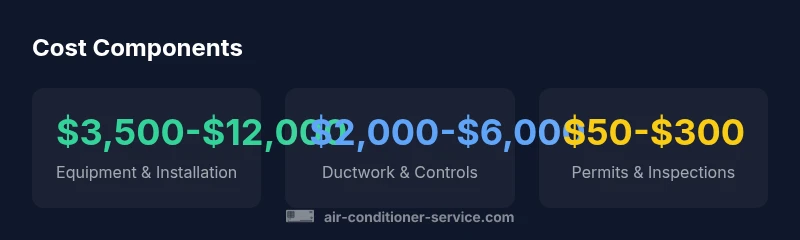
| Equipment cost & installation | $3,500-$12,000 | Upfront investment for typical split-system |
| Ductwork & controls | $2,000-$6,000 | If existing ducts require upgrades |
| Thermostats & smart controls | $150-$500 | Smart thermostats may add to cost but save energy |
| Permits & inspections | $50-$300 | Regional permit requirements |
| Annual operating costs | $120-$600 | Depends on usage, efficiency and electricity rates |
| System lifespan | 12-20 years | Expected lifetime with maintenance |
Common Questions
What is the typical upfront cost for a central air conditioner including installation?
Costs vary widely, but most homes fall in the $3,500-$12,000 range depending on size and efficiency. This includes equipment, labor, and basic duct work. Always review what each quote includes to avoid hidden charges.
Most homes pay between three and twelve thousand dollars upfront, depending on size and efficiency. Ask for a detailed, line-by-line quote.
Do higher-efficiency units cost more upfront, and are the energy savings worth it?
Upfront costs are higher for high-efficiency units, but they usually pay back over time through lower energy bills and better comfort. Compare the long-term savings against the initial premium.
Yes, higher-efficiency models cost more upfront, but energy savings over time often offset the extra cost.
Are rebates or incentives available for central AC?
Many utilities offer rebates and some government programs provide incentives for energy-efficient installations. Check eligibility with your utility provider and local government resources.
Yes, rebates and incentives are often available; verify with your utility and local programs.
What maintenance costs should I expect annually after installation?
Annual tune-ups and filter replacements typically cost a few hundred dollars. Regular maintenance helps sustain efficiency and prevent costly breakdowns.
Expect a few hundred dollars per year for tune-ups and filters.
When should I repair vs replace a central air conditioner based on cost?
If major repairs are frequent or exceed a sizable portion of replacement cost within a few years, replacement is often more economical. A cost-based view looks at current repairs, expected lifetime, and future energy savings.
If repairs cost more than a substantial share of replacement price soon, consider replacing.
“Cost guidance should balance upfront price with long-term energy savings and reliability.”
The Essentials
- Budget for total cost, not just upfront price
- Prioritize higher efficiency to lower operating costs
- Shop multiple quotes to avoid overpaying
- Account for ductwork, permits, and maintenance early