Central AC Unit Cost Guide for 2026: What You Pay and Why
Learn the factors behind central AC unit cost in 2026, including installed price ranges, system sizing, ductwork, and regional labor. Get practical budgeting tips, rebates, and how to compare quotes from Air Conditioner Service.


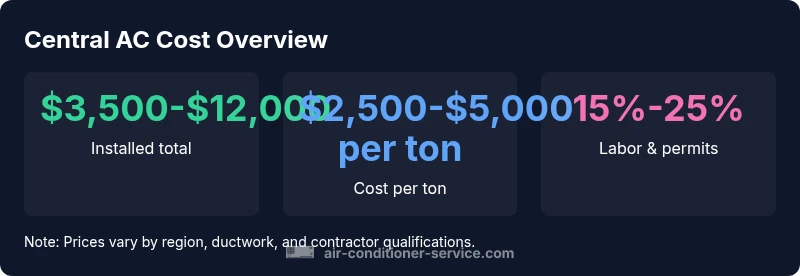
Central AC unit cost typically ranges from $3,500 to $12,000 installed, depending on system size, efficiency (SEER), ductwork, and local labor. For accurate budgeting, expect higher prices with larger homes, complex duct networks, or premium high-SEER units. Labor, permits, and potential resale rebates can also affect the final number, so obtain a comprehensive quote before committing.
What drives the central AC unit cost
Understanding central AC unit cost begins with the fundamentals: house size, ductwork, climate, and the efficiency you choose. Sizing a system is critical; too small results in insufficient cooling and short cycling, while too large wastes energy. A professional will typically perform a Manual J load calculation to determine the correct tonnage. The higher the SEER rating, the higher the upfront price, but the long-term operating costs are lower. The climate affects workload; homes in hot, humid regions require more robust equipment and perhaps more frequent maintenance, driving up both equipment and labor costs. The cost of smart thermostats, zone controls, and variable-speed blowers can also add to the ticket, though they may offer energy savings and comfort improvements. Ductwork condition matters: leaky ducts can waste 15-30% of cooling energy and raise total costs if sealed or replaced during installation. Labor and permits, which vary by region, typically constitute a significant portion of the total price. Finally, installation complexity—new duct runs, attic access, or tight crawl spaces—can push the cost higher. For homeowners evaluating quotes, separate equipment cost from labor and scope to compare apples to apples.
Cost components you should expect
Most homeowners see four primary cost drivers: equipment price, professional labor, ductwork changes, and permits/fees. Equipment price varies with size, efficiency (SEER), and brand, with premium units costing more upfront but offering lower operating costs over time. Labor covers installation, wiring, refrigerant charge, and commissioning; union or contractor rates differ by region. Ductwork can be minimal in some homes or extensive in others, especially if your current ducts require sealing, rerouting, or replacement. Permits and disposal fees add another layer, and some regions mandate energy efficiency upgrades or environmental compliance. Unexpected costs often arise from attic access, crawl space constraints, or adding zone controls. Clear line-item quotes help you compare apples to apples and avoid surprise charges at the end of the job.
How much to budget by system type
Budgeting for a central AC system starts with the scale of the project. A full, new central air installation for a typical single-family home can be markedly different from a retrofit in an older house. For new installations, you pay mainly for the equipment, new ductwork or modifications, and professional labor. Retrofitting into an existing duct system may trigger duct sealing or replacement costs. For homes with high-SEER, variable-speed systems, expect a higher upfront price but lower annual energy bills. Also consider zoning and smart thermostat upgrades, which can add to the initial cost but improve comfort and efficiency. When budgeting, price ranges serve as a guide; always request a line-by-line quote to understand where your money goes.
Installation considerations and hidden costs
Installation complexity is often the wildcard in central AC pricing. Attic access, crawl spaces, and the need to upgrade electrical service can all add days to the project and raise labor costs. Some homes require refrigerant line set replacements or additional outdoor pad supports, which further impacts price. If your home uses older ductwork, sealing or replacing ducts can dramatically improve efficiency, but adds to the ticket. Debris protection, cleanup, and run-time testing are standard steps, yet they can appear as charged line items if not included in a broad estimate. To minimize surprises, insist on a comprehensive estimate that details equipment, labor, ductwork, permits, and any potential ancillary charges.
Regional differences and incentives
Prices for central AC installation differ by region due to labor rates, permitting requirements, and climate. Regions with higher living costs tend to have higher installation quotes. Look for local incentives, rebates, and utility-sponsored programs that reduce upfront costs; many utilities offer rebates for high-SEER units or for duct sealing and insulation upgrades. If your home qualifies, these programs can significantly shorten the payback period. Also consider long-term energy savings when evaluating the cost; a higher SEER unit may have a longer payback horizon but lower annual operating costs, especially in hot climates.
Financing, rebates, and long-term value
Financing options can soften the upfront burden of central AC replacement. Many contractors offer flexible payment plans, and manufacturers or energy programs may provide rebates on high-efficiency models. When calculating value, include not only upfront price but also projected energy savings, maintenance costs, and potential increases in home value. A well-sized and properly installed system can reduce energy consumption, improve comfort, and lower indoor humidity; these benefits contribute to a higher quality of life and potentially higher resale price. Air Conditioner Service recommends comparing total installed cost across multiple quotes and accounting for rebates to determine true value.
Quick-start budgeting checklist
- Get on-site sizing and a written quote from a licensed contractor.
- Separate equipment cost, labor, ductwork, and permits in the quote.
- Assess duct sealing or replacement needs to maximize efficiency.
- Check for rebates, financing options, and utility programs.
- Compare multiple quotes and review warranties, service plans, and maintenance requirements.
Cost factors at a glance
| Factor | Typical Range | Notes |
|---|---|---|
| System installed cost | $3,500-$12,000 | Equipment, labor, and permits included |
| Tonnage (size) | 3-4 tons common | Larger homes may need more tonnage |
| SEER rating | 14-20 SEER | Higher SEER costs more upfront but saves energy |
| Ductwork needs | None to extensive | Duct sealing/replacement affects price |
| Regional labor costs | Low to high | Labor markets impact cost |
Common Questions
What factors most influence central AC unit cost?
The main cost drivers are system size, SEER rating, ductwork needs, installation complexity, and regional labor rates. Upgrades like smart thermostats or zoning can add to the upfront price but may improve long-term comfort and efficiency.
The biggest cost drivers are size, SEER, ductwork, and local labor. Upgrades like zoning can raise upfront price but save energy over time.
Is ductwork replacement necessary when upgrading?
Ductwork replacement is not always required, but duct sealing or rerouting can dramatically improve efficiency and cooling distribution. For homes with old or leaky ducts, addressing them during installation is often cost-effective.
Ductwork isn’t always needed, but sealing or upgrading ducts can save energy and improve comfort.
How long does installation typically take?
Most central AC installations take one to three days, depending on project scope, ductwork changes, and electrical upgrades. A well-coordinated crew minimizes disruption and ensures a quality start-up.
Most installations take about a day or two, depending on ductwork and electrical work.
Are rebates or financing options available for central AC?
Yes. Many utility programs offer rebates for high-efficiency equipment, duct sealing, and insulation upgrades. Financing options from contractors or banks can spread the upfront cost over time.
There are rebates and financing options to help spread the upfront cost.
How should I choose a SEER rating for my home?
Choose a SEER rating that balances upfront cost with expected energy savings. In hot climates, higher SEER units often pay back through lower operating costs, while milder climates may favor mid-range SEER for cost efficiency.
Pick a SEER that fits your climate and budget, with higher SEER saving more energy in hot weather.
“Proper sizing and professional installation matter as much as the equipment itself; a mis-sized unit can erase energy savings and raise operating costs. Investing in a high-SEER unit can pay off through long-term energy efficiency.”
The Essentials
- Size the system correctly with a pro
- Expect a broad cost range based on size and efficiency
- Ductwork quality strongly affects price and comfort
- Look for rebates and financing options to ease upfront costs
- Obtain multiple quotes for a transparent comparison