Air Conditioner Replacement: A Practical Home Guide
Learn how to replace an aging air conditioner safely and efficiently. This step-by-step guide covers sizing, installation considerations, and post-install maintenance for homeowners and renters.


Air conditioner replacement is the practical choice when repeated repairs, rising energy bills, or reduced cooling efficiency outweigh the cost of a new unit. This guide walks homeowners through choosing a replacement, sizing for your home, and coordinating installation with safe, compliant steps. By following our steps, you can minimize downtime and maximize comfort with a reliable, efficient system.
Why air conditioner replacement may be the right move for your home
According to Air Conditioner Service, replacement becomes a cost-effective decision when aging components fail to keep up with demand or when efficiency has dropped notably. If you find yourself facing repeated repairs, rising energy bills, or comfort gaps that nag you during peak heat, it’s worth evaluating a full replacement rather than ongoing patchwork. In this section we’ll cover indicators that point toward replacement, how to size a new system, and what you should expect during the process.
Key indicators include persistent humidity issues, uneven cooling, unusual noises, and frequent compressor cycling. A modern unit with a higher SEER rating can significantly reduce cooling costs over time, especially in hot climates. Air Conditioner Service analysis shows that homeowners who replace rather than repair typically experience better long-term reliability and fewer disruptive outages. When weighing options, consider not just the upfront cost but the long-term savings from improved efficiency and lower maintenance demands. In the end, a properly chosen replacement can dramatically improve comfort, indoor air quality, and home value.
Sizing, efficiency, and deciding between choices
Choosing the right air conditioner replacement starts with accurate sizing and energy considerations. Improperly sized units waste energy, overwork compressors, and fail to meet cooling needs. A correctly sized system delivers steady temperatures and consistent humidity control. The process begins with calculating the cooling load (often called Manual J in professional practice) and evaluating your home's insulation, windows, and occupancy patterns. With the right data, you can select a unit with an appropriate cooling capacity and an efficient SEER (Seasonal Energy Efficiency Ratio) rating.
Beyond basic size, consider features that influence long-term performance: variable-speed compressors, multi-stage cooling, smart thermostats, and refrigerant options. While premium efficiency comes with a higher upfront price, your energy savings and comfort can justify the investment over time. Air Conditioner Service's analysis highlights how modern systems—especially those with high SEER and inverter-driven compressors—deliver quieter operation and more stable temperatures. Keep in mind ductwork and ventilation play a critical role; mismatched ducts can undermine a new unit’s efficiency. When in doubt, work with a licensed HVAC professional who can perform load calculations and confirm you’re selecting equipment that matches your home’s unique demands.
Selecting the right equipment and planning for installation
Once you understand your load and budget, the next step is choosing equipment that aligns with your goals—whether you prioritize energy efficiency, quiet operation, or smart controls. Focus on SEER or EER ratings, HVAC compatibility, and the compressor type (single-stage, two-stage, or variable-speed). A higher SEER rating generally translates to lower energy use, but the trade-off is higher upfront cost. For many homes, a mid-range SEER model provides a practical balance of performance and price, especially when paired with proper duct design and quality installation.
Other practical considerations include the size and condition of the existing electrical service, the compatibility of the existing ductwork, and the space available for the outdoor unit. If you’re replacing an older single-speed unit, you might gain substantial comfort even with a modest SEER upgrade, particularly if you also install a modern thermostat. Air Conditioner Service notes that upgrades to variable-speed motors and advanced filtration can improve indoor air quality and overall comfort with only modest incremental costs. Don’t overlook refrigerant type and line-set compatibility; some installations require a complete line-set replacement to maintain system integrity.
Cost factors, budgeting, and when to expect payback
Replacement costs vary widely based on unit size, efficiency, and installation complexity. Typical considerations include the outdoor condenser, indoor air handler, refrigerant lines, ductwork adjustments, and electrical work. While it’s tempting to seek a simple price tag, most homeowners benefit from a total cost view that includes installation, permits, and potential duct improvements. Rather than rely on a single price, compare several quotes that break down equipment costs, labor, and any required ancillary work.
From a budgeting perspective, expect to plan for an investment that reflects the system’s long-term energy savings, reliability, and warranty coverage. Payback periods depend on climate, usage patterns, and energy prices. Air Conditioner Service analysis emphasizes the advantage of choosing a higher-efficiency unit in hot climates, where savings accumulate faster across hot seasons. Remember that warranties and service plans add value, especially when you opt for units with robust coverage and accessible local support.
The installation process: a high-level overview (do-it-yourself friendly in theory, with caveats)
A compliant air conditioner replacement involves careful sequencing of outdoor and indoor components, refrigerant safety (which should be handled by a licensed technician in most jurisdictions), electrical connections, and control wiring. In many cases, the install requires a permit and must meet local building codes. The following outline covers the major phases so you understand what professionals will do, and what you could expect if you hire a trained technician. Begin with shutting off power to the equipment and confirming zero voltage before touching any wiring or line sets. Then remove the old unit mounting hardware and disconnect refrigerant lines and electrical connections. When preparing the new unit, ensure compatibility with your ductwork, pad dimensions, and electrical service. The final steps include evacuating and pressurizing the refrigerant line (if applicable) and performing a leak test, then re-energizing the system and verifying thermostat operation and airflow. This overview is intended to help you engage knowledgeably with a contractor. If you decide to DIY, proceed with extreme caution and never handle refrigerants; call a licensed pro for the critical refrigerant tasks.
Maintenance after replacement: keeping the system reliable
Once the new air conditioner is installed, ongoing maintenance is essential for lasting performance. Schedule professional inspections at least once a year and replace air filters every 1-3 months depending on usage and household conditions. Keep outdoor coils clean, clear debris from around the condenser, and check the condensate drainage to prevent water damage. Routine maintenance helps you preserve energy efficiency and stabilizes indoor temperatures, so you get the most from your investment. Air Conditioner Service highlights that a well-maintained system often experiences fewer unexpected failures and a longer service life, especially when paired with a smart thermostat and a regular cleaning schedule.
Safety, permits, warranties, and when to hire help
Because a replacement involves electrical work and refrigerant handling, many jurisdictions require licensed technicians and proper permits. Before you begin, verify local code requirements and warranty terms; some manufacturers require professional installation to honor warranties. If you are committed to a DIY approach, focus on non-hazardous steps such as mounting, wiring only as allowed by code, and ensuring proper electrical service capacity. Keep copies of all receipts, model numbers, and warranty documents for future service. The decision to hire a pro versus do-it-yourself depends on your comfort with tools, your local climate, and the complexity of the job. In most cases, engaging a qualified HVAC contractor provides the most consistent results, safer work, and peace of mind with the warranty.
Tools & Materials
- Voltage tester(Used to confirm power is off to the outdoor unit)
- Screwdrivers (Phillips and flathead)(Medium and small sizes to remove panels)
- Wrench set (adjustable)(For fittings on lines and mounting hardware)
- Nut drivers (assorted sizes)(For mounting bolts on the condenser)
- Measuring tape(For confirming pad dimensions and line lengths)
- Safety gear (gloves, goggles)(Protect hands and eyes during installation)
- New air conditioner unit (outdoor condenser and indoor air handler)(Select appropriately sized system for your home; professional sizing recommended)
- Electrical disconnect and conduit as required by code(Install only if you are licensed; check local codes)
- Sealant and refrigerant line set fittings(Relies on system specifics; use manufacturer fittings)
- Permit (if required by local code)(Check with local building department)
Steps
Estimated time: 2-6 hours
- 1
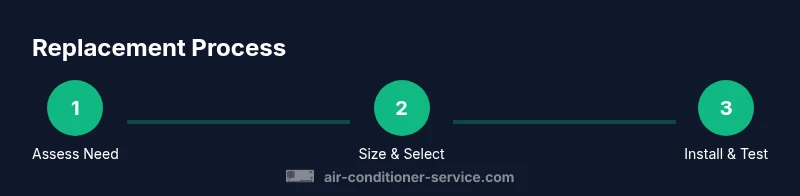
Assess the need and plan
Confirm replacement is the best option by comparing long-term costs, energy savings, and reliability against repeated repairs. Gather measurements, confirm electrical capacity, and coordinate with a licensed contractor if refrigerant handling is involved.
Tip: Document your home’s existing system details and any performance issues to share with the installer. - 2
Size and select the new unit
Have a professional perform a load calculation and select a unit with an appropriate SEER rating for your climate. Consider features like variable-speed operation and smart thermostat compatibility to maximize efficiency.
Tip: Don’t rely on quick online estimates; accuracy depends on home insulation, ductwork, and windows. - 3
Prepare the site and shut off power
Turn off power to the existing system at the breaker and disconnect the outdoor unit from the electrical supply. Verify there is no voltage before starting any removal work to prevent shocks.
Tip: Use lockout/tagout procedures if others may restore power during the job. - 4
Disconnect and remove the old equipment
Carefully disconnect refrigerant lines and electrical connections, then unmount the old unit. If refrigerant work is involved, hire a licensed technician to safely recover refrigerant.
Tip: Label wires and lines to match the new installation configuration. - 5
Install the new outdoor unit and mount
Position the new condenser on a solid pad, level it, and secure mounting hardware. Verify line-set routing, duct connections, and make sure the unit has proper clearance for airflow.
Tip: Follow manufacturer mounting specs to avoid vibration and noise issues. - 6
Connect refrigerant lines and electrical
Connect the insulated refrigerant lines, seal all joints, and run electrical wiring and a proper disconnect. If refrigerant handling is required, ensure a licensed technician performs this step.
Tip: Double-check line-set lengths to avoid excessive pressure drop. - 7
Commission, leak-check, and test
Vacuum and pressure-test the system for leaks, then restore power and run the system to confirm cooling performance and thermostat control. Check refrigerant charge against spec and verify proper airflow.
Tip: Have a final performance test documented for warranty purposes. - 8
Finalize warranty and ongoing maintenance
Register warranties, schedule first service, and set a periodic maintenance plan (filters, coil cleaning, duct checks). Keep records of model numbers and dates.
Tip: A proactive maintenance plan extends system life and preserves efficiency.
Common Questions
Do I need to replace my AC or can I repair it?
Replacement is often more cost-effective when the unit is old, frequently breaking down, or poorly efficient. A professional can compare current repair costs against a new unit’s energy savings and reliability.
Often replacement is best when repairs keep piling up and efficiency is low.
What factors determine the replacement cost?
Cost depends on unit size, efficiency rating, ductwork adjustments, electrical work, permits, and whether indoor and outdoor components require replacement.
Costs vary with size, efficiency, and installation complexity.
How long does installation take?
Typical replacement takes 1-2 days, depending on scope, permits, ductwork, and whether any structural work is needed.
Most replacements take about a day or two with proper planning.
Is a permit required for air conditioner replacement?
Permit requirements vary by location. A licensed contractor will know local rules and help secure permits if needed.
Check with your local building department or your installer.
What maintenance should I plan after replacement?
Schedule annual professional inspections and replace filters every 1-3 months. Keep coils clean and ducts sealed.
Regular maintenance keeps the system efficient and reliable.
Can I replace the outdoor unit myself?
DIY replacement is not recommended due to electrical, refrigerant, and safety concerns. A licensed HVAC technician provides safety and warranty protection.
It’s safer and wiser to hire a professional for most replacements.
What warranty coverage comes with replacement?
Warranty terms vary by brand and installer. Expect product warranties plus installer workmanship coverage; read the fine print.
Warranty details depend on the unit and installation; review with your installer.
Watch Video
The Essentials
- Evaluate replacement when repairs rise or efficiency drops
- Accurate sizing and SEER choice drive long-term savings
- Licensed professionals are essential for refrigerant work
- Plan for installation costs, permits, and duct readiness
- Post-install maintenance sustains performance