Refill Car A/C: Safe DIY Guide
Learn how to refill your car's air conditioner safely with practical steps, essential tools, and safety tips. Understand refrigerant handling, legality, and maintenance to prevent future leaks.


Refilling a car’s air conditioner can restore cooling when refrigerant is low, but it requires careful handling and awareness of regulations. This guide outlines when a refill is appropriate, which tools you need, how to perform a basic charge safely, and how to recognize symptoms that indicate you should stop and consult a professional.
Understanding When Refilling Is Appropriate
According to Air Conditioner Service, refilling your car's air conditioner should be considered only when there’s clear evidence of refrigerant loss and after ruling out other issues like a faulty compressor or a leak. This section explains how to evaluate symptoms (for example not cooling as expected, frost on low-pressure lines, or unusual hissing sounds), why refrigerant types matter, and how environmental factors influence performance. You’ll learn what a basic recharge can accomplish, what it cannot fix, and how to approach the task without risking safety or legal trouble. We emphasize transparency: if you are unsure about your vehicle’s system or if you detect any leak, the safer option is professional service. The goal of this guide is to empower you with practical, cautious steps for a controlled refill when it is appropriate, and to help you decide when to seek expert help.
Tools and Conditions for a Safe Refill
Before you begin any refill, ensure you are working in a well-ventilated area away from direct sunlight and heat sources. Put on safety glasses and chemical-resistant gloves. Confirm you have the correct refrigerant type for your vehicle (R-134a or R-1234yf are common in modern cars), and a compatible gauge set. A clean workspace, clear labeling, and a car on a level surface with the engine off are essential to avoid overcharging or injury. Environmental considerations matter: refrigerants are potent greenhouse gases, and accidental discharge can harm the atmosphere. This section also explains how to recognize the limits of a DIY top-off and when a professional service is the safer option.
Refrigerant Types and Legalities
Refrigerant selection is not universal across vehicles. Most older cars use R-134a, while newer models may use R-1234yf. Handling refrigerants requires knowledge of local regulations and in many places EPA-related certification. Verify your local rules before purchasing refrigerant and starting a refill. Using the wrong type or performing a top-off without proper equipment risks refrigerant contamination, compressor damage, and failed inspections. If you’re unsure, consult your vehicle’s manual or a certified technician. This section stresses legality and safety above speed or cost.
The Basic Physics Behind a Refill
Air conditioning cooling depends on refrigerant cycling between a low-pressure side and a high-pressure side. When refrigerant is low, pressure readings shift and cooling performance drops. A refill seeks to restore the correct pressure balance, but overcharging can lead to higher system pressures, stress on the compressor, and potential refrigerant loss through seals. This section provides a conceptual overview of why proper charge matters and how gauge readings correlate with performance. It does not replace hands-on training or the manual for your exact vehicle.
Signs a DIY Refill Is Not Enough
Even a perfect top-off can fail to restore cooling if the system has a leak, a failing compressor, or a clogged orifice. Common signs that you may need professional service include persistent not-cooling symptoms after a refill, obvious refrigerant hissing, oil residue near service ports, or recurring pressure drops. If the vehicle experiences frequent hot spots or the evaporator cold spots disappear soon after a refill, a leak or component failure is likely. This section outlines how to distinguish a temporary recharge from a true system issue and why professional help is prudent in such cases.
Maintenance to Reduce Future Refills
Reducing the need for frequent refills starts with leak prevention and regular maintenance. Schedule periodic inspections for leaks, replace damaged hoses or seals, and ensure cabin air filters are clean to prevent unnecessary strain on the system. Keep an eye on HVAC performance indicators, and address strange noises or odor promptly. A small commitment to routine checks can extend the life of your car’s A/C and minimize costly refrigerant top-offs.
DIY Refill vs Professional Service: Making the Call
Choosing between a DIY refill and professional service involves weighing safety, legal considerations, and potential costs. A DIY approach may be appropriate for minor, well-contained leaks and proper refrigerant handling with the right tools. However, if your system shows signs of leaks, if you’re not trained in refrigerant handling, or if the vehicle is under warranty or local regulations require certification, a licensed technician is the safer option. This section helps readers evaluate risks and decide when to seek expert help.
Air Conditioner Service's Verdict
The Air Conditioner Service team reiterates that safety, accuracy, and compliance come first. If you are not fully confident in identifying refrigerant type, reading pressures correctly, and handling pressurized cans, delay the refill and contact a qualified technician. When a DIY refill is appropriate, use high-quality refrigerant and maintain strict control over charging to avoid overpressure. The team emphasizes continuing to educate yourself and to maintain your system with periodic checks to prevent future failures.
Tools & Materials
- Refrigerant (correct type for your vehicle)(Typically R-134a or R-1234yf; do not mix types)
- Manifold gauge set with hoses(Includes low-pressure port adapter compatible with the system)
- Recharge hose and canister adapter(Ensure compatibility with refrigerant type)
- Safety glasses(ANSI Z87.1 or equivalent)
- Chemical-resistant gloves(Protect hands from refrigerant exposure)
- Soap water spray or leak detector dye (optional)(For leak confirmation during testing)
- Vehicle owner’s manual(Check for port locations and refrigerant type)
- Digital thermometer or vent temperature gauge (optional)(For verifying cooling performance)
Steps
Estimated time: 30-60 minutes
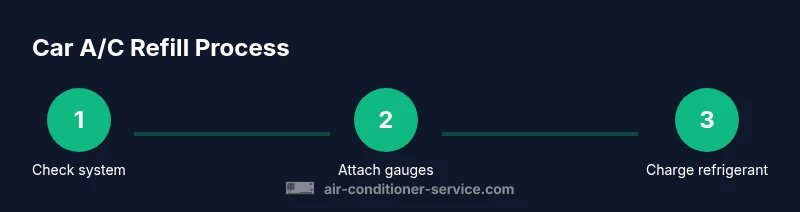
- 1
Identify refrigerant type and safety prerequisites
Confirm your vehicle uses the refrigerant specified in the manual, then put on safety glasses and gloves. Verify there are no open flames or sparks nearby and ensure the car is off and parked on a level surface.
Tip: Double-check port locations in the owner’s manual before attaching gauges. - 2
Prepare the work area and test for leaks
Park in shade, disconnect the battery if needed for safety, and visually inspect lines for cracks. Use a soapy spray to test for slow leaks at fittings before charging.
Tip: Do not proceed if you detect an active leak; refrigerant handling requires professional repair. - 3
Attach low-pressure gauges to the service port
Locate the low-pressure service port and securely connect the gauge hose. Ensure connections are tight and the engine remains off during setup.
Tip: Keep the can upright to avoid liquid refrigerant backflow into the system. - 4
Connect the refrigerant can and begin charging
Attach the can’s hose to the gauge manifold and gently open the valve to start the recharge. Monitor the gauge closely to prevent overcharging.
Tip: Charge in small increments and pause to monitor temperature drop across the evaporator. - 5
Watch pressures and stabilize the charge
Continue charging until pressures reach the recommended range for your vehicle, then stop. If the pressure rises unexpectedly, stop and reassess.
Tip: Undercharging will give marginal cooling, while overcharging risks compressor damage. - 6
Test cooling performance and confirm no leaks
Set the A/C to maximum and check for a meaningful temperature drop. Re-spray test fittings to ensure there is no ongoing leak.
Tip: Take note of intake temperature to ensure a measurable improvement. - 7
Finalize and document the refill
Remove tools, seal ports, and reset gauges. Record date, refrigerant type, and observed pressures for future maintenance.
Tip: Keep a simple log in the glove box for quick future reference.
Common Questions
Is it legal for a non-professional to refill a car's A/C refrigerant?
Laws vary by location and refrigerant type. Many jurisdictions require certified handling for refrigerants. Check your local regulations and the EPA guidelines before attempting a DIY refill.
Regulations vary by location; check your local rules and EPA guidelines before attempting a DIY refill.
What are the signs of a refrigerant leak?
Visible hissing sounds, oily residue near connections, frost on lines, or a rapid change in cooling performance can indicate a leak. If you suspect a leak, do not continue the refill and seek professional help.
Hissing noises, oil near fittings, frost on lines, or sudden drop in cooling suggest a leak; stop and consult a pro.
What refrigerant types are common in modern cars?
Many older cars use R-134a, while newer models may use R-1234yf. Always verify the correct type for your vehicle before purchasing refrigerant.
Most older cars use R-134a, newer ones may use R-1234yf; confirm your vehicle’s requirement.
Can a DIY refill fix cooling issues other than low refrigerant?
If cooling issues stem from a failed compressor, clogged orifice, or leaks, a refill will not fix the underlying problem. A professional assessment is recommended for non-responsive systems.
A refill won’t fix issues like a bad compressor or leaks; get a professional check if cooling doesn’t improve.
What should I do if I overcharge the system?
If overcharged, the system can be damaged. Do not run the engine with high pressures; consult a technician to bleed or service the system safely.
If overcharged, stop and seek professional service to avoid damaging the compressor.
Do I need to evacuate the system before refilling?
Evacuation is recommended for leaks or after repairs. For a basic top-off where no leaks are detected, evacuation is typically not required, but follow the vehicle manual and local regulations.
Evacuation is usually not needed for a simple top-off if there are no leaks; follow the manual and local laws.
Watch Video
The Essentials
- Assess leak signs before refill.
- Use the correct refrigerant type and safe handling.
- Monitor pressures to avoid overcharging.
- If uncertain, consult a licensed technician.