Charging Air Conditioner Car: Step-by-Step Guide
Learn how to safely charge a car's AC with proper refrigerant, leak testing, and post-charge checks. This educational guide helps homeowners and DIY enthusiasts troubleshoot, service, and maintain automotive air conditioning systems.


This guide shows you how to safely charge the air conditioner in a car, including pressure checks, refrigerant handling, and safety precautions. You'll need the right refrigerant type, a gauge set, and basic hand tools. Follow the steps in order to restore cooling efficiently. This is a practical task for DIYers with proper training, or you can hire a professional if your system shows leaks or abnormal pressure. Air Conditioner Service recommends starting with a low-pressure system evaluation and avoiding overcharging.
Understanding when charging is necessary and what to check first
Car cooling performance can decline for several reasons, but many failures come from refrigerant loss due to leaks. If you notice weak airflow or warm air from the vents, low refrigerant could be part of the problem. Before you attempt a recharge, make sure you have a clear plan: verify there are no active leaks, confirm the correct refrigerant type for your vehicle, and ensure the compressor is engaging normally. According to Air Conditioner Service, charging is best after leak testing and system diagnosis. This ensures you aren’t just masking a leak with refrigerant. The goal is reliable cooling, not a temporary fix in hot weather. A cautious, methodical approach saves time and reduces the risk of further damage.
Safety and legal considerations for automotive AC charging
Recharging a car's AC involves handling compressed refrigerant under pressure, which can cause frostbite or eye injury if mishandled. Always wear safety goggles and gloves, work in a well-ventilated area, and keep a fire extinguisher nearby. Never vent refrigerant to the atmosphere; follow local regulations and manufacturer guidelines. Ensure the vehicle is on a level surface, the engine is off, and the A/C is in the off position before connecting gauges. If your vehicle uses a newer refrigerant, such as R-1234yf, be aware it may require specialized equipment and training. Air Conditioner Service analysis highlights the importance of safety and proper handling to protect both you and the environment. If you’re unsure about any step, pause and seek professional assistance.
Tools, equipment, and refrigerants you will need
To perform a recharge safely, assemble the following items before you start:
- refrigerant canister labeled for your vehicle’s system (verify whether your car uses R-134a or R-1234yf)
- coupling hoses and a calibrated gauge set
- an adaptor and a scale for accurate charge weight
- leak-detection dye kit or UV flashlight for trace checks
- PPE: safety goggles, gloves, and closed-toe shoes
- optional vacuum pump to evacuate the system if you find it necessary
- rag, sealant wipes, and a thermometer to verify outlet temperature Always check the vehicle’s service label under the hood for the correct refrigerant type and refrigerant amount. Air Conditioner Service notes that proper tools reduce risk of overcharging and leaks. The right setup also minimizes environmental impact and helps you avoid costly mistakes.
Pre-charge inspection: leaks, pressure, and performance checks
Begin with a visual inspection for oil stains around service ports and hoses, which indicate leaks. If you have dye, use the UV kit to locate active leaks. Check the compressor clutch engagement and condenser fan operation, since a faulty fan reduces cooling and can mimic a charge problem. With the engine off, connect the gauge set to the low-pressure port and record baseline readings when the A/C is turned on and off. If pressure readings are out of the normal range for your vehicle, do not proceed with charging. Air Conditioner Service emphasizes addressing leaks and mechanical faults first to prevent wasted refrigerant and environmental impact. Remember that proper diagnosis saves time and money in the long run.
Understanding pressure readings and refrigerants (what the gauges tell you)
Automotive A/C gauges show the relationship between the low-pressure and high-pressure sides. A healthy system should display stable readings when the compressor cycles and the evaporator gets cold. Use the guidelines in your service manual to interpret gauge values; if readings are too low, it signals undercharge, while readings that are too high can indicate overcharge or a blockage. If in doubt, stop and consult a qualified technician. The goal is to achieve balanced pressures that maintain proper temperatures without stressing the compressor. Air Conditioner Service recommends confirming readings with a second set of gauges if possible to avoid misinterpretation.
Step-by-step overview before you begin (quick map of actions)
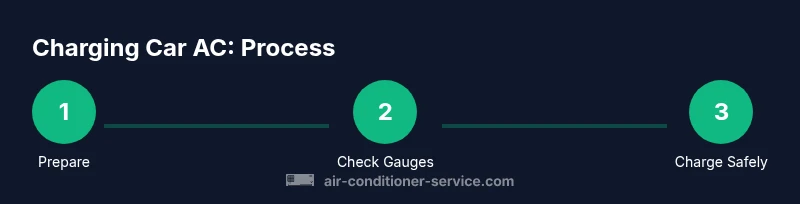
This section outlines the high-level steps you’ll perform, so you understand the flow before diving in. 1) confirm refrigerant type, 2) locate service ports and safety equipment, 3) perform leak checks, 4) connect the charging kit, 5) add refrigerant slowly while watching gauges, 6) verify evaporator temperature and comfort, 7) test drive and observe for improvement, 8) clean up and check for leaks again. You’ll find the detailed step-by-step instructions below in the dedicated steps section. Air Conditioner Service reminds you to stop if you notice any unusual sounds or smells during the process.
Common mistakes and troubleshooting tips
Common mistakes include charging a hot system, overcharging, and ignoring leaks. Always start with a cold engine and cool system; charging hot refrigerant is dangerous and can damage components. Do not rely on “one-size-fits-all” gauge values—use your vehicle’s service data. If cooling doesn’t improve after charging, it’s often due to leaks, a failing compressor, or a malfunctioning condenser fan. Air Conditioner Service recommends pausing the job and seeking professional help if you’re unsure, and keeping records of charge amounts and readings for future maintenance.
Tools & Materials
- Refrigerant canister labeled for vehicle (R-134a or R-1234yf)(Verify the exact refrigerant type from the vehicle label or owner manual)
- Gauge set with low-pressure and high-pressure ports(Includes hoses and adapters)
- Recharge hose with integral gauge (or a scale for weight measurement)(Calibrated for accurate charge amount)
- Leak-detection dye kit or UV flashlight(Helpful for locating leaks, optional if no dye is used)
- Personal protective equipment (PPE)(Safety goggles, chemical-resistant gloves, closed-toe shoes)
- Vacuum pump (optional)(Use if you suspect moisture or you need to evacuate the system)
- Thermometer or inlet air temp sensor(Helps verify cooling performance)
Steps
Estimated time: 60-90 minutes
- 1
Prepare and safety-check
Park on a level surface and turn off the engine. Put on PPE, and verify you have the correct refrigerant type. Ensure the A/C is off and the area is well-ventilated before you connect gauges.
Tip: Double-check labels on the refrigerant can and vehicle; wrong refrigerant leads to poor cooling and possible damage. - 2
Identify refrigerant type and service ports
Locate the service ports on the low-pressure and high-pressure sides. Confirm the refrigerant type from the vehicle’s service label under the hood. If unsure, consult the owner manual or a service bulletin.
Tip: Use the correct port adapters to avoid leaks and cross-threading. - 3
Perform a basic leak check
Inspect hoses and fittings for oil residue or dye marks. If you detect leaks, do not proceed with charging until they are repaired. A dye test provides a clear path to leaks that are not visible to the naked eye.
Tip: If a leak is detected, prioritize repair rather than charging to avoid repeated recharge cycles. - 4
Attach the charging equipment
Attach the recharge hose to the low-pressure port and connect the gauge to the canister. Ensure all connections are tight and upright to prevent spills. Start the vehicle with the A/C set to MAX and the engine at idle as you monitor readings.
Tip: Keep hands away from the belt-driven components and ensure hoses are not kinked. - 5
Add refrigerant gradually
Open the can valve in short bursts while watching the low-pressure gauge. Stop periodically to allow the system to settle and read the gauges. Do not exceed the recommended charge amount and never force refrigerant in if the system pressure is already high.
Tip: Give the system 30–60 seconds between bursts to avoid overcharging. - 6
Check cooling performance
Switch to MAX cooling and observe evaporator temperatures and air outlet temperature. If the air remains warm or the compressor cycles irregularly, stop and re-check for leaks or component faults. Safety first: if the system is hard to engage, seek professional help.
Tip: A simple test drive after stabilization can confirm real-world performance. - 7
Finalize and monitor
Remove charging equipment, re-check all connections for tightness, and document the amount charged. Run the system for a few more minutes to ensure steady cooling, then turn off and store equipment properly.
Tip: Keep a log of charge amount and high/low pressure readings for future maintenance. - 8
Post-charge checks and cleanup
Check for any lingering leaks and inspect the battery and engine area for refrigerant residue. If you’re uncertain about the results, consult a professional for a final check.
Tip: Dispose of empty refrigerant cans according to local regulations.
Common Questions
Is it safe for a DIYer to charge a car's AC?
DIY charging can be safe with proper training, PPE, and adherence to local regulations. If you suspect a leak or the system won’t hold refrigerant, stop and consult a professional.
DIY charging is possible if you take safety seriously and follow the steps carefully. If you’re unsure, seek professional help.
Can I charge without fixing leaks?
No. Charging a system that leaks will only provide a temporary cooling improvement and refrigerant could escape, harming the environment and your vehicle’s components.
Leaking systems should be repaired before charging to avoid wasting refrigerant.
Do refrigerants vary by vehicle?
Yes. Different vehicles use different refrigerants (e.g., R-134a vs. R-1234yf). Always verify the type from the service label under the hood or the owner’s manual.
Always check your vehicle’s refrigerant type before charging.
Should I evacuate the system before charging?
Evacuating removes moisture and air from the system and is recommended when replacing components or if the system has moisture contamination. If not, some DIYers proceed with charging after leak testing.
Evacuation is best practice when moisture is suspected, but not always required for a simple recharge.
What are signs of overcharging?
Signs include a hissing sound, poor cooling, higher pressures than normal, and potential compressor noise. Stop charging if you observe these symptoms and re-check the system.
Overcharging can stress the compressor; stop and reassess if symptoms appear.
How long does it take to recharge a car AC?
Recharge time varies based on system access, leak status, and whether evacuation is performed. Plan for a session that could last at least an hour and adjust based on readings.
It varies; expect roughly an hour, depending on access and leak checks.
Watch Video
The Essentials
- Verify refrigerant type before charging to avoid damage.
- Leak testing is essential; charging without leak repair is counterproductive.
- Monitor pressures and temperatures during charging to prevent overcharging.
- Safety gear and proper ventilation are non-negotiable.
- Document charge amount and system readings for future maintenance.