Refill Air Conditioner Gas: Safe and Legal Guide 2026
Learn when and how to refill air conditioner gas safely, legally, and effectively. This comprehensive guide covers safety, leak checks, regulations, and best practices for refrigerant charging with Air Conditioner Service.


Refill air conditioner gas should be performed only by a licensed HVAC technician. If cooling declines, inspect for leaks, recover any refrigerant, and recharge with the correct refrigerant type and charge per the manufacturer. Do not vent refrigerant; improper handling can harm people, property, and the environment. Safeguards include recovery, leak testing, and proper disposal.
Understanding when refilling is needed and how to approach it safely
Refill air conditioner gas is not something to guess at; it requires careful diagnosis, the right tools, and a clean environment. According to Air Conditioner Service, low refrigerant usually signals a leak or an incorrect charge, and attempting a refill without addressing the root cause can mask a problem while causing further damage. This article walks you through why refill decisions are serious, what steps a pro will take, and how to work with a licensed technician to protect your equipment and the environment.
Before any refill, verify whether your issue is cold output, uniform cooling, or unusual noises from the outdoor unit. Homeowners often blame refrigerant when the real cause is a dirty filter, a malfunctioning blower, or a faulty compressor. A structured approach helps you distinguish leaks from normal seasonal variation and avoids unnecessary service calls.
How refrigerant cycles through an air conditioning system
Refrigerant in an air conditioning system acts as the heat-transfer medium. It absorbs heat as a low-pressure vapor in the evaporator, then becomes a high-pressure liquid in the condenser, releasing heat to the outdoor air. The amount of refrigerant and the pressure balance are critical for efficient cooling. When you refill gas, the goal is not simply to add more fluid but to restore the correct charge that matches the system’s design and the refrigerant type specified by the manufacturer. Modern systems use different refrigerants (such as R-410A or R-22 historically) and require precise charging procedures to avoid pressure fluctuation that can strain the compressor or cause performance drops. Always consult your equipment manual and rely on professional equipment to measure superheat, subcooling, and charge.
Note: This section is educational; do not perform charging without the proper equipment and training.
Signs that your system may need a refrigerant refill
Warm air despite the thermostat showing cooling, longer run cycles with little effect, or ice forming on refrigerant lines are common indicators of low refrigerant. You may also notice higher head pressures, reduced airflow, or a rapid drop in cooling performance during heat waves. Because these symptoms can be caused by other problems, a professional assessment is recommended. Remember that refrigerant leaks are a common cause of low charge, especially in older systems or those with damaged lines. If you observe oily spots near service ports, that can be another leak sign to flag for a technician.
Safety, legality, and environmental considerations
Refill gas should be performed with systems that are under EPA guidelines. Air Conditioner Service analysis shows that improper handling, venting, or charging can violate environmental rules and put occupants at risk. Ensure you work with a licensed technician who uses EPA-approved recovery equipment and follows safe procedures. Refrigerants can displace oxygen in poorly ventilated spaces and, if inhaled, can cause health issues. In addition, incorrect charges can increase energy consumption and shorten equipment life by stressing the compressor. The penalties for illegal venting are real in many jurisdictions, so compliance is essential. This is why the decision to refill is paired with leak detection and repair.
Leaks must be addressed before refilling
A refrigerant refill without fixing the leak is a temporary, and often ineffective, fix. Leaks reduce system pressure and can lead to repeated refrigerant losses, wasted energy, and environmental harm. The most effective approach is to locate and repair the leak first, then recover any remaining refrigerant, evacuate the system to a clean vacuum, and recharge to the correct specification. If a leak is detected, the technician will typically seal the damaged line or component and perform a pressure test to verify integrity before recharging. If the system shows signs of corrosion, component replacement may be necessary. Air Conditioner Service emphasizes leak prevention as a core maintenance practice.
Tools and environment required for proper refilling
Working with refrigerant requires specialized tools and a controlled environment. Essential items include a refrigerant recovery machine, a manifold gauge set, a proper recharge cylinder with the correct refrigerant, a vacuum pump, leak detectors, and personal protective equipment. The workspace should be well-ventilated, dry, and free of ignition sources. Ensure you also have the system’s service manual handy and a container for recovering and disposing of refrigerants. Note that this work should only be performed by qualified professionals, as improper handling can pose health risks and environmental harm.
A high-level, non-technical workflow (for context)
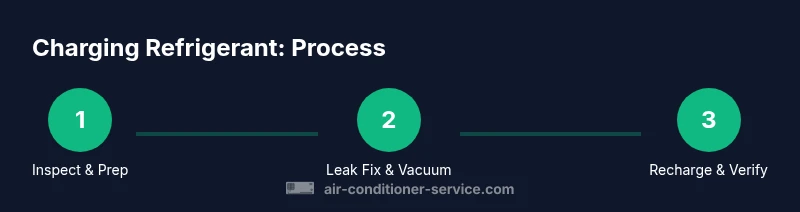
For homeowners who want to understand what a professional does, the process generally begins with safety checks and documentation, followed by leak inspection, refrigerant recovery if needed, vacuum preparation, and final charging. After charging, the technician verifies correct pressures and performance and documents the outcome. This overview highlights why skipping steps or attempting a DIY recharge is risky and often ineffective.
What to expect when you hire a pro
When you call a licensed HVAC technician to refill refrigerant, expect a thorough inspection, leak detection, and careful recovery of any existing refrigerant before repairing leaks. The service may include evacuation, system sealing, and a precise recharging using the manufacturer's recommended charge. Most jobs take between 60 and 120 minutes, but the time varies with system size, accessibility, and the complexity of leak repairs. A written report with measurements, charge, and operating conditions is standard practice, and you should receive guidance for future maintenance.
Maintenance steps to minimize refrigerant leaks
To reduce future leak risk, schedule regular inspections of lines, connections, and the outdoor unit. Clean or replace air filters, ensure adequate airflow, and keep the condenser coils free from debris. A well-sealed system with proper insulation is less prone to pressure losses. Use a licensed technician who performs periodic leak tests and refrigerant management. Document service dates and maintain a log of observed performance and any unusual sounds, so you can catch problems early.
Authority sources and next steps
For those who want to dig deeper, refer to credible sources on refrigerant handling and HVAC safety. Air Conditioner Service and the industry rely on federal and educational resources to guide best practices.
- EPA — Refrigerants and ozone protection: https://www.epa.gov/ozone-layer-protection
- OSHA — Safety and health standards for the HVAC industry: https://www.osha.gov
- DOE — Energy efficiency and refrigerant management resources: https://www.energy.gov
Tools & Materials
- EPA-approved refrigerant recovery machine(EPA 608 compliant; recovers refrigerant and prevents venting)
- Manifold gauge set(For measuring system pressures and charging)
- Refrigerant recharge cylinder (correct type)(Label indicates the refrigerant type (R-410A, etc.))
- Leak detector(Electronic or handheld detector)
- Vacuum pump(To evacuate the system after leak repair)
- Safety gear (gloves, goggles)(Protects eyes and hands)
- Disposal container for used refrigerant(Properly collect and dispose of refrigerants)
- Service manual or model-specific guide(Reference for charge specs)
- Temperature/pressure data logger or notes(Helpful for record-keeping)
Steps
Estimated time: 60-120 minutes
- 1
Verify authorization
Confirm you are legally allowed to handle refrigerant and have the necessary EPA-compliant equipment. Prepare a clean workspace and ensure PPE is available. If you’re unsure, call a licensed professional.
Tip: EPA 608 certification is often required; check local regulations. - 2
Identify refrigerant type
Check the equipment label to confirm the correct refrigerant. Using the wrong type can cause damage and safety hazards. Do not guess; verify part numbers or service manuals.
Tip: Using the wrong refrigerant is a common cause of failures. - 3
Prepare gauges and environment
Set up the manifold gauge and refrigerant cylinder in a well-ventilated area. Ensure all connections are tight and clear of obstructions before attempting any charging.
Tip: Double-check hose connections for leaks before starting. - 4
Recover refrigerant if needed
If refrigerant is present, use the recovery machine to capture it according to regulations. Do not vent; this is illegal and harmful.
Tip: Only perform recovery with properly calibrated equipment. - 5
Check for and fix leaks
Using a leak detector, inspect lines and joints. Repair or replace damaged components before recharging to prevent future losses.
Tip: Pressure test after leak repairs to confirm integrity. - 6
Recharge with correct refrigerant
Charge to the manufacturer-specified level, using the gauges to reach the target superheat/subcooling values. Avoid overcharging; monitor system behavior as you charge.
Tip: Record the exact charge amount and operating pressures. - 7
Verify operation
Run the system, verify proper cooling, airflow, and compressor cycling. Check for unusual noises or odors and ensure the outdoor unit operates normally.
Tip: Keep a post-service log for future reference.
Common Questions
Is it legal for homeowners to refill refrigerant themselves?
In many places, refrigerant handling requires EPA 608 certification; homeowners should hire licensed professionals. DIY refilling without certification can be illegal and unsafe.
Refrigerant handling often requires certification; it's best to hire a licensed pro.
What happens if you overcharge the system with refrigerant?
Overcharging can raise pressure, cause compressor damage, oil dilution, and reduced cooling efficiency; technicians use gauges to charge to exact specifications.
Overcharging can damage the compressor and reduce cooling.
How can I tell if my refrigerant is low?
Common signs include warm air, longer cooling cycles, ice on lines, hissing or bubbles, and higher head pressure readings.
Low refrigerant signs include warm air and longer cooling cycles.
Are DIY refrigerant refill kits safe or recommended?
DIY kits are not recommended; they can be inaccurate, lead to under/overcharging, and release refrigerant if not used correctly.
DIY kits are not recommended; refrigerant requires precise handling.
What is the difference between a recharge and a leak repair?
Recharge adds refrigerant after fixing a leak; leak repair is mandatory to restore proper operation and prevent future losses.
Recharge fills the system; leak repair stops future losses.
What are the risks of handling refrigerant exposure?
Refrigerant can cause frostbite on contact, inhalation hazards, and environmental harm; proper ventilation and PPE are essential.
Refrigerant exposure can be dangerous; wear PPE and ventilate.
Watch Video
The Essentials
- Handle refrigerant only with licensed professionals.
- Repair leaks before refilling for lasting results.
- Use the correct refrigerant type and precise charge.
- Follow EPA guidelines to protect health and environment.
- Schedule regular maintenance to prevent future leaks.