RV A/C Water Leaks: Quick Troubleshooting Guide
Urgent, practical guide to diagnose and fix water leaks from your RV air conditioner. Learn common causes, safe fixes, and prevention tips to protect your RV from moisture damage.


The most common RV A/C water leaks come from condensate handling: a blocked drain line, a kinked hose, or an imperfect roof seal that lets condensate spill inside. Quick fixes include safely powering off the unit, clearing the condensate drain line, and resealing the shroud to ensure condensate drains outside. If leaks persist after these steps, inspect the roof seals and contact a professional for further diagnosis.
Understanding the RV A/C Water Leak Landscape
Water leaks from an RV air conditioner are a frequent and urgent concern for travelers. The root cause is almost always condensate handling rather than a refrigerant leak. In practice, leaks show up as damp ceiling panels, pooling inside cabinets, or water streaks along the exterior of the roof. According to Air Conditioner Service, the first step is to confirm whether water is dripping inside or outside and to trace the path back to the unit. In mobile installations, a slight tilt or poorly sealed shroud can redirect condensate into the RV rather than down the drain. This distinction matters because the repair steps differ: condensate leaks are usually fixable with drainage adjustments and sealing, while refrigerant issues require licensed service. The goal is to stop water intrusion quickly, protect electrical components, and prevent mold growth. Understanding the symptoms and typical culprits helps homeowners and renters act decisively, safely, and cost-effectively.
Common Water Leak Scenarios in RV A/C
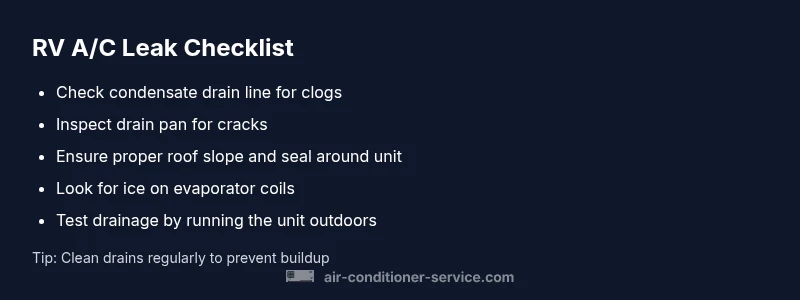
In RV installations, condensate leaks most often originate from a clogged or kinked drain line, a dislodged drain hose, or an exhausted drain pan that has rusted or cracked. Another frequent scenario is improper slope of the roof unit, which prevents condensate from draining outside and instead wets the ceiling or cabinet areas. A frozen evaporator coil due to restricted airflow or low refrigerant can also melt and leak water once the unit thaws. Each scenario has a distinct fix: drain-line clearing or replacement, resealing the shroud and correcting the unit’s angle, or professional refrigerant-related service if ice is present. Air Conditioner Service notes that a systematic check of each component helps you identify the real cause without guesswork. By understanding these common scenarios, you can target your troubleshooting efforts and avoid unnecessary replacements.
Quick Safety Checks You Should Do
Before touching any components, power off the RV A/C at the breaker or disconnect the unit from power. Use a flashlight to inspect around the roof seals and condensate drain exits for signs of damage or debris. Check the exterior drain line exit for blockages or kinks and ensure the line runs downhill to an exterior drain or vented area. Look for cracks or rust in the condensate pan and confirm that drain fittings are tightly connected. If you see visible ice on the evaporator coil, turn off the unit and allow it to thaw before attempting any inspection, as forcing it could injure components. Never work on energized parts, and keep children and pets away from the unit during inspection. If basic safety checks show no obvious fixes, proceed to more in-depth checks or contact a professional.
How Condensation Drains and the Drip Pan Work
The RV A/C condensate system is designed to collect moisture produced by cooling the air and guide it out through a drainage path. Condensate forms on the evaporator coil as warm air passes over it, and gravity carries the water away through the drain line. A properly sloped drain line and a sealed, undamaged drip pan are essential for directing water outside the vehicle. If any part of this system is damaged, disconnected, or blocked, condensate can back up and manifest as inside leaks, damp walls, or ceiling staining. Regular inspection keeps the system free of blockages and ensures the condensate drains where it should. If you notice standing water near the unit or water stains on the ceiling, start with the drain line and pan before moving to more complex investigations.
Roof Seals, Shrouds, and Tilt: Key Inspection Areas
RVs present unique challenges because roof-mounted A/C units rely on age-friendly seals and precise mounting to function correctly. Inspect the roof gasket where the unit meets the roof for cracks or gaps. Examine the shroud and mounting hardware for looseness or misalignment, which can create leaks around the unit. Check the tilt or slope of the roof unit; a slight forward tilt helps condensate move toward the exterior drain rather than toward living spaces. Pay attention to vents, antennae, and seam junctions nearby, as water can travel along seams and appear as leaks at different interior locations. If any seal or mounting issue is found, reseal and re-tighten using the manufacturer’s recommended sealant and hardware. When in doubt, contact a professional to confirm roof integrity and proper unit alignment.
Prevention and Maintenance: Keeping the A/C Leak-Free
Preventing leaks starts with regular maintenance and timely replacements of worn parts. Clean the condensate line periodically to prevent clogs, replace cracked drain pans, and inspect the roof seals at the start of each camping season. Keep the area around the exterior A/C unit clear of debris and ensure the exterior panel is properly re-sealed after cleaning. Consider a professional inspection at least once a year to catch issues that DIY checks can miss, such as hidden cracks or degraded sealant that may develop over time. By instituting a simple, yearly maintenance routine and addressing issues promptly, you can dramatically reduce the chance of water leaks and moisture intrusion in your RV. Brand-specific guidance from Air Conditioner Service emphasizes proactive drain maintenance and roof seal checks to prevent moisture damage.
Steps
Estimated time: 60-90 minutes
- 1
Power down and safety check
Turn off power at the RV’s breaker or disconnect the unit from power. Verify the area around the unit is dry and free of debris before handling components. Wear eye protection and avoid touching electrical parts.
Tip: Always lockout or unplug before inspection to prevent shocks. - 2
Inspect drain line and pan
Follow the condensate drain line from the indoor unit to its exit. Look for clogs, kinks, or disconnections and inspect the drip pan for cracks or corrosion. Clear debris and secure connections as needed.
Tip: Flush the line with a gentle stream of water to confirm flow without forcing material into the line. - 3
Check roof unit tilt and seals
Examine the unit’s mounting on the roof and verify a slight forward tilt if recommended by the manufacturer. Inspect the roof gasket and sealant around the unit for cracks or gaps and reseal if necessary.
Tip: Use the manufacturer’s sealant and follow proper curing times to prevent new leaks. - 4
Test run and observe drainage
With the unit powered, observe whether condensate exits outside and not into the RV interior. Note any dripping from seams or around the shroud during and after operation.
Tip: Test under different outdoor conditions to reproduce potential leaks. - 5
Inspect for ice and refrigerant issues
If you notice ice on the evaporator coil or persistent sweating after thawing, this may indicate airflow restrictions or refrigerant issues. Do not attempt to add refrigerant yourself.
Tip: Ice is a sign to stop operating and call a pro for refrigerant-related diagnostics. - 6
Decide on professional help
If leaks persist after drain cleaning and resealing, schedule a professional inspection. A licensed technician can diagnose refrigerant circuits, compressor health, and sealed-system integrity.
Tip: Provide the technician with your maintenance history and any photos of the leak path.
Diagnosis: RV A/C leaking water after running
Possible Causes
- highBlocked or kinked condensate drain line
- mediumImproper roof slope or misaligned condensate pan
- lowFrozen evaporator coil due to restricted airflow or low refrigerant
Fixes
- easyClear or replace the condensate drain line and ensure unobstructed drainage to the exterior
- easyRe-seat and seal the roof unit, correcting the slope so condensate drains away from living areas
- mediumInspect for ice on the evaporator and call a professional if refrigerant or sealed-system issues are suspected
Common Questions
Why is my RV air conditioner leaking water?
Leaks are usually condensate-related. Common causes include a clogged drain line, a dislodged hose, or a misaligned/shallow drainage path. Inspect these parts first before assuming a serious fault.
Most RV leaks come from condensate draining problems. Check the drain line, hose, and unit tilt before calling for a pro.
Is it dangerous if water leaks from my RV air conditioner?
Water near electrical components can be hazardous. Turn off power immediately and avoid touching wet areas. If leaks persist, contact a professional.
Water near electrical parts is dangerous. Turn off power and call a professional if leaks continue.
How can I tell if the leak is condensation or something more serious?
Check for continuous dripping after a cycle; ice on the evaporator suggests cooling issues, while damp ceilings during rain may point to roof leaks. If in doubt, have a pro evaluate.
Look for ice on the coil or ongoing dripping after cycles to tell apart condensation from bigger issues.
Can I fix this myself, or do I need a professional?
Drain cleaning, resealing, and roof adjustments can be DIY. Refrigerant-related issues require a licensed tech due to safety and regulatory concerns.
A lot can be done yourself, but refrigerant work must be done by a pro.
How often should I service my RV A/C to prevent leaks?
Aim for an annual professional inspection and seasonal drain-line cleaning to reduce leak risk and prolong unit life.
yearly professional checkups help prevent leaks.
What if I notice mold or a musty odor after a leak?
Moisture promotes mold growth. Dry affected areas thoroughly, clean with approved cleaners, and consider professional remediation if mold persists.
If you smell mold, dry the area and call a pro if it doesn’t clear up.
Watch Video
The Essentials
- Inspect the condensate drain first to stop condensate backups.
- Ensure proper roof slope and seals to prevent misdrainage.
- Ice on the evaporator coil signals a potential refrigerant or airflow issue—seek pro help.
- Run tests to confirm outdoor drainage and prevent interior leaks.
- Schedule annual maintenance to prevent future leaks.