What Causes Air Conditioner to Leak Water: Quick Troubleshooting Guide
Learn the common causes of AC water leaks and follow practical steps to stop condensate leaks, protect your home, and prevent mold. Clear drain lines, replace filters, and thaw coils safely.


Water leaks are most often caused by a blocked condensate drain line, a dirty air filter that makes the evaporator coil freeze, or a failing condensate pan. Start by flushing the drain line, replacing the filter, and thawing the coil if needed. If the leak persists, contact a licensed HVAC technician.
What causes air conditioner to leak water
The question what causes air conditioner to leak water is a common concern for homeowners. In most homes, leaks stem from moisture management and drainage rather than refrigerant loss. According to Air Conditioner Service, the most frequent culprits are a blocked condensate drain line, a dirty air filter that triggers coil freezing, and problems with the condensate pan or pump. Understanding these parts helps you identify where water is coming from and what to check first. By tracing the path of condensate from the evaporator coil to the floor drain, you can spot whether a blockage, a frozen coil, or a pan overflow is the source. Early action is important to prevent mold, staining, and humidity buildup. The good news is that many leaks are addressable with routine maintenance and careful inspection. If you manage the simple checks promptly, you can prevent bigger damage and prolong the life of your system.
How condensate drainage works and why it fails
Condensate drainage is the tiny but critical path that moves water away from the evaporator coil. When this line becomes clogged, or when the drain pan overflows, water can back up and spill into living spaces. A dirty filter reduces airflow, which can cause the evaporator coil to frost over and later drip water as it melts. Improper installation or a damaged drain line can also create drainage problems. Regular inspection of the condensate drain, pan, and surrounding area helps you identify a blockage or leakage before it turns into a bigger water problem. Keeping a clean filter and clear drainage path is a simple, proactive habit that pays off in reduced humidity and fewer mold concerns.
Common culprits and how to spot them
The drain line is the primary suspect when water appears where it shouldn’t. Look for a damp ceiling, wall, or a pool of water beneath the indoor unit. A dirty or clogged filter is another frequent cause; if you notice reduced airflow or a drop in cooling performance, check and replace the filter. A frozen evaporator coil is a telltale sign of airflow restriction or refrigerant-related issues; you may see ice on the coil and increased condensation when it melts. The condensate pan or pump can fail or overflow, especially in homes with an aging unit or a system that sits too low for proper drainage. Finally, installation errors, such as an improper slope of the drain line, can invite constant leaks. Each cause has a distinct symptom pattern that helps narrow down the fix.
Safe checks you can perform today
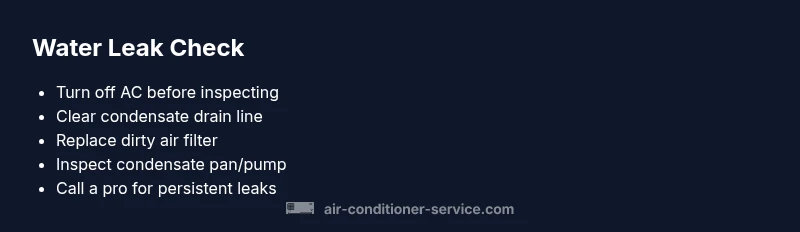
Begin with the simplest, safest checks. Power off the unit before touching any components. Locate the condensate drain line and inspect for visible blockages or kinks. If you can access it safely, gently clear the line using a flexible brush or a wet/dry vacuum to pull the blockage out. Check the air filter; if it’s dirty or clogged, replace it with a fresh one. Inspect the evaporator coil area for frost or ice; if you see ice, turn the unit off and allow it to thaw while ensuring adequate airflow around the outdoor unit. Finally, check the condensate pan for cracks and the pump for proper operation. If any step feels risky, or you’re unsure, stop and call a professional. Safety first ensures you don’t create new problems while chasing leaks.
Diagnosing the drain line and coil without tools
You don’t need fancy equipment to begin diagnosing leaks. Start by observing where water appears and tracing it back toward the drain. If water is dripping near the indoor unit and you can access the drain line, attempt a safe flush with water or use a vacuum to clear the line. If you see ice on the evaporator coil, this indicates airflow restrictions or a refrigerant concern that a technician should verify. A leaking or overflowing condensate pan is often visible under the unit; check for cracks or discoloration. These checks establish a basic map of where the leak is originating and whether it’s a simple clog or a more complex problem requiring professional tools and expertise.
Step-by-step maintenance to prevent future leaks
Establish a routine to prevent leaks before they start. Schedule a monthly filter check and replacement as needed. Keep the condensate drain line clear by flushing it with a few gallons of water and using a vacuum to remove debris. Periodically inspect the condensate pan and pump for signs of wear or damage, especially in areas with hard water or mineral buildup. Ensure the drain line has a proper slope to the outdoors or to the designated drain. Clear vegetation or obstacles around the outdoor unit to maintain good airflow. Finally, have your system inspected by a pro at least once a year to catch issues that aren’t obvious to a DIY inspection.
When to call a professional and what to expect
If you have performed the basic checks and the leak persists, it’s time to call a licensed HVAC technician. Persistent leaks could indicate a clogged drain, a faulty condensate pump, a frozen coil, or refrigerant-related problems that require specialized equipment. A professional will perform a thorough diagnostic, check refrigerant levels, inspect electrical components, and assess installation integrity. They can safely thaw a frozen coil, repair damaged components, and verify proper drainage. Regular maintenance visits by a skilled technician help prevent leaks and extend system life.
Final thoughts and proactive prevention
Regular maintenance is the best defense against water leaks. The steps above, when done consistently, reduce moisture buildup and mold risk while preserving cooling efficiency. The Air Conditioner Service team emphasizes proactive checks and professional inspections as your best protection against expensive water damage. By staying on top of drain line cleanliness, filter upkeep, and proper installation, you’ll curb leaks and keep your space comfortable.
Steps
Estimated time: 30-60 minutes
- 1
Power down and locate the drainage path
Shut off the thermostat and indoor blower to prevent shocks or injury. Find the condensate drain line and the overflow pan so you know where water is expected to travel.
Tip: Always test for residual power at the switch or breaker before touching wires. - 2
Clear the condensate drain line
If you can safely access the line, use a flexible brush or a wet/dry vacuum to remove clogs. Flush with clean water to ensure the line is clear.
Tip: Choose a safe flush method recommended by your unit’s manual. - 3
Check and replace the air filter
Remove the filter, inspect for dirt and debris, and replace with a correctly rated filter. Poor airflow is a common source of coil ice and leaks.
Tip: Keep spare filters on hand for quick changes. - 4
Inspect the evaporator coil for ice
Look for frost or ice buildup on the coil. If present, turn off the unit and allow it to thaw while ensuring adequate airflow.
Tip: Once thawed, recheck filter and airflow to prevent recurrence. - 5
Check the condensate pan and pump
Inspect for cracks, rust, or clogs. Ensure the pump engages and the discharge path is clear.
Tip: A failed pump can quickly lead to standing water and mold. - 6
Test operation and monitor
Turn the system back on and watch for leaks during a normal cycle. Confirm water is draining through the intended path.
Tip: If leaks appear again, document the symptoms for the technician.
Diagnosis: Water dripping or pooling around the indoor unit or on the floor
Possible Causes
- highBlocked condensate drain line
- mediumDirty air filter causing evaporator coil to freeze
- mediumOverflowing condensate pan or failed condensate pump
- lowImproper installation leading to drainage issues
Fixes
- easyUnclog or flush condensate drain line using a wet/dry vacuum or approved chemical line flush
- easyReplace or clean the air filter to restore proper airflow
- easyThaw the evaporator coil if ice is present and verify airflow
- mediumInspect condensate pan and pump for damage; replace if needed
- hardConsult a licensed HVAC technician for installation or refrigerant issues
Common Questions
What is the most common reason an air conditioner leaks water?
The most common reason is a blocked condensate drain line. A clogged line can cause water to back up and overflow into living spaces. A dirty filter that reduces airflow can also lead to coil frost and leakage.
The most common reason is a blocked condensate drain line. It can cause water to back up, and a dirty filter can cause coil frost and leakage.
Can a dirty filter cause water leaks?
Yes. A dirty filter restricts airflow, which can cause the evaporator coil to freeze. When the ice melts, it can produce excess condensation and leaks.
Yes. A dirty filter can cause the coil to freeze, and when it melts, you may see leaks.
What should I do first if I see water under my AC?
First, turn off the unit and check the condensate drain line and filter. Clear any blockages and replace the filter if dirty. If water continues, call a pro.
First, turn off the unit and check the drain line and filter. If leaks continue, contact a professional.
Is a leaking AC always a refrigerant problem?
Not necessarily. Most leaks come from drainage or ice-related issues. Refrigerant leaks require professional testing and are not safe to handle yourself.
Not always. Leaks are usually about drainage or ice, but refrigerant issues need a pro to test safely.
When is it safe to fix it myself?
Safe DIY steps are limited to flushing the drain, replacing a dirty filter, and thawing a coil if needed. Others, like refrigerant or pan replacement, should be handled by a professional.
You can do drain flushing, filter replacement, and thawing yourself. For refrigerant or pan issues, call a professional.
The Essentials
- Inspect the condensate drain and filter first
- Ice on the coil usually means airflow or refrigerant issues
- Clear drainage paths before testing refrigerant levels
- If leaks persist, call a licensed professional
- Regular maintenance prevents most leaks