Why Do Air Conditioners Leak? A Practical Troubleshooting Guide
Discover practical, step-by-step ways to diagnose and fix AC leaks. Learn common causes, safety tips, and when to call a pro to prevent water damage and mold.


According to Air Conditioner Service, the most common reason an air conditioner leaks is condensate water escaping through a clogged drain line or a full drip pan. A quick fix is to power down the unit, clear the blockage from the drain line, and remove standing water in the pan. This quick answer sets you up for a safe, structured diagnostic flow.
What causes AC leaks
Air conditioners can leak for several reasons, most related to the condensate system rather than refrigerant loss. The leading culprits are a clogged condensate drain line, a full or damaged drip pan, and improper installation that prevents proper drainage. High humidity, mineral buildup, and algae growth can quickly block the drain, causing water to back up and spill into living spaces. Other contributing factors include a dirty air filter that freezes the evaporator coil and then melts, producing excess condensate. Air Conditioner Service notes that these issues are common across many home units and are often resolved with simple maintenance. Recognizing the signs early helps prevent water damage to floors, ceilings, and insulation.
Common leak sources and signs
Most leaks originate in the condensate drainage path: a clogged drain line, a blocked or damaged condensate pan, or a malfunctioning condensate pump. Evaporator coil sweating from high humidity or a frozen coil that melts can also create unexpected moisture. Signs include water pooling near the indoor unit, damp drywall, a musty smell, or water marks along the ceiling. To verify if the source is the condensate line, check for a continuous slow drip when the unit runs, and look for visible corrosion on the pan. Air Conditioner Service analysis shows that addressing the drain line resolves the vast majority of leaks without refrigerant service.
Immediate safety steps if you notice water
Turn off power to the air conditioner at the breaker to prevent electric shock and further damage. If you can safely reach the condensate tray, remove standing water with a towel or a shallow bucket. Do not use sharp tools to poke at pipes or electrical components. Keep children and pets away from the unit until you confirm the area is dry. If the leak continues after basic checks, or if you see refrigerant hissing or oil, call a licensed professional immediately. Safety first is essential, and a quick response can save costly damage.
How to inspect the drainage system safely
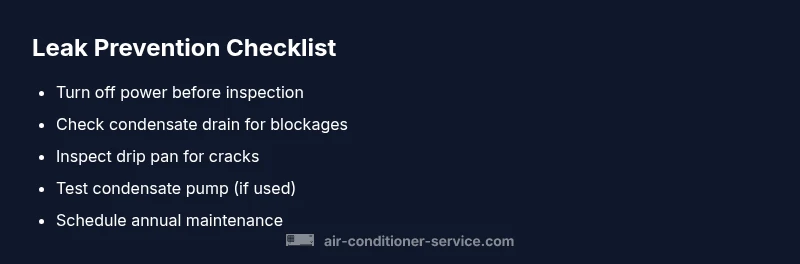
With the unit powered off, locate and inspect the condensate drain line and pan. Clear blockages from the drain line using a small flexible brush or a long flexible wand, and flush with warm water. Check the drain line’s trap and remove any debris. Inspect the drip pan for cracks or rust and replace if compromised. If your system uses a condensate pump, test it by pouring a small amount of water into the pan to see if it pumps out properly. Document any damage for service records.
Home remedies you can try (with limits)
Flush the condensate line with a mixture of warm water and mild dish soap, then rinse with clean water. A gentle application of vinegar can help slow algae growth, but avoid harsh chemicals near electrical components. Do not attempt to seal cracks in the drain pan yourself; structural damage requires replacement parts. After each fix, run the AC for 10-15 minutes to observe whether the leak returns. If water reappears, stop and contact a professional.
When to call a professional and maintenance tips
If you notice persistent leakage after performing safe at-home checks, it’s time to schedule service. A professional can inspect the condensate line, pan, pump, and evaporator coil for damage and confirm there’s no refrigerant issue. Regular maintenance—changing filters, keeping the condensate pan clean, and ensuring proper unit slope—reduces leak risk. The Air Conditioner Service team recommends annual inspections and immediate attention to leaks to prevent water damage and mold growth.
Steps
Estimated time: 45-60 minutes
- 1
Power down and assess safety
Switch off the thermostat and turn off the outdoor unit at the disconnect or breaker. Don’t touch electrical components. Use a flashlight to inspect the area without leaning into the unit. Keep children and pets away while you assess the setup.
Tip: If you smell burning plastic or see exposed wires, stop and call a pro immediately. - 2
Locate the condensate path
Find the condensate drain line and drip pan. Look for a visible clog or algae buildup near the opening of the drain. Note any signs of rust or cracks on the pan that could leak.
Tip: Take a photo of the setup before you start to aid future maintenance. - 3
Clear the drain line
Carefully remove any visible debris from the drain line with a flexible brush. Use a wet/dry vacuum to suction out the line if accessible. Run warm water through the line to flush remaining blockage.
Tip: Never use force; gentle agitation avoids damaging the pipe. - 4
Inspect the drip pan
Check the pan for cracks, rust, or improper alignment. If you see damage, replace the pan or seal cracks with manufacturer-approved materials. Ensure the pan sits level to promote drainage.
Tip: If you must replace the pan, keep a spare drain gasket handy for a quick reseal. - 5
Test the pump (if applicable)
If your system uses a condensate pump, pour water into the pan to trigger the pump. Listen for the pump engaging and observe whether water is expelled properly through the outlet line.
Tip: If the pump doesn’t run, check the float switch and electrical connections before replacing. - 6
Restore power and observe
Reconnect power and run a cooling cycle, checking for any renewed leaks. Monitor for 15-30 minutes and note whether the drip line remains clear. If leaks persist, schedule professional service.
Tip: Keep a log of symptoms, times, and any changes to help the technician diagnose faster.
Diagnosis: Water pooling around the indoor air handler or visible puddles near the drip pan area
Possible Causes
- highClogged condensate drain line
- mediumDamaged or cracked condensate pan
- lowImproper drainage slope or installation
Fixes
- easyUnclog and flush the condensate drain line; use a wet/dry vacuum or flexible auger to remove debris
- mediumInspect and replace a damaged drip pan; repair or replace as needed
- hardEnsure proper drainage slope and secure piping; if installation is incorrect, call a pro for re-slope and re-seal
Common Questions
What is the most common cause of an AC leak?
The most common cause is a clogged condensate drain line or a full drip pan. Leaks from refrigerant are rare and require licensed service. Start with the condensate path inspection and cleaning.
The most common cause is a clogged condensate drain line or a full drip pan; refrigerant leaks are rare and should be handled by a professional.
Can I fix a leaking condensate drain line myself?
You can clear minor blockages with a flexible brush and flush with warm water. Avoid aggressive solvents or tools near electrical components. If the drain line keeps clogging, call a professional.
You can clear minor clogs with a flexible brush and warm water, but if it keeps clogging, call a pro.
Why does my AC leak water inside but not outside?
Leaks inside usually point to a condensate drain issue or a blocked line in the indoor unit. Exterior leaks may indicate a drainage path problem or overflow from an outdoor coil pan. Check the indoor drain first and clear any obstructions.
Inside leaks usually mean the condensate drain is blocked; check and clear the indoor drain first.
How do I know if the condensate pump is failing?
If water backs up in the pan after the pump should have cleared it, or you hear the pump laboring or not activating, the pump or float switch may be failing. Test the pump manually and replace if necessary.
Watch for backups after the pump should run and listen for its operation when you test it.
Is a leaking AC dangerous?
Water leaks themselves pose slip and mold risks, and potential electrical hazards if wiring is exposed. Do not ignore persistent leaks; shut off power and call a pro if you suspect electrical activity.
Leaks can cause mold or electrical hazards, so don’t ignore them—shut off power and call a pro if in doubt.
How often should I schedule AC maintenance to prevent leaks?
Annual professional maintenance is recommended to keep condensate components clean and ensure proper drainage. Regular filter changes and duct cleanliness also help prevent moisture-related leaks.
Aim for yearly professional checks plus regular filter changes to prevent leaks.
Watch Video
The Essentials
- Identify the condensate issue early to prevent damage
- Clogged drain lines are the most common leak source
- Keep a maintenance schedule to reduce future leaks
- Call a professional if leaks persist or you see refrigerant signs