Why Do Air Conditioners Drip Water? Practical Troubleshooting Guide
Learn why air conditioners drip water, how to diagnose the cause, and safe fixes homeowners can perform. Step-by-step flow, maintenance tips, and professional guidance.


The most likely cause is a blocked condensate drain line or a dirty air filter causing excess moisture. Start by turning off the unit, check the condensate line for clogs, clear it, inspect the drain pan, and replace the air filter. If water continues to drip, call a licensed tech.
Why does water drip from an air conditioner? Causes explained and what it means for your home
If you’ve noticed water pooling around your indoor air handler or dripping from the outdoor unit, you’re not alone. The question often asked is why do air conditioners drip water, and the answer, according to Air Conditioner Service, points to moisture management rather than a refrigerant leak. In most homes, a dripping AC signals an issue with the drainage or airflow rather than a catastrophic failure. The good news is that many drips are solvable with a few safety-first checks and a quick maintenance routine. Core causes include a blocked condensate drain, a dirty air filter, or a cracked drain pan. Humidity levels and poor airflow can also increase drip rates. This Air Conditioner Service guide explains how to verify each cause and perform practical fixes safely. We’ll cover safety considerations and when it’s time to call a pro. Prompt attention helps prevent water damage and mold growth in humid spaces.
Check your condensate drainage system
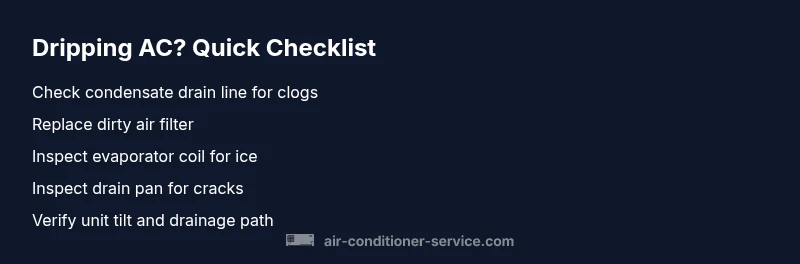
The condensate drainage system is the primary path water takes as it leaves the cooling coil. A clogged drain line, a blocked condensate trap, or a failed pump can back up water and spill into the tray or onto the floor. Start by locating the condensate drain line (usually a small PVC pipe). Look for standing water near the pan and a musty smell that suggests mold. If you see a clog, try flushing the line with warm water and a mild cleaner or using a wet-dry vacuum from the exterior vent to pull debris out. If your system uses a condensate pump, listen for the pump running and check for jammed impellers. After clearing, run the unit to test drainage. If you cannot clear the clog, or if the line fills again within hours, call Air Conditioner Service for a professional line-clean and system check.
Inspect the air filter and evaporator coil
A dirty air filter or a blocked evaporator coil reduces airflow across the coil, causing it to get too cold and occasionally freeze. When the frost melts, water may drip from the coil faster than the pan can handle. Check the air filter; if it’s noticeably dirty or discolored, replace it with a filter of the correct size and MERV rating. Also inspect the evaporator coil visually for ice buildup. If you see frost on the coil, turn the system off to thaw and call a pro if it recurs. Ensure return air pathways aren’t blocked by furniture or closed vents. Poor airflow also stresses the system and can increase wear. Regular filter changes, about every 1-3 months depending on usage, dramatically reduce drip risks. For best results, combine filter maintenance with a seasonal coil cleaning.
Determine if the issue is from ice or a pan crack
Ice on the evaporator coil is a common reason for temporary dripping: an iced coil will drip when it melts, sometimes creating a leak while the system tries to recover. If you suspect ice, turn the thermostat to 'Fan On' and set the unit to cooling, then switch it off and allow it to thaw completely. Inspect the drain pan: a cracked or rusted pan can leak water even when the line is clear. Look for discoloration, corrosion, or a visible crack near the edge. If the pan is damaged, replacement is often straightforward but may require removing housing panels. If you find evidence of refrigerant leaks, do not attempt DIY repairs; refrigerant work requires an EPA-certified technician. Document any symptoms to share with the service professional.
Installation tilt and drainage considerations
Improper installation can create drainage problems from day one. A unit that sits too level or too steep can cause water to pool or misroute along joints. Many wall-mounted and ceiling-intrusion units should have a slight forward tilt toward the condensate drain to encourage flow. Check the level with a carpenter’s level and adjust mounting brackets if possible. In windows or through-the-wall units, confirm the drain line exits above grade and doesn’t drain onto a balcony or into a wall cavity. If your installation was done by a contractor, you may want to verify the tilt and downstream drainage path during annual maintenance. Air Conditioner Service recommends addressing installation issues promptly to avoid repeated leaks.
Preventive maintenance to stop drips
Preventive maintenance is the best defense against drips. Schedule regular filter changes, coil cleaning, and drain-line inspections. Keep the area around the indoor unit clear of dust and obstructions and run a quick check after heavy rain or high humidity days. Consider installing a condensate overflow switch or a secondary drain line as a safety backup. Maintain a clean, accessible drain pan and check for signs of corrosion. Finally, keep your eye on subtle changes in drip rate; a sudden change can indicate a developing problem that’s easier to fix early.
Steps
Estimated time: 45-60 minutes
- 1
Power down and locate the condensate drain
Ensure safety by turning off power at the breaker and disconnecting the thermostat. Locate the condensate drain line and nearby drain pan. Confirm there is access to the line for inspection and cleaning.
Tip: Use a flashlight to trace the line and avoid damaging any insulation or wiring. - 2
Inspect the drain line for clogs
Examine the line for visible debris. If accessible, flush with warm water or a mild cleaner. A wet-dry vacuum can help pull obstructions from the line end.
Tip: Do not force material through a narrow line; back off if you feel resistance. - 3
Check and replace the air filter
Remove the existing filter and inspect for dirt and particle buildup. Replace with a compatible filter of the correct size and MERV rating. Reinstall securely.
Tip: Mark the replacement date on the filter so you know when to change it next. - 4
Look for ice on the evaporator coil
Inspect the coil area for frost or ice. If ice is present, allow the system to thaw completely before restarting. Investigate potential airflow restrictions or refrigerant issues.
Tip: Do not run the unit while iced; running can damage components. - 5
Inspect the drain pan and connections
Check the pan for cracks or corrosion and confirm drain connections are secure. If you see damage, plan a pan replacement and reseal joints.
Tip: Take a photo of the pan area to show a technician if needed. - 6
Test the system and plan next steps
Restore power and run a cooling cycle. Monitor for continued dripping. If drips recur, schedule professional service for further diagnosis.
Tip: Document symptoms and times to help the technician pinpoint the issue.
Diagnosis: Water dripping from indoor unit or drain line
Possible Causes
- highBlocked condensate drain line
- highDirty air filter causing poor airflow
- mediumIce on evaporator coil from restricted airflow or refrigerant issues
- lowCracked or overflowing drain pan
- lowImproper unit tilt affecting drainage
Fixes
- easyClear the condensate drain line and ensure proper drainage
- easyReplace or clean the air filter and improve airflow
- hardDefrost the evaporator coil and check for refrigerant leaks; contact a pro if leak suspected
- mediumReplace damaged drain pan and reseal drain connections
- easyCorrect unit tilt and drainage path
Common Questions
What is the most common cause of an AC dripping water?
The most common causes are a blocked condensate drain line and a dirty air filter, which impair drainage and airflow. Addressing these usually resolves most drips without major repairs.
Most drips come from a clogged drain or dirty filter. Fix those first for a quick resolution.
Can a dirty filter cause dripping water?
Yes. A dirty filter reduces airflow, which can cause the evaporator coil to frost. As the frost melts, water may drip more quickly than the drainage system can handle.
A dirty filter can lead to frost and extra dripping when it melts.
Is a dripping AC dangerous?
Dripping itself isn’t usually dangerous, but it can indicate issues that lead to water damage and mold. If you notice persistent leaks or ice, seek professional evaluation.
Drips aren’t usually dangerous, but they can cause water damage. Get a pro if it keeps happening.
When should I call a professional?
Call a professional if simple fixes don’t stop the drip within 24 hours, if you see ice on the coil, or suspect a refrigerant leak. A licensed tech can safely diagnose and repair.
If drips persist or you see ice or leaks, contact a licensed technician.
How can I prevent future drips?
Maintain regular filter changes, schedule coil cleanings, and inspect the drainage system yearly. Consider a backup drain line or overflow switch for extra protection.
Keep up with filters and drain inspections to prevent future drips.
Watch Video
The Essentials
- Fix drain line clogs first to stop most drips.
- Replace dirty filters to prevent future moisture issues.
- Check for ice on the coil before costly repairs.
- Call a professional if drips persist after basic fixes.