Air Conditioner Dripping Water: Quick Troubleshooting Guide
Practical, urgent guide to diagnosing and fixing air conditioner dripping water issues, from clogged condensate drains to frozen coils. Includes a safe, step-by-step workflow and when to call a pro.


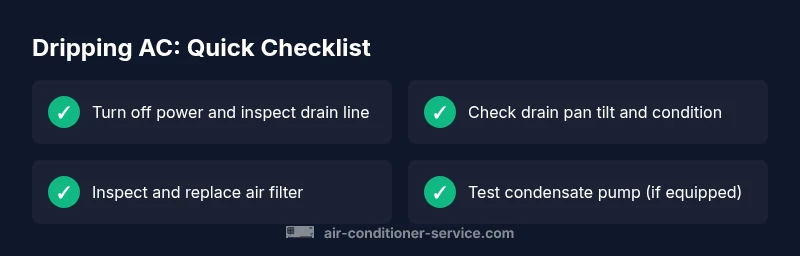
Most likely the drip is caused by a clogged condensate drain line, which allows water to back up into the drain pan and overflow. Begin by turning off power to the AC, then clear the line with a wet/dry vacuum or flush it with warm water. If dripping persists, inspect the drain pan tilt and check for a frozen evaporator coil.
Why air conditioner dripping water happens
If you notice air conditioner dripping water, it's a signal that something isn't draining correctly. Condensate produced by the cooling process should flow through an unobstructed condensate line into a drain. When that pathway is blocked or the pan is misaligned, water can back up and escape into your room or onto surfaces. According to Air Conditioner Service, most drips come from drainage issues, and addressing them quickly protects your home and keeps your system running efficiently. In this guide, we walk through a practical, safety-conscious diagnosis and fix plan you can perform as a homeowner or renter. We will cover common causes, a clear diagnostic flow, safe step-by-step fixes, and when to call a professional. Keep in mind that working with electrical components and refrigerants requires care—when in doubt, stop and seek expert help.
Common causes you can detect easily
- Clogged condensate drain line or pan blockage: The most frequent reason water appears where it shouldn’t. Lint, algae, and mineral buildup can block flow, causing backups.
- Improper drain pan tilt or cracked pan: If the pan isn’t sloped toward the drain, water can pool and spill out.
- Frozen evaporator coil from restricted airflow: A dirty filter or blocked supply vents can cause the coil to ice up, then melt and drip water.
- Condensate pump failure (in some models): If your system relies on a pump, a fault can lead to water not reaching the drain.
Safety First: Power Down and Inspect Safely
Before touching any components, switch the thermostat to off and unplug the unit if accessible. If you use a window unit, unplug it from the wall outlet; if you have a split system, turn off the indoor and outdoor units at the breaker. Wear gloves and safety glasses when handling damp electrical areas. Never pour water into electrical components or attempt DIY fixes if you feel unsure; call a pro.
Diagnostic Flow: Symptom to Diagnosis
This section walks you through a practical diagnostic approach. Start with the simplest checks (power off, visible blockages) and advance to more involved inspections only as needed. Each step includes an immediate check, a likely diagnosis, and a recommended next action. If at any point you feel uncertain, stop and contact a licensed HVAC technician.
How to Inspect the Condensate Drain Line
Locate the condensate drain line (usually PVC) and inspect for visible blockages or kinks. If the line is blocked, use a wet/dry vacuum attached to the line to pull out debris or carefully flush with warm water. Do not use harsh chemicals without verifying compatibility with your system. If you smell strong chlorine or chemical odor, stop and consult a pro.
Clear the Drain Line: Step-by-Step Fix
If you suspect a clog, try these steps: (1) Shut off power to the unit. (2) Detach the drain line at the access point and clear any visible debris with a flexible brush. (3) Use a wet/dry vacuum to suck out the line from both ends. (4) Reconnect and flush with warm water to confirm clear flow. (5) Restore power and run a test cycle. If water continues to back up, the issue may be the pan or coil.
Check for Frozen Evaporator Coil
A frozen coil means restricted airflow rather than a leak. Check the air filter and replace if dirty, then ensure supply vents aren’t blocked by furniture or curtains. If you see visible ice, turn off the AC to let the coil thaw naturally; running the unit while frosted can damage components. Once thawed, recheck for dripping and ensure airflow is unimpeded.
Drain Pan, Tilt, and Pump Checks
Inspect the drain pan for cracks or corrosion and replace if compromised. Ensure the unit is installed with the correct tilt toward the drain (about 1/8 inch per 6 inches). If your system uses a condensate pump, verify the float switch, check valve, and power supply. Replace or repair faulty parts as needed and test with a controlled drip.
Maintenance to Prevent Future Drips
Schedule regular maintenance to prevent future drips: change filters monthly or as recommended, clean condensate lines annually, and check for proper pan tilt and pump operation. Keep the area around the outdoor unit clear of debris, and seal any ductwork with visible leaks. A short maintenance routine now saves bigger repairs later.
Steps
Estimated time: 60-90 minutes
- 1
Power down and safety prep
Turn off the thermostat and unplug the unit if accessible. Confirm the outdoor unit is not energized by the breaker. Gather safety gear and a bucket or towels to catch any water.
Tip: Never work with live electrical components; mark the area with caution tape if others are nearby. - 2
Locate condensate drain line
Find the condensate drain line (usually a PVC pipe) and identify where it exits the unit. Note any visible kinks, blockage, or algae growth that could impede flow.
Tip: Take photos to reference during reassembly or future maintenance. - 3
Inspect for blockages
Check the drain line for visible clogs. Remove debris with a flexible brush or pipe cleaner. Avoid pushing debris further into the line.
Tip: If you see sludge, flush gently; avoid forcing material through the line. - 4
Vacuum or flush the line
Attach a wet/dry vacuum to the line and apply suction to dislodge any blockage. If needed, flush with warm water to clear loosened material.
Tip: Do not use bleach or caustic cleaners unless the manufacturer approves. - 5
Check the drain pan and tilt
Inspect the drain pan for cracks and verify the unit tilts toward the drain. Adjust or replace to restore proper drainage.
Tip: A misaligned pan is a common overlooked cause of drips. - 6
Inspect air filter and airflow
Remove and replace the air filter if dirty. Ensure air vents are unobstructed and the blower can move air freely across the coil.
Tip: A clean filter improves efficiency and reduces coil freezing risk. - 7
Check for a frozen coil
If you see frost or ice on the evaporator coil, turn the system off and allow thawing. After thawing, ensure proper airflow to prevent recurrence.
Tip: Avoid smashing ice with tools; it can damage the coil. - 8
Test condensate pump (if present)
For systems with a pump, test the float switch and power. Listen for the pump operation and confirm water is being pumped away from the unit.
Tip: A failing pump will still drip until replaced. - 9
Run a test cycle and monitor
Restore power and run a short cooling cycle. Observe whether water continues to drip and where it originates. Document results for reference.
Tip: If drip persists, schedule a professional inspection.
Diagnosis: Air conditioner dripping water
Possible Causes
- highClogged condensate drain line or drain pan blockage
- mediumImproper drain pan tilt or cracked pan
- highFrozen evaporator coil from restricted airflow
- lowCondensate pump failure (in pump-enabled systems)
Fixes
- easyClear the condensate line with a wet/dry vacuum or gentle flush; remove visible debris
- easyCorrect drain pan tilt or replace a cracked pan; ensure proper slope toward the drain
- easyReplace or clean the air filter; reduce airflow restrictions and let the coil thaw if iced
- mediumTest condensate pump operation and replace if nonfunctional; check float switch and power
Common Questions
Why is my air conditioner dripping water inside the house?
Water drips indoors mainly from drainage issues—blocked condensate lines or misaligned drain pans. Ice on the evaporator coil can also melt and drip water. Start with a drainage check and pan tilt before considering coil conditions.
Water inside usually means a drainage problem or an iced coil. Check the drain line and pan tilt first, then inspect the coil if the drip continues.
How do I unclog a condensate drain line?
Power off the unit, locate the drain line, and remove visible debris. Use a wet/dry vacuum attached to the line to pull out obstructions, then flush with warm water. If the blockage persists, avoid forcing material and contact a pro.
Turn off the unit, clear the line by vacuuming, then flush with warm water. If it won’t clear, call a technician.
Can I pour bleach or cleaners into the condensate line?
Only use cleaners that are approved by your unit’s manufacturer. In many cases, mild soap and warm water are enough. Avoid harsh chemicals that can damage plastics or refrigerant lines.
Don’t pour strong cleaners into the condensate line unless the manufacturer approves it.
What if the coil is frozen?
A frozen coil usually means restricted airflow or low refrigerant. Turn the system off and let it thaw, then check filters and vents. If it freezes again, schedule a professional inspection to check refrigerant levels.
If the coil is frozen, shut the unit down, thaw it, and fix airflow; persistent freezing needs a pro.
When should I call a professional?
If you’ve cleared lines and checked pan tilt but dripping continues, or you notice ice, coolant smells, or electrical issues, it’s time to call an HVAC technician. Drips can signal underlying hazards that require licensed service.
If the drip persists after basic checks or you see ice, contact a professional.
Can drainage issues cause long-term water damage?
Yes. Repeated dripping can lead to water damage on ceilings, walls, and insulation. Addressing drainage promptly protects your home and prevents mold growth.
Yes—drips can cause water damage if not fixed quickly, so act fast.
Watch Video
The Essentials
- Identify the drain line as the primary suspect
- Safely power down before inspecting any components
- Clean or replace filters to restore airflow
- Call a pro if leakage continues after basic fixes