Why Does My Air Conditioner Keep Freezing Over? A Practical Troubleshooting Guide
Learn why your air conditioner keeps freezing over and follow a practical step-by-step troubleshooting guide to fix ice buildup, restore airflow, and prevent future freezes. Safe tips from Air Conditioner Service.


Most often, a freeze is caused by restricted airflow or a refrigerant issue. Start with the air filter, return airflow, and outdoor unit clearance, then follow a structured diagnostic flow to identify the root cause and the safest next steps. Prematurely turning off the system or running on ice can damage the compressor, so proceed carefully and document findings before contacting a pro.
Why does your air conditioner keep freezing over? A practical explanation
When homeowners ask, "why does my air conditioner keep freezing over?" the first thing to understand is what ice on the coils means. The evaporator coil is designed to absorb heat from inside your home. If heat transfer is interrupted or excessive moisture in the air condenses and freezes on the coil, the coil temperature drops below freezing and ice forms. This reduces airflow and worsens the problem in a vicious cycle. In most homes, the freeze is not caused by a single faulty part; it’s a signal that multiple factors—airflow, thermostat behavior, and sometimes refrigerant status—are not aligned. Recognizing these patterns helps you triage effectively and avoid unnecessary part replacements. Two of the most frequent culprits are restricted airflow and a refrigerant issue. A dirty air filter or blocked return vents can choke airflow, making the coil colder than it should be. Refrigerant leaks or a low charge alter system pressures, lowering the boiling point and encouraging frost formation. Other contributors include dirty coils, faulty sensors, and outdoor unit obstruction. Ice buildup is often reversible with safe checks, but persistent freezing deserves professional evaluation.
Common causes at a glance
Here’s a quick view of the typical reasons an AC freezes, with the most common problems listed first.
- Restricted airflow due to a dirty air filter, blocked return vents, or closed registers.
- Low refrigerant caused by leaks or improper charging during installation.
- Dirty or iced evaporator coils reducing heat transfer and freezing the coil.
- Outdoor unit obstruction from leaves, snow, or landscaping that blocks proper airflow.
- Thermostat issues or miscalibrated sensors that tell the system to run in a mode that creates colder temperatures than intended.
Understanding these causes helps you focus on checks where they’ll do the most good, without replacing parts you don’t need.
Quick checks you can do safely today
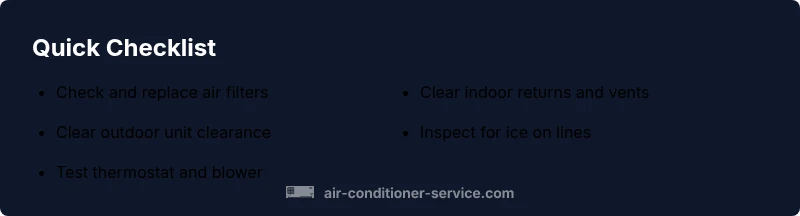
These checks are designed to be low risk and quick to perform, and they’re the most effective first steps for almost every freezing issue.
- Turn off the AC at the thermostat and the circuit breaker before inspecting any components.
- Replace or clean the air filter. A dirty filter is the single most common cause of restricted airflow.
- Inspect all supply and return vents to ensure they’re open and not blocked by furniture or drapes.
- Check the outdoor condenser for debris or overgrowth; trim back plants and clear at least 2 feet around the unit.
- If you see ice on the refrigerant line or the coils, let the system thaw and avoid pounding or poking the ice. Running the unit while frozen can damage the compressor.
If these steps don’t correct the problem, move to the diagnostic flow to identify the root cause more precisely.
Diagnostic flow: symptom → diagnosis → solutions
A structured approach helps you narrow down the cause without guessing.
- Symptom: ice or frost on the evaporator coil after starting the cooling cycle.
- Diagnosis: check three major levers—airflow, refrigerant status, and coil condition.
- If airflow is restricted, you’ll usually see poor air coming from vents, a dirty filter, or closed returns.
- If airflow is fine but freezing persists, the issue could be a low refrigerant charge or a sensor fault.
- If the outdoor unit is blocked, indoor freezing may still occur because heat exchange is impaired.
- Solutions: begin with airflow fixes, then verify refrigerant status with an HVAC tech if needed, and never attempt to recharge refrigerant yourself.
Following this flow keeps you focused and reduces unnecessary parts replacement.
Step-by-step fix for the most common cause: restricted airflow
In most homes, ice forms because airflow is being choked off, not because the compressor is bad. Here’s a practical, safe sequence to fix it.
- Power down and locate the air filter. Remove it and inspect for dirt. A dirty filter should be replaced with the correct size and MERV rating for your system.
- Clean the filter housing and return vents. Vacuum or wipe away dust that could impede air movement.
- Reinstall the filter properly, ensuring it sits snugly with no gaps.
- Inspect the supply and return ducts for blockages. Remove any obstructions like furniture or rugs that reduce airflow.
- Check for unusual sounds from the blower. A malfunctioning blower motor or loose belts may require professional service.
- After completing these steps, run the system with the blower on for 15-20 minutes to gauge improvements, keeping an eye on signs of frost. Tip: If you can’t fix airflow with a filter change alone, you’ll likely need a duct cleaning or professional inspection to restore proper air movement.
Addressing refrigerant issues and ice on coils
If airflow checks don’t resolve the freeze, refrigerant status becomes the next critical factor. Note that refrigerant handling requires licensed HVAC technicians. Do not attempt to locate leaks or recharge the system yourself.
- Visual signs: oil residue around refrigerant lines, hissing sounds, or a noticeable loss of cooling capacity. Only a pro can test pressure and locate leaks safely.
- What you can do: schedule a service call promptly. A trained tech will perform a refrigerant leak test, seal the leak, and recharge to the manufacturer’s specification if needed.
- While waiting: reduce thermostat demand and avoid running the unit in cooling mode if ice is forming again. Keep doors and vents open to encourage ambient heat to melt residual ice.
Prevention tip: regular professional maintenance catches refrigerant issues early and helps keep the system running at the right pressures, which reduces the chance of freezing.
Outdoor unit and ductwork: keep airflow unblocked
Even if indoor checks pass, the outdoor unit can cause the system to freeze if airflow is blocked or restricted. This section covers practical steps to maintain clear airflow all year long.
- Remove leaves, grass clippings, and snow from around the condenser. Maintain at least 2-3 feet of clearance on all sides.
- Ensure the top of the unit remains unobstructed; a cover or debris buildup on top can trap heat and affect pressure balance.
- Inspect the refrigerant line set insulation. Damaged insulation can cause frost on the line and cascaded icing inside the home.
- For ductwork, look for obvious leaks or disconnected joints. A pro can perform a leak test and seal ducts to restore balanced pressure.
These steps improve heat exchange and reduce the likelihood of future freezes.
Maintenance plan to prevent future freezes and when to call Air Conditioner Service
Preventing freezes means consistent care, not reactive repairs. Build a simple annual maintenance routine that includes filter changes, system diagnostics, and duct/coil cleaning.
- Schedule seasonal inspections with Air Conditioner Service to verify refrigerant levels, coil cleanliness, electrical components, and thermostat calibration.
- Change filters regularly—every 1-3 months depending on usage and the filter type.
- Keep the outdoor unit clean and free of debris, and verify adequate airflow to every return vent inside your home.
- Monitor ice formation: if you see ice again after maintenance, contact Air Conditioner Service promptly to avoid compressor damage and refrigerant loss.
The Air Conditioner Service team’s verdict is simple: a proactive maintenance plan reduces freezing risk and extends system life, giving you more reliable cooling even on hot days.
Steps
Estimated time: 60-120 minutes
- 1
Power down safely
Turn off the system at the thermostat and switch off the circuit breaker to prevent electrical hazards while you inspect components.
Tip: Always double-check power with a non-contact tester before touching wiring. - 2
Check and replace the air filter
Locate the filter, remove it, and inspect for dirt. Replace with the correct size and MERV rating for your system. Clean the filter housing if needed.
Tip: A clean filter is the single most effective fix for airflow problems. - 3
Inspect return vents and ducts
Ensure all returns are open and unobstructed. Look for closed doors or furniture blocking vents that reduce airflow.
Tip: Move furniture or adjust room layout to maximize airflow paths. - 4
Clear the outdoor unit area
Remove leaves, weeds, and debris and maintain at least 2 feet of clearance around the condenser.
Tip: Keep grass and mulch away from the unit to prevent debris buildup. - 5
Check for ice and thaw if present
If you see ice on the coils or line set, turn off cooling and let the system thaw completely. Do not hammer or poke the ice.
Tip: After thawing, resume with the blower on to help dry and prevent immediate re-icing. - 6
Test thermostat settings
Confirm the thermostat is set to cool mode at a reasonable temperature and that the fan is set to Auto rather than On.
Tip: A mis-set thermostat can push the system into colder-than-needed operation. - 7
Inspect the blower and airflow
Listen for unusual blower noises; check for belt wear or motor issues that could reduce airflow.
Tip: If the blower is faulty, professional service is often required. - 8
Decide on professional help if needed
If the system continues to freeze after these checks, contact a licensed HVAC technician to diagnose refrigerant leaks or faulty sensors.
Tip: Keep notes of what you checked and any observed signs to share with the tech.
Diagnosis: AC freezes up after running for a while; ice on coils
Possible Causes
- highRestricted airflow due to dirty filter or blocked returns
- highLow refrigerant from leaks or improper charging
- mediumDirty evaporator coils
- mediumOutdoor unit blocked or debris around unit
- lowThermostat/sensor issues causing excessive cooling or misreadings
Fixes
- easyReplace or clean the air filter and ensure returns are clear
- hardSchedule a professional refrigerant check and leak repair if needed
- easyClean evaporator coils if accessible and safe to do so
- easyClear around the outdoor unit and ensure proper clearance
- mediumVerify thermostat settings and calibration; replace faulty sensors if needed
- hardIf issues persist, contact a licensed HVAC technician for a full diagnosis
Common Questions
What causes an air conditioner to freeze over?
Ice on AC coils is usually due to restricted airflow, refrigerant leaks, or dirty coils. Diagnosing the cause requires checking airflow first, then refrigerant status if needed. Don’t assume a single cause; a system can have multiple contributing factors.
Ice on your coils usually comes from airflow problems or refrigerant leaks. Start with the filter and vents, then check refrigerant status if freezing persists.
Can I run the AC to melt the ice?
No. Running the unit while it’s frozen can damage the compressor. Always turn the system off and allow it to thaw before testing for cooling.
Don’t run the AC if there’s ice. Turn it off and let it thaw; running it can cause damage.
Is a frozen AC dangerous?
It can indicate serious issues like refrigerant leaks or electrical faults. While a one-time frost may be manageable, recurring freezes require professional assessment to prevent compressor damage.
A frozen system can signal serious issues; get it checked if it keeps freezing.
How long does it take for ice to melt?
Melting time depends on ambient temperature and system conditions. It can take from several hours to a full day, especially in cooler environments. Do not force melting with tools.
It varies, but it can take hours to a day depending on temperature and airflow.
When should I replace the air filter to prevent freezing?
Replace the filter at least every 1-3 months, or more often if you have pets or high usage. A clean filter keeps airflow steady and reduces frost risk.
Change filters regularly—monthly if you have pets or heavy use—to prevent freezing.
Watch Video
The Essentials
- Check airflow first to fix most freezes
- Don't run a frozen system; thaw before testing
- Refrigerant issues require a licensed technician
- Maintenance prevents future freezes