What to Do If My Air Conditioner Is Leaking
Learn practical steps to diagnose and fix a leaking air conditioner, protect your home from water damage, and prevent future leaks with our thorough troubleshooting guide.


Most common cause of AC leaks is a clogged condensate drain line or a full drain pan. Quick fix: shut off the unit and power at the breaker, locate and clear the drain line with a wet/dry vacuum or compressed air, and wipe the pan. If the leak returns, or you see frost, call a licensed technician.
Why AC Leaks Happen
If you're wondering what to do if my air conditioner is leaking, the first thing to understand is that most leaks come from condensation rather than a refrigerant problem. In homes, the evaporator coil produces water as it dehumidifies air. When the condensate drain line becomes clogged, the drain pan overflows and water ends up on the floor. A damaged drain pan or a misaligned drain line can also cause leaks. In humid climates, fast cooling can overwhelm the pan, especially if the filter is dirty or the unit is oversized. Early recognition and quick action protect your floors and prevent mold growth. The Air Conditioner Service team emphasizes safety and prompt response to avoid costly water damage. If you’re looking for reassurance about the legitimacy of steps, rest assured that following a systematic approach is the most reliable way to minimize damage and get your system back to safe operation fast.
Common Causes in Detail
Leaks almost always point to drainage or airflow problems rather than a refrigerant issue. The leading cause is a clogged condensate drain line, which prevents collected moisture from exiting the system. A full or damaged drain pan can overflow, especially if the evaporator coil is producing more condensate than usual. Dirty air filters reduce airflow and can frost the evaporator coil; when the ice melts, extra water can leak from the unit. A mis-sloped drain line or a disconnected pipe will also manifest as a visible pool below the indoor unit. In some systems, a failing condensate pump (common in apartments or homes with crawlspaces) will fail to move water out, leading to pooling on the floor. Air Conditioner Service analysis shows that when leaks occur, drainage problems are the most frequent culprit, followed by mechanical wear or damage. Regular maintenance helps catch these issues early and prevent costly water damage.
Safety First: Immediate Steps
Before you do any work, prioritize safety. Power down the air conditioner at the thermostat and switch off the breaker to isolate all electrical components. Do not touch wet electrical parts. Move any belongings away from the area to avoid water damage. If you notice exposed wiring or a strong electrical burning smell, evacuate and call emergency services. Use towels or a secondary container to contain any standing water, and never use water on a suspected electrical panel. If you have pets or children in the home, keep them at a safe distance while you assess the situation. The goal is to minimize risk while you determine the cause of the leak. Air Conditioner Service emphasizes safe handling and recommends contacting a professional if you are unsure at any point.
Diagnostic Flow: Quick Checks to Start
A methodical approach makes the problem easier to solve. Start by checking the condensate drain line for visible clogs—often a slimy, white buildup, algae, or debris. Inspect the condensate pan for cracks or signs of overflow. Look for frost or ice on the evaporator coil, which indicates restricted airflow or a too-cold coil. Check the air filter; a dirty filter reduces airflow and can trigger coil icing. If your system uses a condensate pump, ensure it is powered and cycling. Finally, verify that the drain line is sloped correctly toward the exterior and that there are no loose connections. If you find a simple clog, you may be able to clear it without tools; if the problem persists, move to more advanced checks or consider professional help.
Step-by-Step Fixes: Drain Line Cleaning (Most Common Fix) – Part 1
The drain line is the easiest and most common source of leaks. In many homes, clearing a clogged line resolves the issue quickly and safely. Begin by turning off power at the breaker and at the thermostat. Locate the indoor air handler where the drain line exits. Have absorbent towels ready to catch any residual water. If you can access the line with a shop vac, seal the other end and apply gentle suction to remove the clog. If a vacuum isn’t possible, try compressed air in short bursts from the exterior side, never forcing air backward into the unit. For stubborn clogs, a flexible drain snake can be inserted carefully to break the blockage. After clearing, flush the line with a small amount of warm water, and observe whether water drains freely. If water continues to back up, more extensive cleaning or a professional inspection is required.
Step-by-Step Fixes: Drain Line Cleaning (Most Common Fix) – Part 2
Tip: When using a snake or vacuum, avoid creating a vacuum that could crack the drain or push debris into the evaporator. If you must access the pan, inspect for cracks and ensure the pan is properly seated beneath the coil. Reassemble any loose fittings and reconnect the drain line. Power up the system and run for a full cycle to verify that water flows out through the line and the pan remains dry. If you observe repeated backups or if you see signs of mold, discontinue DIY attempts and call a professional.
Maintenance to Prevent Leaks: Proactive Practices
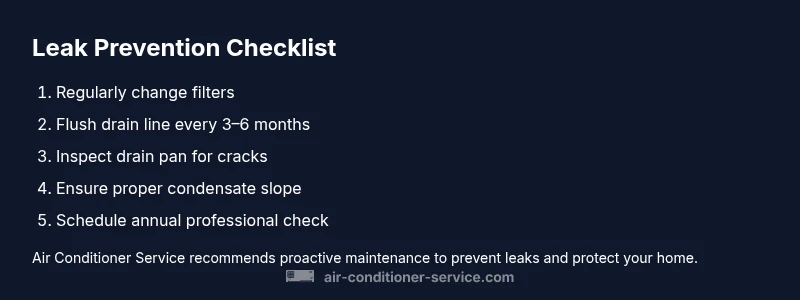
Even after a fix, leaks can recur if maintenance is neglected. Replace or clean the air filter every 1–3 months, depending on usage and household conditions. Ensure the condensate drain line remains free of debris with a scheduled flush every few months. Check the drain pan for cracks or corrosion annually and consider replacing a damaged pan. Verify that the outdoor unit is free of debris and has proper airflow, as restricted airflow increases condensate production. If your system uses a humidifier, ensure it’s not overloading the drain. By implementing a simple maintenance routine, you can reduce the likelihood of future leaks and extend the life of your AC system.
When to Call a Pro: Understanding Limits and Expectations
If the leak reappears after clearing a drain line, or if you notice persistent frost on the evaporator coil, refrigerant issues, or water around electrical components, it’s time to contact a licensed HVAC technician. Licensed professionals can diagnose refrigerant pressure problems, verify coil integrity, and ensure all electrical connections are safe. The Air Conditioner Service team recommends scheduling a service visit promptly for any leak that persists or recurs after a home remedy. This protects your home from water damage and ensures the system operates safely and efficiently.
Steps
Estimated time: 40-60 minutes
- 1
Power down and locate drain line
Turn off the thermostat and switch off the circuit breaker. Find the condensate drain line where it exits the indoor air handler or near the drip pan. Note any obvious cracks or loose fittings and prepare towels to catch water.
Tip: Label the breaker in case you need to reset later. - 2
Clear visible clogs
Inspect the drain line for obvious blockages such as algae, lint, or debris. Use a wet/dry vacuum at the line’s opening to suck out the clog if accessible, or gently blow compressed air in short bursts toward the line by using a proper nozzle.
Tip: Never force debris further into the line; a gentle approach reduces risk of damage. - 3
Flush and test the line
After clearing, flush the line with warm water and a small amount of mild cleaner if available. Observe the line from the exterior end to confirm steady flow. Wipe the pan and ensure it’s draining into the line properly.
Tip: Wear gloves and eye protection when flushing to avoid splashes. - 4
Check the pan and fittings
Inspect the condensate pan for cracks or corrosion. Tighten any loose connections and ensure the drain line sits at the correct slope toward the exterior. If the line exits behind a wall, check for leaks in the wall cavity.
Tip: Only tighten fittings to avoid cracking the plastic drain components. - 5
Test run and monitor
Turn the system back on and run a full cooling cycle. Watch for any dripping or pooling. Check the drain line visually and verify the condensate tray stays dry after several minutes of operation.
Tip: Keep towels nearby during the first test run to catch any residual water. - 6
When to escalate
If leaks return, or you see frost on the evaporator coil, or you smell refrigerant, stop DIY efforts and call a professional. Refrigerant issues require licensed technicians and proper handling, per safety regulations.
Tip: Document symptoms and timing to help the technician diagnose quickly.
Diagnosis: Visible water pooling on floor or near the indoor unit
Possible Causes
- highClogged condensate drain line
- mediumDamaged or overflowing drain pan
- lowFrozen evaporator coil due to restricted airflow
Fixes
- easyUnclog or clear the condensate drain line and wipe the pan
- easyInspect/replace the drain pan and secure pan alignment
- mediumThaw the evaporator coil, replace filter, and restore airflow
Common Questions
What is the most common reason my air conditioner is leaking?
The most common reason is a clogged condensate drain line or a full/ damaged drain pan. Cleaning the line and inspecting the pan often resolves the issue. If the leak persists, there may be an additional problem requiring professional assessment.
The most common reason is a clogged condensate drain line or a full drain pan. Cleaning the line and inspecting the pan usually fixes it.
Can a leaking AC cause mold or water damage in my home?
Yes. Persistent leaking can create damp conditions that promote mold growth and damage carpets or walls. It’s important to address leaks promptly and dry affected areas thoroughly to prevent mold and odors.
Yes. Persistent leaks can lead to mold, so dry the area and fix the leak quickly.
Is it safe to pour bleach or chemicals into the condensate drain to clear a clog?
Some cleaners are not recommended for condensate drains, especially if you have a condensate pump or metal components nearby. Use mild cleaners or water, and avoid harsh chemicals that could damage plastic pipes or trigger fumes. If in doubt, skip chemicals and rely on mechanical clearing or call a pro.
Avoid strong chemicals in the condensate drain; use mild cleaners or call a pro if unsure.
I see water at the base of the unit; should I keep using the AC?
No. If you see water pooling, shut off the system to prevent further damage and reduce risk. Running the unit can worsen the leak and create electrical hazards.
Turn off the unit right away and avoid using it until the leak is resolved.
When should I call a professional for a leak?
If the leak persists after clearing the drain line, if you notice frost on coils, or if you suspect refrigerant issues, contact a licensed HVAC technician. They can safely diagnose and repair advanced problems.
Call a licensed HVAC technician if leaks persist or you suspect refrigerant issues.
Watch Video
The Essentials
- Shut off power before inspecting any leaks.
- Clogged drain lines are the top cause of leaks.
- If leaks persist after DIY fixes, call a pro immediately.
- Regular maintenance prevents most future leaks.