Why AC Not Heating: Practical Troubleshooting Guide
Practical, urgent troubleshooting to fix a heating failure in your air conditioner. Learn quick checks, a step-by-step flow, and safe fixes to restore warmth.


If your AC isn’t heating, start with the simplest checks: verify the thermostat is set to heat, ensure the fan is on, and replace a dirty air filter. The next likely culprits are airflow restrictions and a faulty reversing valve in heat pumps. If these steps don’t fix it, follow the diagnostic flow in the body for deeper causes.
Common causes of heating problems in air conditioners
When your air conditioner seems to refuse to heat, the reason is almost never a mysterious defect. In most homes, the fault boils down to configuration, maintenance, or airflow. According to Air Conditioner Service, the leading culprit is the thermostat not in heat mode or set to an overly low temperature, followed closely by a dirty air filter that restricts airflow. The team also finds that simple issues like closed or blocked supply vents and dirty blower components can prevent warm air from circulating. If you’ve searched for why air conditioner not heating, you’re not alone—this guide walks through the most common sparks and how to fix them safely and quickly.
Quick checks you can perform before tools and calls
- Verify thermostat: ensure it’s set to heat and that the display shows a comfortable temperature. If your thermostat has a cool-down or Hold setting, disable it for normal operation.
- Check the fan setting: set to Auto and verify warm air is blowing from registers.
- Inspect the air filter: replace if dirty or clogged; a blocked filter can starve the system of airflow and underperform in heating.
- Look at supply vents: make sure they’re open and not blocked by furniture or drapes.
- Listen for odd sounds or smell: banging noises or a refrigerant smell require professional attention.
If these quick checks don’t restore heat, proceed with the diagnostic flow below.
Diagnostic flow: from symptom to solution
This flow helps you identify the root cause without guessing. Start with the simplest explanations (thermostat, settings, airflow) and progressively move to more involved issues (heat exchanger, reversing valve, refrigerant). At each step, confirm whether the symptom improves before moving on. If you’re unsure or uncomfortable with any step, stop and contact a licensed technician. Safety first: shut off power at the breaker before inspecting electrical components.
Step-by-step fixes for the most common causes
-
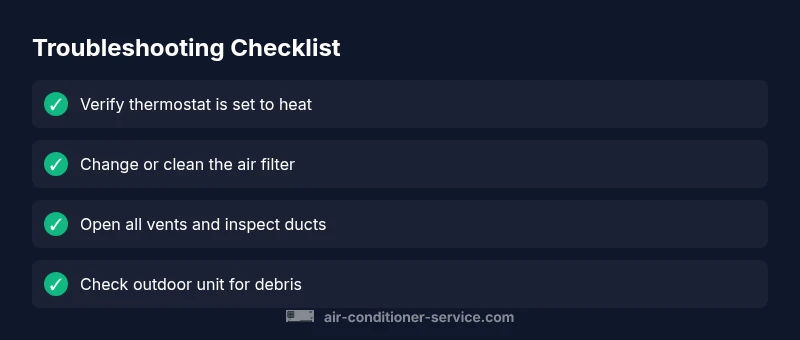
Confirm thermostat is properly configured: Ensure mode = heat, fan = auto, and that the temperature is above room temperature. If your thermostat is a smart device, verify app settings and the Wi‑Fi connection. Tip: Some models have a secondary heat setting (Emergency Heat); ensure it isn’t engaged unless needed.
-
Replace or clean the air filter: Turn off the system, remove the filter, and inspect for dirt. Replace with the correct size. Tip: Create a maintenance schedule to replace filters every 1–3 months depending on usage.
-
Clear vents and ducts: Move furniture away from vents and check for clogged return air grilles. Tip: Use a flashlight to inspect accessible ducts for obvious debris.
-
Inspect the outdoor unit and heat-pump components: Check the outdoor unit for debris and ensure the condenser coil is clean; verify the reversing valve is in heating position. Tip: If you hear buzzing from the outdoor unit, cut power and call a pro.
-
Check electrical components and safety switches: Inspect the breaker, fuses, and wiring connections. Replace a blown fuse only with the same rating; never bypass safety switches. Tip: Keep a spare fuse and a basic multimeter for simple checks.
-
If the system still won’t heat: Many issues like refrigerant leaks or a faulty compressor require professional service. Schedule a visit with Air Conditioner Service if you’re uncomfortable with any step.
Estimated time: 60–90 minutes
Steps
Estimated time: 60-90 minutes
- 1
Verify thermostat settings
Check that the thermostat is in Heat mode, the temperature is above room temperature, and the unit is powered. If using a smart thermostat, confirm the app shows Heat and that the device is communicating with the system.
Tip: If you find a conflicting setting like Emergency Heat, switch to standard Heat unless you specifically need Emergency Heat. - 2
Inspect and replace the air filter
Power off the system, remove the filter, and inspect for dirt. Replace with the correct size and reassemble. Higher-efficiency filters can reduce airflow; choose a filter that balances airflow with filtration for your system.
Tip: Set a reminder to replace filters every 1–3 months based on usage and household factors. - 3
Open vents and check for blockages
Ensure all supply vents are open and unobstructed. Check return air grilles for dust buildup and clear any nearby furniture that blocks airflow.
Tip: A simple vacuum or dusting can improve airflow without tools. - 4
Assess heat-pump components (if applicable)
For heat-pump systems, inspect the outdoor unit for debris and confirm the reversing valve engages to heating. If you hear unfamiliar noises or see frost, stop and call a professional.
Tip: Do not force the reversing valve or bypass controls; improper operation can damage the system. - 5
Inspect electrical and safety switches
Turn off the power at the breaker before inspecting wires, fuses, and connections. Replace any blown fuses with the same rating and never bypass safety devices.
Tip: Keep a basic multimeter handy for simple checks and document any abnormal readings. - 6
Call a professional for persistent issues
If heating still fails after these steps, a licensed technician should evaluate refrigerant levels, compressor health, and refrigerant lines. This protects you and preserves warranty.
Tip: Ask for a diagnostic report and estimated repair time before authorizing work.
Diagnosis: AC won’t heat when set to heat
Possible Causes
- highThermostat misconfiguration (not in heat mode or temperature too low)
- highDirty or clogged air filter
- mediumRestricted airflow from closed vents or duct blockages
- mediumFaulty reversing valve or heat pump malfunction
Fixes
- easyDouble-check thermostat settings and power to the thermostat
- easyReplace or clean the air filter and inspect supply registers for obstructions
- easyClear vents and ensure blower is functioning; check the blower fuse
- mediumHave reversing valve, refrigerant, or heat-pump controls tested by a professional
Common Questions
Why is my air conditioner not heating even though the thermostat is set to heat?
Commonly, the thermostat is not in heat mode, or the temperature is set too low, or the unit is in a protection mode. Verify mode, temperature, and any energy-saving features. If the issue persists, continue with the diagnostic flow.
Check that the thermostat is in heat mode and the temperature is set properly; if it still doesn’t heat, move on to the troubleshooting steps.
Can a dirty air filter cause no heat?
Yes. A clogged filter restricts airflow, causing the system to underperform or not heat adequately. Replacing the filter often resolves the issue.
A dirty filter can block airflow and prevent heating; replace it and see if heat returns.
What is a reversing valve and how do I know if it’s failing?
A heat pump uses a reversing valve to switch between cooling and heating. If it fails, heating may fail to engage. This usually requires professional testing and may involve refrigerant considerations.
The reversing valve controls heating in heat pumps; if heat isn’t delivered, a professional check is needed.
Is it dangerous to work around refrigerant or electrical components?
Yes. Refrigerant leaks and high-voltage components pose risks. Do not attempt repairs beyond basic maintenance; call a licensed technician.
Refrigerant work and electrical testing can be dangerous; contact a pro if you suspect leaks or electrical faults.
How often should I schedule AC maintenance to prevent heating problems?
Annual professional tune-ups plus regular filter changes are recommended to prevent heating issues and extend system life.
Have an annual service and change filters regularly to keep heating reliable.
Watch Video
The Essentials
- Verify thermostat is set to heat and power is on
- Replace or clean the air filter to restore airflow
- Open and clear all vents for proper airflow
- For heat-pump issues, consult a pro rather than DIY testing refrigerant
- Maintain regular HVAC maintenance to prevent future heating problems