Why Your Air Conditioner Is Freezing Up (And How to Fix It)
Discover why your air conditioner is freezing up, how to diagnose airflow and coil problems, and safe steps to thaw and fix the issue. Practical tips from Air Conditioner Service.


According to Air Conditioner Service, a frozen coil usually stems from restricted airflow or a dirty evaporator. Start with simple checks: turn the unit off to thaw, replace a clogged air filter, and ensure all vents are open. If ice reappears, switch to auto fan and call a pro for a deeper diagnosis.
Common causes of a freezing AC
Ice on the evaporator coil is usually a symptom rather than a stand-alone failure. The most frequent culprits in homes are restricted airflow and dirty coils. A clogged air filter reduces the amount of warm air reaching the evaporator, which allows the coil to get too cold and ice to form. Blocked return vents or closed supply registers can create the same effect by starving the coil of air. If your blower is weak or failing, it may fail to push air across the coil properly. Thermostats set too low can also contribute by telling the system to cool too aggressively; if the outdoor temperature is very low, the system may overcool the indoor coil, especially with heat-pump configurations in cooling mode. Outdoor fan issues can worsen the problem by preventing the outdoor coil from shedding heat. According to Air Conditioner Service Analysis, 2026, airflow problems and dirty coils are the leading drivers of freezing incidents in homes. Early action matters: ice on the coil can quickly turn into compressor stress and higher energy use. Persistent icing can indicate a refrigerant leak or another underlying fault that requires a pro's assessment.
How airflow, refrigerant, and temperature interact to cause freezing
Freezing typically happens when there is an imbalance between heat absorption and heat rejection inside the system. Restricted airflow makes the evaporator coil cold enough to attract moisture from the air; when moisture freezes on contact, a layer of ice forms that insulates the coil and impedes heat exchange. If the refrigerant pressure is too low due to a leak or improper charging, the coil can get colder than intended, encouraging ice formation. Temperature differences between the indoor and outdoor units also matter: in very cold outdoor conditions or during defrost cycles on heat pumps, the coil can ice up if airflow isn’t delivering enough warm air to keep it above freezing. Lastly, dirty coils reduce heat transfer efficiency, so the system overworks to reach the set temperature, increasing the likelihood of icing.
Quick checks you can perform safely today
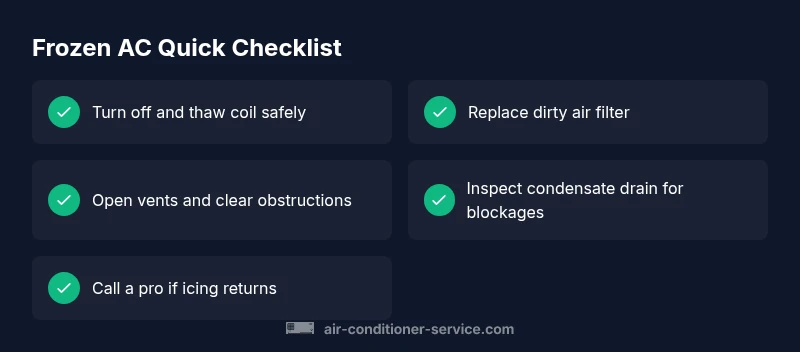
- Inspect the air filter: remove and replace if dirty or clogged. A clean filter restores proper airflow and reduces coil icing.
- Check for blocked supply and return vents: move furniture or boxes that restrict airflow and ensure at least 18 inches of clearance around the outdoor unit.
- Listen for blower issues: a weak or noisy blower can indicate motor problems or obstructions; if you hear unusual sounds, stop using the unit until checked.
- Observe thermostat settings: avoid keeping the thermostat too far below room temperature; use the auto fan setting to maintain steady airflow.
- Look at the condensate drain: a clogged drain can cause moisture buildup that contributes to icing; do not ignore standing water around the indoor unit.
Note: If ice is present after thawing or the unit continues to freeze, do not continue operation; contact a professional. Safety is paramount when dealing with electrical components and refrigerant.
Diagnostic flow overview (symptoms to solutions)
In many cases, a frozen AC starts with a simple airflow issue. Work through the checks above, then observe for continued icing. If icing recurs, move to professional diagnosis, as persistent ice can indicate refrigerant problems or a compressor-related fault. A licensed HVAC technician can check refrigerant pressures, perform a leak test, and evaluate electrical controls without risking safety.
What to expect when you call a professional
When a pro arrives, they will typically inspect: filter condition, ductwork and vents, outdoor unit cleanliness, refrigerant lines for leaks, electrical connections, and the thermostat wiring. They may perform a pressure test, refrigerant reclaim/recharge if needed, and coil cleaning. Recovery and repair times vary by the system type and issue severity, but most common fixes are straightforward and do not require full unit replacement. Having your model, age, and recent maintenance history ready helps speed the service.
Preventing future freezes: maintenance tips
- Schedule regular maintenance in spring: a professional checkups for coils, refrigerant, and airflow prevent most freezing issues.
- Change filters every 1-3 months depending on usage and household needs.
- Keep outdoor unit clear of debris and ensure good airflow around the condenser.
- Periodically inspect ducts and vents for blockages and seal leaks to maintain consistent airflow.
- Consider upgrading to a smart thermostat that optimizes cooling cycles to reduce overcooling and icing risk.
Steps
Estimated time: 30-60 minutes
- 1
Turn off and thaw the coil
Set the thermostat to OFF and allow the system to thaw completely. Do not attempt to chip away ice; forced heat can damage components. Once the ice has melted, reset the unit to a comfortable cool setting.
Tip: Patience matters—failing to fully thaw can cause rapid re-icing when restarted. - 2
Replace the air filter
Remove the old filter and install a new one of the correct size. A clean filter restores airflow and helps the evaporator coil warm evenly. If you have pets or a dusty environment, replace more frequently.
Tip: Mark your calendar to check filters every 30 days during peak season. - 3
Check vents and clear obstructions
Inspect all supply and return vents to ensure they are open and unobstructed. Move furniture or drapes that block airflow and recheck after moderate use to ensure airflow stays consistent.
Tip: Aim for at least 18 inches of clearance around the outdoor unit. - 4
Inspect condensate drain
Look for standing water or signs of blockages in the condensate drain line. Clear any clogs using a wet/dry vac or a pipe snake, and ensure drainage is flowing freely. Do not use chemical cleaners in the drain line without professional guidance.
Tip: A blocked drain can promote humidity buildup that encourages icing. - 5
Assess whether professional help is needed
If ice returns after thaw or you notice refrigerant signs (hissing sound, oily residues, or frequent outages), schedule a professional inspection. Refrigerant issues require licensed handling and cannot be safely repaired by homeowners.
Tip: Have model, age, and recent service history ready to speed the visit.
Diagnosis: AC unit is freezing up during operation
Possible Causes
- highRestricted airflow due to dirty filter or blocked vents
- mediumLow refrigerant level from a leak or improper charging
- lowThermostat set too low or cooling demand exceeds capacity
- highDirty evaporator coil reducing heat transfer
- mediumBlocked condensate drain causing moisture buildup
Fixes
- easyTurn off unit, thaw coil, and replace dirty air filter
- easyOpen all supply/return vents and clear obstructions
- easyInspect condensate drain and clear blockages
- hardIf icing recurs, call a licensed HVAC tech to test refrigerant and leak integrity
Common Questions
Why is my air conditioner freezing up?
Freezing is usually caused by restricted airflow or a problem with the evaporator coil. Start with thawing, replacing the air filter, and checking vents. If the issue persists, it may indicate a refrigerant problem or a deeper fault.
Freezing usually comes from airflow problems or coil issues; thaw, replace the filter, and check vents. If it keeps freezing, you may have a refrigerant or deeper fault that needs a pro.
Can low refrigerant cause freezing?
Yes. A refrigerant leak or undercharged system can cause the coil to become too cold and ice up. A professional should test pressures and repair leaks before recharging.
Yes. Leaks or low refrigerant can frost the coil. A pro should verify pressures and fix leaks before recharging.
What should I do first if I notice ice on the coil?
Turn off the unit to thaw, then inspect the air filter and vents. Do not resume operation until the ice is gone and airflow is restored.
Turn it off to thaw, then check the filter and vents. Don’t run it again until the ice is gone and airflow is good.
Is it safe to run the AC if it’s freezing?
No. Running a unit when it’s iced can damage the compressor and worsen the problem. Thaw, fix airflow, then restart with caution.
No — don’t run a cold, iced unit. It can damage the compressor. Thaw and fix airflow first.
When should I call a professional for a frozen AC?
If ice returns after thaw or you suspect a refrigerant leak, contact a licensed HVAC technician. Persistent icing or unusual noises are also triggers.
Call a pro if it refreezes or you suspect leaks. Persistent icing needs expert help.
How can I prevent future freezing?
Keep filters clean, coils unobstructed, and schedule regular maintenance. A well-maintained system is less prone to icing and more efficient.
Keep filters clean and have regular maintenance to prevent freezing in the future.
The Essentials
- Check airflow first: clear filters and vents.
- Thaw safely, then recheck for recurring icing.
- Inspect for refrigerant issues if icing returns.
- Maintain routine service to prevent freezes.