Why Would an Air Conditioner Freeze Up? Practical Troubleshooting
Discover why an air conditioner may freeze up and how to diagnose, fix, and prevent it. Urgent, practical tips from Air Conditioner Service to keep your home cool and safe.


An air conditioner usually freezes up when airflow is restricted or the refrigerant cycle is imbalanced. Common causes include dirty filters, blocked evaporator coils, low refrigerant from leaks, or a malfunctioning blower. Start by checking the air filter and outdoor unit for airflow, then inspect coils and thermostat settings. If the frost persists, call Air Conditioner Service for professional help.
Why Would a Air Conditioner Freeze Up?
When an air conditioner forms ice on the evaporator coil, it reduces cooling speed and can damage components if ignored. The most frequent triggers are airflow problems, refrigerant issues, and equipment faults. The phrase why would a air conditioner freeze up captures a common homeowner concern, and understanding the root causes helps you act quickly. According to Air Conditioner Service, many freezes start with something as simple as a blocked return air path or a dirty filter. Early detection lets you restore cooling faster and minimize repair costs.
Common Causes of Ice Formation (Airflow First)
Airflow restrictions are the top culprit behind most freezes. A dirty or clogged filter chokes air that should flow over the evaporator coil, allowing moisture to condense and freeze. Other airflow problems include closed vents in rooms, blocked return air grilles, or a coil surrounded by dust and debris. When airflow declines, the evaporator coil can drop below freezing and ice will form. Addressing airflow issues is often inexpensive and effective, making it the first line of defense.
Refrigerant-Related Ice: Leaks and Low Charge
A refrigerant imbalance can cause evaporator coils to ice up as the coil temperature drops below freezing. Leaks reduce system pressure and prevent proper heat absorption from the indoor air. Unlike airflow issues, refrigerant problems require careful handling by a licensed HVAC technician. If you suspect a refrigerant leak, do not attempt to weld or seal the line yourself; refrigerant handling requires certifications and proper equipment.
Defrost Controls, Fans, and Blower Performance
Malfunctions in the defrost cycle (if you have a heat pump) or a failing blower can cause frost buildup. If the blower isn’t circulating air properly, the evaporator coil remains cold for longer, promoting ice formation. Inspect the blower motor and capacitor for signs of wear, unusual noises, or sluggish operation. A faulty fan can allow the coil to freeze even when other parts are functioning correctly.
Quick Checks You Can Do Safely
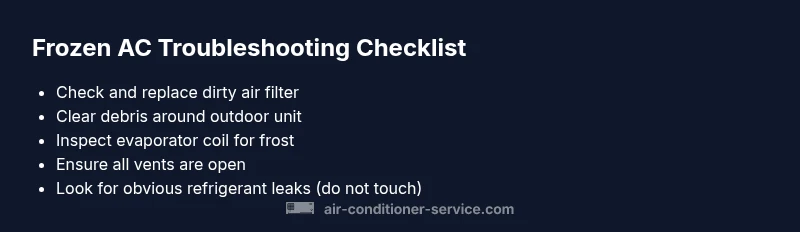
- Turn off the system at the thermostat and power switch. Do not chisel ice or poke at components. - Inspect and replace the air filter if dirty. - Clear debris from around the outdoor unit to ensure adequate airflow. - Check for obvious ice on the coil and in the drain line. - Ensure all supply vents are open and unobstructed. These quick checks can often prevent further damage and buy you time before a professional visit.
Diagnostic Flow: Symptom to Solution (Overview)
This section maps common symptoms to likely causes and practical fixes. If you notice ice on the coil, begin with airflow and filter checks, then assess the coil for dirt and frost. If the problem persists, inspect the outdoor unit for airflow blockages and listen for unusual noises from the blower. When in doubt, prioritize professional assessment to avoid refrigerant mishaps.
Step-by-Step Fixes for the Most Common Causes
Follow these steps in order to resolve the typical reasons an AC freezes up. Start with the simplest action and progress to more complex tasks only if necessary. Remember to shut off power before touching electrical components and to never attempt refrigerant handling unless you’re licensed.
Safety, Warnings, and When to Call a Pro
Working around refrigerant, high voltage, or damaged coils can be dangerous. If you smell refrigerant, hear hissing, or see visible leaks, stop and call a licensed technician immediately. Never bypass safety features or operate a unit with ice on the coil, as this can lead to compressor damage and poor indoor air quality.
Prevention: Maintain a Free-Flowing System
Preventing future freezes is easier than fixing repeated issues. Implement a regular maintenance routine: change filters monthly during peak season, have a professional inspect refrigerant levels yearly, keep the outdoor condenser clear of vegetation, and schedule seasonal tune-ups. A proactive approach reduces emergency repairs and keeps your cooling system efficient.
Quick Actions to Take This Season
If you’re in the middle of a heatwave and a frost forms, turn the system off and fix basic airflow first: clean filters, ensure vents are open, and remove obstructions. Once frost melts, start the system on a lower setting to test airflow, and if the frost returns, contact Air Conditioner Service for an in-depth diagnostic.
Steps
Estimated time: 60-90 minutes
- 1
Power down and secure safety
Turn off the AC at the thermostat and switch off the circuit breaker to cut power to the unit. This prevents shock and damage while you inspect components. Do not bypass safety systems.
Tip: Double-check that the outdoor fan also has no power before touching any wiring. - 2
Check and replace air filter
Remove the air filter from the air handler and inspect for obstruction or excessive dirt. Replace with a new filter of the correct size if dirty or discolored.
Tip: Write the replacement date on the filter to track maintenance intervals. - 3
Clear obstructions around the outdoor unit
Remove leaves, grass, and debris within a 2-foot radius of the condenser. Ensure there is at least 12-24 inches of clearance on all sides for proper airflow.
Tip: Keep nearby shrubs trimmed and avoid placing the unit in enclosed spaces. - 4
Inspect for ice on the coil and drain line
Carefully check the evaporator coil area for visible ice buildup. If ice is present, allow it to melt while keeping the unit powered off so it doesn’t refreeze.
Tip: If you see standing water or a blocked drain, clear the condensate line safely or contact a pro. - 5
Assess refrigerant and coil condition
Look for signs of oil, refrigerant smell, or obvious leaks. If you suspect a leak or the system won’t hold a charge, do not attempt repair—call a licensed tech.
Tip: Do not attempt to seal refrigerant leaks yourself. - 6
Restore power and test airflow
Turn the system back on at the thermostat. Monitor whether ice re-forms after a short run and check for steady airflow through all registers.
Tip: If ice re-forms quickly, stop and schedule a professional diagnostic for refrigerant or compressor issues.
Diagnosis: AC freezes up (ice on evaporator coil)
Possible Causes
- highRestricted airflow (dirty filter, blocked return/grill, closed vents)
- mediumLow refrigerant due to leak or undercharge
- mediumMalfunctioning blower or fan
Fixes
- easyReplace/clean air filter, ensure vents are open, remove obstructions to airflow
- easyCheck outdoor unit for debris and clear debris; verify proper refrigerant charge with a professional if needed
- mediumTest blower motor and capacitor; ensure blower is circulating air across coil
Common Questions
Why does my air conditioner freeze up so quickly in summer heat?
Heavy indoor humidity, restricted airflow, or a refrigerant issue can cause rapid icing. The most common cause is a dirty filter or blocked return air path. A quick check of airflow and filter can often resolve the issue.
Ice can form quickly if airflow is blocked or there’s a refrigerant problem; start with airflow and filter checks, then inspect the coil for frost.
How can I tell if the coil is iced without dismantling the unit?
Look for visible frost on the evaporator coil through access panels or panel gaps. If the coil is encased in ice or you hear a hum from the blower with no airflow, ice is likely present.
Visible frost or reduced airflow usually means the coil is iced.
Is it safe to run the AC when ice is present?
Running with ice can damage the compressor and worsen leaks. Turn the unit off and let the ice melt before investigating further.
Do not run the AC when you see ice; turn it off and inspect safely.
How long does it take ice to melt after turning the unit off?
Ice typically melts within 1-2 hours once power is off and the evaporator warms. Avoid forcing melt with heat around the unit.
Expect 1-2 hours for ice to melt when powered down.
How often should I change the air filter to prevent freezes?
Change the air filter every 1-3 months, depending on usage, air quality, and the type of filter installed. Regular changes maintain airflow and reduce ice risk.
Change filters regularly; it keeps airflow steady and lowers frost risk.
When should I call a professional for a frozen AC?
If ice returns after basic checks, or you notice refrigerant leaks, unusual noises, or electrical smells, call a licensed HVAC technician for a thorough inspection and safe repair.
If basic steps don’t fix it or you suspect leaks, contact a pro right away.
Watch Video
The Essentials
- Inspect and replace dirty filters first
- Clear outdoor unit debris for proper airflow
- Do not manipulate refrigerant; call a pro if leaks are suspected
- Ensure all vents are open to maintain airflow
- Schedule regular maintenance to prevent future freezes