When Air Conditioners Freeze: Quick Troubleshooting Guide
Urgent, practical troubleshooting for frozen AC coils. Learn common causes, safe thawing steps, and a clear path to fix—with expert tips from Air Conditioner Service.


Most freezer-ups on central or window units come from restricted airflow. A dirty filter, blocked return vent, or debris around the outdoor condenser can cause the evaporator coil to ice up. Quick fix: shut the unit off, let it thaw, replace the filter, and clear any obstructions. If it re-freezes, proceed through the diagnostic flow below for deeper checks.
Why the Evaporator Freezes (and why it matters)
If you’ve noticed frost forming on the coil or ice visible inside the air handler, you’re dealing with a common but solvable problem. When air conditioner freezes, the root cause is almost always heat transfer disruption at the evaporator. That disruption lets the coil get colder than the surrounding air, so condensation freezes into ice. According to Air Conditioner Service, most frost events start with something simple: reduced airflow or a temperature setting that pushes the system too hard. In many homes, a clogged filter, a closed or blocked return vent, or debris around the outdoor unit creates a bottleneck that prevents warm, moist air from passing over the coil. The result is ice, higher pressure on the refrigerant, and eventually a system that won’t cool effectively. Getting ahead of this requires understanding how air moves through the system, how to thaw safely, and what quick checks you can perform right away. If you ignore the frost, you risk ice forming deeper, and you may invite compressor damage—something Air Conditioner Service would prefer you to avoid.
Common Causes of a Frozen AC
There are several predictable triggers for an evaporator coil icing up. The most frequent is restricted airflow, often caused by a dirty air filter or blocked return air path. A second common culprit is a refrigerant leak or low refrigerant charge, which reduces the coil’s ability to shed heat even when airflow is adequate. Debris around the outdoor condenser, closed or nearly closed supply vents, and a malfunctioning blower can also set the stage for frost. Less common, but important to consider, are thermostat misconfigurations or outdoor temperatures that push the system into a cooling mode that isn’t compatible with the current humidity levels. Air Conditioner Service notes that diagnosing the exact cause requires a logical check of airflow first, then refrigerant status, then mechanical function.
Safety First: What to Do Before You Work
Before you touch any components, power down the system fully. Turn off from the thermostat, and if safe, switch off the outdoor disconnect or breaker. Frost and ice can hide electrical faults, so use insulated gloves when handling panels. Never poke around a running compressor or open contact points while power is applied. If you smell burning plastic or hear buzzing, leave the area immediately and call a licensed tech. These precautions protect you from electrical shock and further damage to the equipment. Air Conditioner Service emphasizes that safety is non-negotiable whenever you encounter a frozen unit.
Quick Checks You Can Do Without Tools
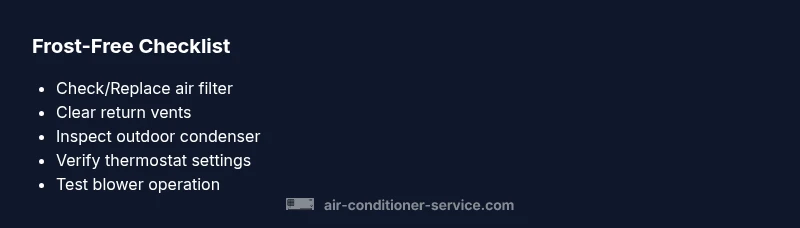
- Inspect and replace the air filter if dirty; a clogged filter is the top culprit for airflow restriction.
- Check the return air grille and supply vents for blockages; clear any furniture or drapes that impede airflow.
- Look for obvious debris around the outdoor condenser and remove leaves, grass, or dirt buildup.
- Confirm the thermostat is set to cool and not on a fan-only or emergency heat setting; confirm the temperature isn’t set unrealistically low for the current conditions.
- Observe the blower inside the air handler. If you can hear the fan running inside but no airflow seems to reach the room, there may be a duct or motor issue. These checks are designed to be safe, quick, and corrective when simple airflow restrictions are the problem. Air Conditioner Service recommends performing them in sequence and documenting what changes after each step.
Diagnostic Flow: Symptom to Diagnosis
Starting with the frost symptom, work through a short, practical diagnostic flow. First, assess airflow (filter, return vent, outdoor unit). If airflow improves with a clean filter and clear vents but the coil remains frozen, the likely cause shifts toward refrigerant or a restricted blower. If airflow remains restricted or the problem recurs after thawing, inspect the blower motor and ductwork for faults. Persistent icing often signals a refrigerant issue or a failed defrost cycle in heat pump systems, which requires a licensed technician. Air Conditioner Service recommends keeping a cooling log: note dates, thermostat settings, outdoor temperature, and any ice formation—this helps the tech pinpoint the fault quickly.
Step-by-Step: Fixes for the Most Common Cause
If the frost is caused by airflow restriction, follow these steps:
- Power off the system at the thermostat and disconnect switch.
- Remove and replace a dirty filter with an appropriately rated one.
- Clear the return air path and outdoor condenser of obstructions.
- Verify the blower is running when the system is on cooling mode.
- Allow the coil to thaw completely before testing again.
- Restart the system and monitor for frost within the first hour of operation.
- If frost recurs, inspect for a refrigerant leak or calculate if a refrigerant recharge is needed (this requires a licensed tech).
- Schedule a professional check if the problem persists beyond thawing and basic airflow fixes. Tip: Always thaw completely before testing—cooling cycles can restart the frost if the coil is still frozen. If you notice strange noises or smells, stop and call a pro.
Prevention Tips to Stop Future Freezes
- Replace air filters every 1–3 months or as recommended by the manufacturer.
- Schedule seasonal inspections to clean coils, test the blower, and verify refrigerant levels.
- Keep outdoor units free of debris and ensure at least 2 feet of clearance around the condenser.
- Use the thermostat properly: avoid left-on cooling at very low temperatures in high humidity; use fan setting when appropriate.
- Address leaks promptly and do not ignore early signs of frost or moisture around the evaporator.
- Maintain proper duct design and seal leaks to prevent pressure drops that promote icing. Air Conditioner Service stresses that prevention reduces emergency calls and keeps equipment efficient.
When to Seek Professional Help and What to Expect
If you thaw the coil and the problem returns quickly, if you suspect a refrigerant leak, or if you hear unusual noises during operation, contact a licensed HVAC technician. A pro will perform a precise refrigerant pressure check, evaluate the evaporator coil condition, inspect electrical connections, and test the defrost or cooling cycle logic. Expect a diagnostic visit that may include leak testing, refrigerant recharge if needed, and a system-wide airflow assessment. In many cases, a single component replacement or a duct fix restores reliable cooling and prevents recurring freezes. The Air Conditioner Service team recommends scheduling service before energy costs rise or compressor damage occurs.
mainTopicQuery_1_3_word_noun_phrase_for_Wikidata_lookup_1_3_word_noun_phrase_for_Wikidata_lookup_1_3_word_noun_phrase_for_Wikidata_lookup_1_3_word_noun_phrase_for_Wikidata_lookup_1_3_word_noun_phrase_for_Wikidata_lookup_1_3_word_noun_phrase_for_Wikidata_lookup_1_3_word_noun_phrase_for_Wikidata_lookup_1_3_word_noun_phrase_for_Wikidata_lookup
Steps
Estimated time: 60-90 minutes
- 1
Shut off and thaw
Power down the system at the thermostat and outdoor disconnect if accessible. Allow several hours for the ice to melt before testing temperature or airflow.
Tip: Do not restart the system until the coil is completely thawed to avoid rapid re-freezing. - 2
Check and replace filter
Inspect the air filter. If dirty, replace with a filter of the correct size and MERV rating recommended for your system.
Tip: A high-quality filter can reduce multiple issues, not just icing. - 3
Clear airflow paths
Clear the return air grille and ensure supply vents are open. Remove any obstructions like furniture or drapes.
Tip: Even small blockages can dramatically reduce airflow. - 4
Inspect the outdoor unit
Remove leaves, grass, and other debris from the condenser. Ensure at least 2 feet of clear space around the unit.
Tip: A dirty outdoor unit reduces heat rejection and promotes icing. - 5
Test the blower and reset
Turn the system back on to cooling mode and listen for the indoor blower. Verify airflow reaches the rooms.
Tip: If there’s no airflow, a blower or circuit problem may exist. - 6
Monitor for re-freezing
Run a short cooling cycle and monitor the coil temperature. If frost returns quickly, proceed to professional assessment.
Tip: Document any recurring patterns (time of day, humidity, outdoor temp). - 7
Evaluate refrigerant status
Do not attempt to handle refrigerant yourself; leaks require a licensed tech to repair and recharge.
Tip: Refrigerant work is hazardous and regulated. - 8
Call a pro if unresolved
If frost persists after thaw and basic fixes, schedule service with Air Conditioner Service or another qualified technician.
Tip: Early professional intervention saves compressor life.
Diagnosis: Frozen evaporator coil or ice buildup on the indoor coil
Possible Causes
- highRestricted airflow due to dirty filter or blocked return vent
- mediumLow refrigerant charge or leak
- lowMalfunctioning blower motor or electrical fault
Fixes
- easyReplace dirty or clogged air filter and clear return vents
- hardCheck for refrigerant leaks and arrange a professional recharge after leak repair
- easyTest blower operation and inspect ductwork for leaks or blockages
Common Questions
What is the most common cause of a frozen air conditioner?
The most frequent cause is restricted airflow, usually from a dirty filter or blocked return vents. Clearing airflow and replacing the filter often resolves the problem. If frosting returns, check for other issues like refrigerant leaks or duct restrictions.
The most common cause is restricted airflow, usually from a dirty filter. Clear the airflow and replace the filter; if it comes back, you may have a leak or duct issue.
Can a frozen AC damage my compressor?
Yes, prolonged freezing can increase pressure and stress on the compressor, potentially causing damage if left unfixed. Thawing and correcting airflow usually prevents long-term harm, but persistent icing warrants professional inspection.
Ice buildup can stress the compressor over time, so thaw and fix airflow; if it keeps freezing, get a pro to check.
Should I turn off the unit to thaw it?
Yes. Turn off the thermostat and the outdoor disconnect if safe, and allow the ice to melt completely before testing airflow or restarting the system.
Turn the system off to thaw, then test airflow once the ice has melted.
How long does it take for a frozen evaporator to thaw?
Thaw times vary with room temperature and humidity, but expect at least 30 minutes in mild conditions and longer in very cold environments.
It usually takes at least half an hour, depending on conditions.
Is a low refrigerant charge a common cause?
Low refrigerant can cause freezing, but it’s less common than airflow issues. If suspected, a licensed technician should confirm and repair leaks before recharging.
Low refrigerant can cause freezing but is less common; get a pro to check for leaks and refrigerant.
When should I call a professional?
Call a professional if frosting recurs after thaw, you suspect a refrigerant leak, there are strange noises, or you’re uncomfortable performing safety steps.
Call a pro if frosting returns or you suspect a leak or electrical issue.
Watch Video
The Essentials
- Identify airflow issues first and fix dirty filters
- thaw completely before testing cooling function
- avoid refrigerant handling yourself—call a professional
- prevent future freezes with regular maintenance