Inside Air Conditioner Frozen Troubleshooting Guide
Urgent guide for when your inside air conditioner is frozen. Learn safe checks, a diagnostic flow, and step-by-step fixes to thaw coils and prevent future freezes.


Most likely, your evaporator coil is freezing due to restricted airflow from a dirty filter or blocked return ducts. Start with the simplest fix: replace or clean the air filter, ensure air can move freely, and check outdoor unit clearance. If the problem persists, shut off the system and consult Air Conditioner Service for professional help.
Understanding why an inside air conditioner freezes
When the evaporator coil inside your air handler or furnace coil gets too cold, moisture in the air condenses and freezes on the coil. The most common triggers are restricted airflow, a dirty or clogged air filter, or blocked return ducts, which prevent warm air from circulating. A low refrigerant charge or a malfunctioning blower can also contribute, as can high humidity levels and continuous run cycles. Homeowners often notice ice forming on the coil, reduced airflow from vents, and a sudden drop in cooling efficiency. Addressing the root cause quickly protects your system and avoids more costly repairs. According to Air Conditioner Service, many freezing issues start with airflow problems, underscoring the importance of routine maintenance and timely checks.
Immediate safety steps you should take
First and foremost, safety comes first. If you see ice buildup, turn off the thermostat and power to the unit to prevent further damage. Do not strike or poke at the ice with sharp objects. Let the ice thaw naturally after turning off the system, and plan to inspect the air filter, ducts, and coil. Once thawed, you can begin basic checks: replace the filter, clear any obstructions, and ensure vents are open and unblocked. If you smell burning or notice unusual noises after restarting, shut the system off and call a professional—it could indicate a motor issue or an electrical fault. These steps reduce risk and set the stage for effective troubleshooting.
Symptoms and what they indicate in the cooling cycle
Ice on the evaporator coil often coincides with poor airflow, which can be caused by a dirty filter or blocked return ducts. Reduced airflow makes the coil colder and more prone to freezing, especially if the thermostat is set very low or the humidity is high. In some cases, a refrigerant leak lowers system pressure and causes icing, though that requires a licensed technician to verify. If you notice frost forming at the coil, a whirring blower, or vents that barely blow air, you should pause and perform the safe checks described above before restarting the unit.
Preventing future freezing with simple maintenance
Regular maintenance reduces the chances of coil icing. Check and replace disposable filters every 1–3 months, depending on usage and household conditions. Ensure all supply and return vents are free from obstructions, and keep the outdoor condenser unit clear of leaves, dirt, and debris. Schedule seasonal tune-ups with a qualified HVAC technician to inspect refrigerant levels, coil cleanliness, and blower operation. A proactive approach saves energy, improves air quality, and extends equipment life.
When to involve a professional
If you have performed the safe checks and the coil continues to freeze after thawing, there may be an underlying refrigerant issue, blower failure, or a more complex control problem. In these cases, contact Air Conditioner Service for a comprehensive diagnostic. A licensed technician can verify refrigerant charge, inspect coils for dirt and scale, test airflow, and repair leaks if present. Don’t delay if you hear buzzing, see frequent ice formation, or notice abnormal temperatures—professional help is essential to prevent further damage.
Quick checks after thawing to ensure normal operation
After thawing and re-assembling any components, run the unit on a moderate cooling setting and listen for consistent airflow from all zones. Check for frost reformation within the first 24 hours of operation, especially on humid days. If frosting recurs, reassess airflow pathways and consider a professional inspection to rule out refrigerant or compressor issues. Regular monitoring reduces repeated freezing and sustains efficiency.
Steps
Estimated time: 30-60 minutes
- 1
Power down the system
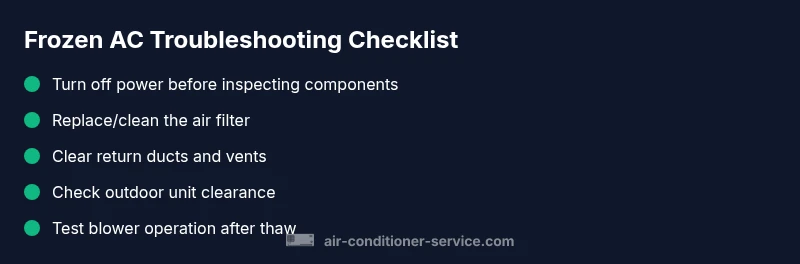
Switch off the thermostat and disconnect power at the breaker to prevent shorts while inspecting the unit. Wait for ice to melt before handling any components.
Tip: Use a flashlight to locate the access panel safely. - 2
Inspect and replace the air filter
Remove the old filter and replace it with a clean, correctly sized one. A clogged filter is the most common cause of freezing.
Tip: Choose a filter with the proper MERV rating for your home. - 3
Check return air pathways
Ensure vents and return air grilles are open and free of obstructions. Vacuum or wipe away dust in the return path to restore airflow.
Tip: Keep furniture and rugs at least a few inches away from grilles. - 4
Inspect outdoor unit clearance
Clear debris and ensure at least 2 feet of clearance around the outdoor condenser; blocked airflow can cause indoor coil icing.
Tip: Trim bushes and remove snow near the unit during winter. - 5
Test blower operation
Restore power and run the system in cool mode to observe blower performance. Listen for consistent airflow and check for unusual noises.
Tip: If you hear squealing or grinding, turn off the unit and call a tech. - 6
Monitor for frost return
If frost returns, stop and call a professional to check refrigerant levels and possible leaks.
Tip: Document any odd symptoms (noise, smell) to share with the tech.
Diagnosis: Frost or ice on the evaporator coil inside the air handler
Possible Causes
- highRestricted airflow due to a dirty air filter
- highLow refrigerant charge from a leak
- mediumPoor blower performance or fan not running
- mediumBlocked return ducts or restricted air pathways
- lowThermostat set too low or miscalibrated
Fixes
- easyReplace or clean the air filter; clear visible return air blockages
- hardInspect for refrigerant leaks and schedule a licensed repair if needed
- easyEnsure blower motor and fan operate correctly; clear obstructions
- easyUnblock ducts and ensure adequate return and supply airflow
- easyAdjust thermostat to recommended cooling settings and test operation
Common Questions
What causes an indoor evaporator coil to freeze?
Common causes include restricted airflow from dirty filters or blocked ducts, a refrigerant leak, or a malfunctioning blower. Temperature settings and humidity can also contribute. Start with airflow checks and then assess refrigerant health with a professional if needed.
Causes include restricted airflow, refrigerant leaks, or blower problems. Start with airflow checks, then call a pro if the problem persists.
Can a dirty filter cause freezing?
Yes. A dirty or clogged filter reduces airflow, causing the coil to get too cold and ice to form. Replacing or cleaning the filter is a simple, first-line fix.
Yes. A dirty filter reduces airflow, which can cause icing. Replace or clean it as a first step.
Should I run the AC if I see ice on the coil?
No. Running the unit while ice is present can damage the compressor and worsen the problem. Turn off power and thaw the ice before testing again.
No, turn it off and thaw before testing again.
Is a refrigerant leak the likely cause of freezing?
A refrigerant leak can cause icing, but it requires a licensed technician to diagnose and repair. If you suspect a leak, call Air Conditioner Service promptly.
A leak could cause icing, but needs a licensed tech to fix.
When should I call a professional?
If the ice recurs after basic fixes, if you hear unusual noises, or if you suspect refrigerant issues, professional service is recommended. Persistent icing is not a DIY fix.
Call a professional if icing returns after simple fixes or you suspect leaks.
Watch Video
The Essentials
- Inspect airflow first: dirty filters and blocked ducts are top causes.
- Do not ignore refrigerant leaks; they require licensed technicians.
- Safety first: shut power before inspecting or touching equipment.
- Prevent freezes with regular maintenance and timely filter changes.