Frozen Air Conditioner Unit Troubleshooting Guide
Urgent, practical steps to diagnose and fix a frozen air conditioner unit. From thawing the coil to restoring airflow and knowing when to call a pro.


Turn off the AC at the thermostat to stop ice buildup and let the evaporator coil thaw. Check and replace dirty air filters to restore airflow, and inspect the outdoor unit for debris or a blocked fan. If the ice returns after thawing or you suspect a refrigerant issue, contact a professional.
What a Frozen Air Conditioner Unit Really Means
A frozen air conditioner unit is not just a nuisance—it’s a signal that something is wrong with airflow, coil operation, or refrigerant behavior. When the evaporator coil becomes too cold, moisture in the air can freeze on the coil, blocking heat transfer and reducing cooling. In many homes, the problem stems from blocked or dirty filters, closed or blocked return vents, or debris around the outdoor condenser. The Air Conditioner Service team notes that addressing the basics often resolves most freezes without expensive repairs. Quick action now prevents bigger problems later, especially in high-humidity climates where frost can form more rapidly. If you’re seeing frost, don’t ignore it—start with simple checks and safer interventions before progressing to more involved fixes.
Common Causes Behind the Freeze
Most freezes start with airflow issues that starve the evaporator of warm air. A clogged filter or obstructed return air path reduces airflow, causing the coil to ice up. Outdoor temperature and dirty condenser coils can also contribute, as can a malfunctioning blower motor or a faulty defrost control. Low refrigerant is a more serious cause that typically requires a professional repair. In many cases, keeping the filter clean and ensuring clear space around the outdoor unit solves the problem. Air Conditioner Service analysis shows that routine maintenance, not just rapid intervention, prevents recurring freezing.
Immediate Safety Steps to Take Now
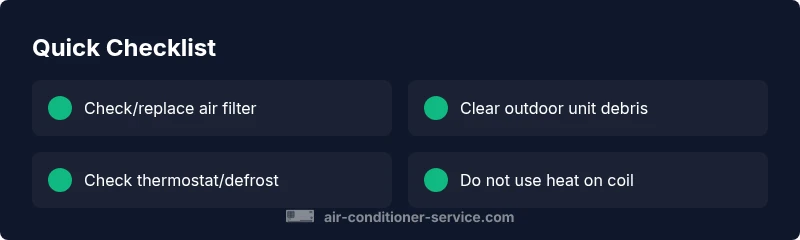
First, power down the system at the thermostat and, if possible, at the circuit breaker to avoid any chance of energizing an ice-encrusted coil. Do not attempt to poke or melt the ice with heat—this can damage components or create a safety hazard. Check the air filter and replace it if dirty, then inspect return ducts for blockages. Clear leaves, dust, and debris from the outdoor unit’s surroundings to improve airflow. If you notice burning smells (or any electrical discoloration), stop and call a professional immediately. The goal is to thaw safely while preserving components for future use.
Thawing the Evaporator Coil Safely
Let the system thaw naturally with the thermostat off and the fan set to ON only if it does not energize the compressor. This helps circulate room air across the coil without driving cold refrigerant through a frozen loop. Expect thawing to take several hours, during which you should monitor for re-freezing. After thawing, inspect the coil for obvious frost, and then reassemble and test the system in stages. If icing recurs, do not run the unit repeatedly; schedule a diagnostic to check for airflow restrictions or refrigerant issues.
Restoring Airflow: Filters, Ducts, and Outdoor Unit
A clean filter is the easiest path to preventing freezes. Replace disposable or washable filters every 1–3 months depending on use and environment. Inspect return vents to ensure they’re not blocked by furniture or stored items. On the outdoor unit, remove debris and ensure the fan spins freely when powered. A dirty condenser coil should be cleaned carefully; if you see oil or lubrication issues with the fan, stop and call a professional. Regular maintenance reduces frost risk and keeps your system running efficiently.
When to Call Air Conditioner Service
If ice returns after thawing, or you notice symptoms beyond simple airflow issues, it’s time to involve a professional. Refrigerant leaks, a failing blower, or a faulty defrost control require specialized tools and safety protocols. The Air Conditioner Service team recommends booking a diagnostic if you’re unsure about refrigerant status or if the outdoor unit remains blocked with ice or debris after cleaning. Pro help ensures lasting repairs and protects your equipment’s lifespan.
Steps
Estimated time: 2-3 hours (including thaw time and testing)
- 1
Power down the system
Turn off the thermostat and switch off power at the circuit breaker to prevent electrical hazards while thawing. This reduces the risk of damaging components during the ice melt.
Tip: Label the breaker for future reference; never work on live wires near ice. - 2
Inspect and replace the air filter
Remove the old filter and replace it with a clean one that matches your unit’s rating. A clean filter restores airflow and helps prevent future freezes.
Tip: Keep spare filters on hand and set reminders to replace monthly during peak seasons. - 3
Clear return and supply pathways
Check all return air vents for obstructions (furniture, boxes, or drapes) and remove any blockages. Also inspect the supply ducts for kinks or heavy dust buildup.
Tip: Move furniture away from vents to maintain consistent airflow. - 4
Assess the outdoor unit
Remove leaves and debris around the outdoor condenser. If the fan does not spin freely when powered, there may be a motor or capacitor issue that requires a professional.
Tip: Do not bypass safety grills or touch exposed electrical components. - 5
Thaw the coil safely
With the power off, allow the evaporator coil to thaw naturally. If you restart, use the fan only at first and monitor the system for re-freezing.
Tip: Avoid using heat sources near refrigerant lines; they can damage the coil. - 6
Test operation gradually
Restore power and set the thermostat to cooling. Listen for unusual noises and watch for frost on the coil for the first hour. If re-freeze occurs, stop and proceed to step 7.
Tip: If frost reappears, don’t continue running the unit; professional assessment is needed. - 7
Check refrigerant status
If the unit cools poorly or continues to frost, refrigerant level might be low due to a leak. This requires a refrigerant recharge by a licensed tech.
Tip: Never attempt refrigerant handling yourself; it’s a hazardous process. - 8
Schedule a professional diagnostic
If basic steps don’t resolve the problem, book a professional service. A technician can confirm refrigerant integrity, inspect components, and perform necessary repairs.
Tip: Document symptoms and timings to help the technician diagnose faster.
Diagnosis: AC blows warm air and the evaporator coil is icy or frosted
Possible Causes
- highRestricted airflow from a dirty filter or blocked return duct
- mediumOutdoor unit blocked by debris or a fan not operating properly
- lowLow refrigerant due to a leak
- mediumThermostat or defrost control malfunction
Fixes
- easyPower off, replace dirty filter, and ensure clear return paths for unobstructed airflow
- easyClear debris around outdoor unit, confirm condenser fan runs, and clean coils if accessible
- easyCheck thermostat settings/defrost controls for proper operation
- hardIf the issue persists, arrange a refrigerant check and leak repair by a technician
Common Questions
What causes a frozen air conditioner evaporator coil?
Most freezes are caused by restricted airflow from dirty filters or blocked return vents, plus debris around the outdoor unit. A malfunctioning blower or thermostat can contribute, and low refrigerant is a less common but serious factor.
Most freezes happen because airflow is blocked by a dirty filter or blocked return vents. Debris around the outdoor unit and a faulty blower can contribute, and refrigerant leaks are less common but serious.
How long does it take for the coil to thaw after turning off the AC?
Thaw time varies with humidity and temperature, but it typically takes several hours. Do not rush the process by applying heat or turning the unit back on prematurely.
It usually takes several hours for the coil to thaw. Avoid using heat and don’t restart the unit until it’s fully thawed.
Can a dirty filter cause freezing?
Yes. A dirty or clogged filter reduces airflow, causing the evaporator coil to ice up. Replacing the filter often resolves the problem.
Absolutely. Dirty filters cut airflow and can make the coil freeze. Replacing the filter often fixes it.
Is low refrigerant a common cause of a frozen unit?
Low refrigerant due to a leak is a possible cause but less common than airflow issues. A professional can confirm refrigerant levels and repair leaks if needed.
Low refrigerant can cause freezing, but it's less common. A pro should check levels and fix leaks if needed.
Should I run the fan during thawing?
Running the indoor fan (without the compressor) can help circulate air and speed thaw, but avoid operating the compressor until solid ice has melted.
Yes, run the fan only during thaw to circulate air, not the compressor.
When is professional help absolutely necessary?
If the ice reappears after thawing, or you suspect refrigerant leaks or electrical issues, call a licensed HVAC technician promptly. Do not attempt refrigerant work yourself.
Call a licensed HVAC technician if the ice returns or you suspect a refrigerant or electrical issue.
Can window or portable units freeze like central systems?
Yes, window and portable units can freeze for the same airflow or outdoor-coil reasons. Apply the same checks: filter, airflow, and outdoor clearance.
Window or portable units can freeze too—check filters and airflow.
What maintenance prevents freezing long-term?
Regularly replace filters, clean coils, and ensure outdoor clearance. Schedule annual professional maintenance to detect leaks and performance issues early.
Regular maintenance and annual checkups help prevent freezing.
Watch Video
The Essentials
- Address airflow issues first to prevent freezer cycles.
- Thaw coils safely and avoid applying heat directly to the ice.
- Keep filters clean and outdoor unit clear of debris.
- If freezing recurs, seek professional diagnosis to check refrigerant and system integrity.
- Regular maintenance reduces future freezing incidents.