What to Do When Car Air Conditioner Is Not Cooling
Struggling with warm air from your car A/C? This practical troubleshooting guide covers common causes, safe do-it-yourself checks, and when to call a professional for reliable cooling.


If you’re wondering what to do when car air conditioner is not cooling, you’re not alone, and the fix is often straightforward. Start with a quick self-check that doesn’t require tools: ensure the blower fan is delivering strong airflow, look for a clogged cabin air filter, and inspect visible hoses for oily residue signaling a refrigerant leak. Also verify the condenser and radiator fins aren’t blocked. If these checks don’t restore cold air, follow the diagnostic flow and consider a professional recharge or component repair.
Why car A/C not cooling happens
Car A/C cooling depends on refrigerant flow, good airflow, and properly functioning components. When any of these subsystems falter, you notice warmer cabin air, reduced cold air, or intermittent cooling. If you’re searching for what to do when car air conditioner is not cooling, you’re not alone, and the fix is often straightforward. Start with a quick self-check that doesn’t require tools: ensure the blower fan is delivering strong airflow, look for a clogged cabin air filter, and inspect visible hoses for oily residue that signals a refrigerant leak. Also verify that the condenser and radiator fins are clean and not blocked by leaves or debris. If these checks don’t restore cold air, you’ll want to follow the diagnostic flow and, if needed, arrange a professional recharge or component repair. This approach keeps your car safer and cooler without unnecessary steps.
Common causes at a glance
Not cooling often comes from simple, everyday culprits. The cabin air filter is dusty, the refrigerant is low due to a leak, the compressor clutch fails, or airflow to the evaporator is restricted. Less common but possible issues include a damaged condenser, a faulty blend door that blocks cold air, or an electrical fault that prevents the compressor from engaging. Start with the most obvious items: break out dust in the cabin air filter, then look for oily residue around refrigerant lines and behind the bumper where the condenser sits. Finally, check for any warning lights or fault codes via your car’s onboard computer if available. By prioritizing likely causes, you can save time and money and determine when a professional visit is necessary.
Quick home checks before a mechanic
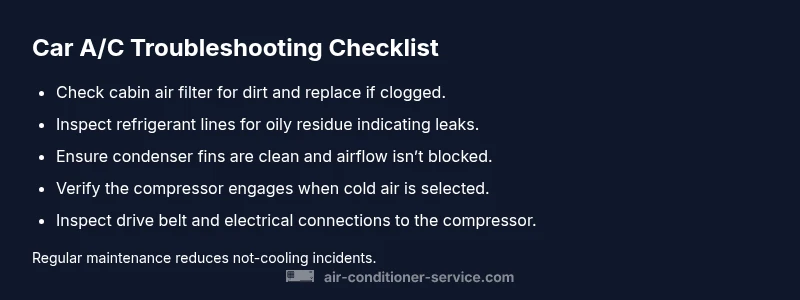
These checks are safe and quick and don’t require special tools. First, confirm you’ve set the climate control to cold and that the fan is running on high, since weak airflow can feel like not cooling. Next, inspect the cabin air filter and replace if dirty. Then, perform a visual inspection for refrigerant leaks: look for oily residue on hoses and connections, especially near the compressor. Check the drive belt for wear and ensure it’s not slipping. Finally, make sure the condenser fins are free of leaves, bugs, or debris to ensure proper heat rejection. If you find a clear issue, address it; if not, proceed to the diagnostic flow or seek a professional evaluation.
Diagnostic Flow: Symptom → Diagnosis → Solutions
Begin with the symptom: air is warm or only slightly cool, and you hear no engaging click from the compressor. The most likely causes, in order, are: low refrigerant (high) due to a leak, blocked airflow from a dirty filter (high), or a failed compressor or clutch (medium). A blocked condenser or damaged cooling coils (low) can also reduce cooling. For each cause, apply the corresponding solution: recharge and fix leaks for refrigerant; replace cabin air filter and verify airflow for airflow issues; repair or replace the compressor or clutch, and ensure electrical connections are sound for compressor problems; clean or replace the condenser if airflow is restricted. If none of these steps restore cooling, it’s time to consult an air conditioning professional for a precise diagnosis and safe handling of refrigerant.
Step-by-Step: Fixes for the most common causes
-
Low refrigerant due to a leak: A tech must locate the leak, evacuate the system, repair the leak, and recharge with the correct refrigerant; this is a professional fix. Tip: If you notice oily residue around hoses, mention it when you call for service.
-
Clogged cabin air filter: Locate and replace the cabin air filter; this is an easy DIY task and should improve airflow immediately. Tip: Mark your calendar to replace every 12,000–15,000 miles or per your vehicle manual.
-
Faulty compressor or clutch: Inspect belts and electrical connections; replacement of worn parts is typically required and should be done by a professional. Tip: A failing compressor can cause belt wear and engine stress.
-
Blocked condenser airflow: Clean the condenser fins and remove debris; in case of damage, replacement is often necessary. Tip: Park in a shaded area while you work and avoid bending fins.
-
Electrical faults or sensors: Check fuses and relays; if the fault persists, use a professional diagnostic tool to read codes. Tip: Do not bypass safety relays; improper wiring can cause hazards.
-
After any repair, test the system: Run the AC on max cooling with the engine running for several minutes and verify cold air delivery. Tip: Monitor for leaks after a recharge.
Safety, warnings, and common mistakes
- Safety: Refrigerant handling must be performed by a licensed professional. Never vent or release refrigerant and never open high-pressure lines.
- Common mistakes: Assuming any not-cooling issue is simple; using the wrong refrigerant type; neglecting to fix leaks can lead to repeated failures.
- Electrical hazards: Working around the electrical system without proper knowledge can cause shocks or shorts.
- Aftercare: Dispose of old filters and parts properly; confirm the system holds a proper charge after service.
Prevention: maintenance to avoid not cooling
Regular maintenance reduces the risk of not cooling. Replace cabin air filters on schedule, check the drive belt for wear, and ensure condenser fins stay clean from debris. Periodically have the system inspected for leaks and proper refrigerant charge. Keeping a maintenance log helps you catch issues early and avoid emergency repairs.
Final drive-ready checklist
Before you drive away, confirm the A/C is cooling properly, ensure the climate controls stay set to cold, and watch for any unusual noises, smells, or gauge readings. If the problem returns, schedule a professional evaluation rather than continuing to drive with reduced cooling.
When to seek professional help and what to expect
If the steps above don’t restore cooling or you notice refrigerant leaks, refrigerant smell, or electrical faults, contact a professional immediately. A technician will locate leaks, recover refrigerant, repair the system, and recharge it to the correct specification. Expect a multi-hour appointment for leaks repair and a recharge, and plan for a follow-up check to confirm the fix.
Wrap: quick recap for car A/C troubleshooting
The most common fixes are cabin air filter replacement, leak repair with refrigerant recharge, and ensuring condenser airflow. Start with simple checks, follow the diagnostic flow, and know when a pro is required to safely restore cooling.
Steps
Estimated time: 60-75 minutes
- 1
Verify climate control settings
Turn the ignition on, set the AC to the coldest setting, and crank the fan to high. Confirm that the system responds with airflow and cool air within a few minutes.
Tip: If you have dual zones, test both sides for discrepancies. - 2
Inspect the cabin air filter
Locate the filter housing, remove the filter, and check for dirt, debris, or mold. Replace if dirty to restore airflow.
Tip: Keep a spare cabin air filter on hand for quick swaps. - 3
Check for refrigerant leaks and compressor engagement
Look for oily residue on hoses near the compressor and listen for a definite click when the compressor engages. No engagement often points to electrical or clutch issues.
Tip: Do not attempt to recharge refrigerant yourself unless you’re trained. - 4
Inspect the condenser and radiator area
With the engine cool, check that the condenser fins are clear of leaves and debris. Clear airflow is essential for proper heat rejection.
Tip: Be gentle with fins to avoid permanent damage. - 5
Check drive belt and electricals
Inspect the belt for cracks or looseness and verify electrical connections to the compressor. A slipping belt or loose connector can prevent cooling.
Tip: If belt shows wear, replace; don’t reuse a worn belt. - 6
Decide on recharge vs. professional service
If leaks are suspected or refrigerant charge is low, plan a professional recharge after leak repair. If the compressor or clutch seems faulty, professional service is generally required.
Tip: Document observations and symptoms to share with the tech. - 7
Test and confirm cooling after service
Run the A/C for several minutes and monitor whether cold air returns. Recheck for leaks after recharge.
Tip: Keep an eye on cabin comfort for the next few days.
Diagnosis: Car A/C not cooling or blows warm air
Possible Causes
- highLow refrigerant due to leak
- highBlocked cabin air filter or poor airflow
- mediumFaulty compressor or clutch
- lowBlocked condenser airflow or damaged condenser
Fixes
- hardLocate and repair refrigerant leak, evacuate and recharge to spec; replace damaged components if needed
- easyReplace cabin air filter and ensure blower delivers adequate airflow
- mediumInspect belt and clutch; repair or replace compressor or electrical connections
- mediumClean condenser fins; replace condenser if damaged
Common Questions
What is the first thing I should check if my car A/C isn't cooling?
Start with the basics: confirm the climate control is set to cold, the fan is on high, and inspect the cabin air filter for dirt. If the air remains warm, proceed with the diagnostic flow to pinpoint the cause.
First check the controls and air filter, then follow the diagnostic steps to identify the cause.
Can low refrigerant cause not cooling in a car A/C?
Yes. A leak or a low refrigerant charge can prevent the system from producing cold air. A professional should locate leaks and recharge to the proper specification.
Low refrigerant can prevent cooling; a pro should locate leaks and recharge.
Is a clogged cabin air filter a common cause of not cooling?
A dirty cabin air filter reduces airflow and cooling efficiency. Replacing it is an easy first step before aggressive diagnostics.
Yes, a dirty cabin filter is a common, easy fix.
How long does a refrigerant recharge take?
Recharge time varies with leaks and system access but typically requires a professional appointment and could take several hours including leak repair and recharging.
Recharge times vary; expect a professional appointment longer than a quick DIY fix.
When should I replace the car A/C condenser?
Condenser replacement is considered when the condenser is damaged or airflow is severely restricted. A pro should assess heat rejection and refrigerant flow.
Condenser replacement is needed if it’s damaged or airflow is blocked.
Is it safe to drive with a not-cooling A/C?
If the car overheats or refrigerant leaks are suspected, limit driving and seek professional evaluation. Driving with a faulty A/C can place additional strain on the engine.
Driving with a not-cooling A/C isn’t ideal; get it checked promptly.
Watch Video
The Essentials
- Start with safe, simple checks like airflow and cabin filter.
- Leaking refrigerant and blocked condensers are common not-cooling culprits.
- Use the diagnostic flow to escalate to professional help when needed.
- Professional recharge or compressor repair is often required for not-cooling car A/C.