What to Do If Air Conditioner Is Leaking Water
Urgent step-by-step troubleshooting for water leaks from your air conditioner. Learn quick fixes, safety tips, and when to call a professional from Air Conditioner Service.


Most AC leaks trace to a clogged condensate drain line or a dirty air filter causing excess moisture. Start by turning off the unit, locate the condensate drain, and clear any blockage. If water continues to pool, shut off power completely and contact Air Conditioner Service or a licensed technician to prevent water damage and refrigerant risk.
Common Causes of Water Leaks from Your AC (what to do if air conditioner is leaking water)
If you are asking what to do if air conditioner is leaking water, this section explains the main reasons and how they arise. According to Air Conditioner Service, the most frequent culprits are a clogged condensate drain line, a blocked or dirty air filter that reduces airflow and causes the evaporator coil to overhang moisture, a cracked or displaced condensate pan, or improper installation that prevents proper drainage. In humid environments, the drainage system can be overwhelmed by excess condensate during peak cooling. A secondary sign is water on the floor near the indoor unit or a visible drip from the drain line. If you notice ice on the evaporator coil or frost around the section, airflow restrictions or refrigerant issues may be involved. Always switch the unit off and avoid tampering with refrigerant lines; mishandling refrigerant is dangerous and illegal in many locations. Routine maintenance reduces leaks and protects your home from water damage and mold growth.
Quick Checks You Can Safely Perform
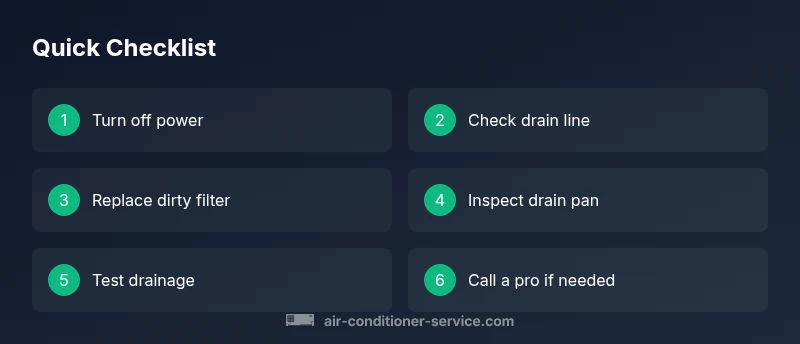
Before calling for help, perform a few safe checks. Ensure the power to the indoor unit is off at the breaker, then locate the condensate drain line and the drain pan. Look for obvious clogs, kinks, or standing water in the pan. Check the air filter; a dirty filter reduces airflow and can lead to frost on the coil, which melts into water leaks once the unit cycles. Inspect the outdoor unit for blocked coils or a clogged drainage pathway from the drain line to the outdoors. Do not use chemical drain cleaners inside the unit; these substances can damage components and venting. If you find the drain line clogged, you can attempt a gentle flush with a specialized cleaning solution or a wet/dry vacuum from the exterior line. If the leak continues after these checks, move to the diagnostic steps or contact a professional.
Understanding the Drainage System: Drain Line, Pan, and Trap
Your AC removes humidity as part of the cooling process. Water produced travels through a condensate drain line into a drain or outside. A clogged drain line is the leading cause of indoor leaks. The drain pan collects condensate; cracks or misalignment cause overflow. Some installations include a P-trap to prevent backflow; if the trap is blocked or disconnected, water will pool around the unit. Regular inspection of these components during maintenance helps prevent unexpected leaks.
Step-by-Step Overview for the Drain-Line Fix
This section outlines a practical approach to clearing a clogged drain line without creating new problems. Start with turning off power, then locate the access point for the condensate line. Use a flexible drain snake or a gentle flush designed for condensate lines. Do not force anything that could crack the pipe or push debris further in. After clearing, run the system briefly to verify that water drains correctly and monitor for new leaks. If you hear gurgling or see water backing up, pause and seek professional assistance.
Safety, Warnings, and When to Call a Professional
Handling an active water leak involves electricity and refrigerant. Always shut off power at the breaker before touching any parts. If you notice signs of refrigerant leakage, a hissing sound, or a chemical smell, stop immediately and call a licensed technician. Do not attempt to repair refrigerant lines yourself. Leaks coming from the outdoor unit or unexpected water near electrical components require professional inspection.
Prevention: Keep Your AC Leak-Free with Routine Maintenance
Preventing leaks starts with proactive maintenance. Regularly replace or clean air filters, inspect the condensate pan for cracks, and ensure proper drainage by keeping the drain line clear. Schedule professional maintenance to check refrigerant pressure, electrical connections, and the condensate system. A well-maintained system runs more efficiently, reduces humidity, and minimizes the risk of future leaks.
Steps
Estimated time: 45-60 minutes
- 1
Power off and access indoor unit
Shut off power at the breaker and remove the service panel. Locate the evaporator area and keep a flashlight handy to inspect for moisture, debris, or ice. Document any obvious damage before proceeding.
Tip: Use a non-metallic tool and dry hands to avoid damage. - 2
Inspect drain line and pan
Trace the condensate line from the evaporator to the drain. Look for clogs, kinks, or a pan with standing water. If you see blockages, prepare to clear them safely.
Tip: Have a towel ready for minor spills. - 3
Clean or replace air filter
Remove the filter, check for dirt and blockages, and either clean (if reusable) or replace with the correct size. This restores airflow and reduces the chance of coil freezing.
Tip: Only use filters rated for your unit; generic sizes can reduce performance. - 4
Clear the drain line
If a clog is visible, use a condensate line cleaning tool or a wet/dry vacuum to remove debris. Avoid harsh chemicals near electrical components. Re-test drainage after clearing.
Tip: Never force debris; gentle coaxing is safer. - 5
Check for ice on evaporator coil
With power still off, inspect the coil for ice buildup. If present, allow thawing and resolve airflow restrictions before restarting.
Tip: Post-thaw, ensure return air paths are unobstructed. - 6
Test operation and monitor
Restore power and run cooling briefly while observing for leaks and proper drainage. If leakage recurs, stop and call a professional for a full diagnosis.
Tip: Keep a towel handy during the test.
Diagnosis: Visible water pooling around the indoor evaporator or on the floor near the air handler.
Possible Causes
- highClogged condensate drain line
- mediumBlocked or dirty air filter causing evaporator coil freezing
- lowDamaged or dislodged drain pan or condensate tray
Fixes
- easyUnclog the condensate drain line and check the trap; flush and clear debris using appropriate tools
- easyReplace or clean the air filter and restore proper airflow; inspect for ice on the coil
- mediumInspect drain pan for cracks or misalignment; reseal or replace as needed
Common Questions
What causes air conditioner water leaks?
Leaks are most often caused by a clogged condensate drain line, a dirty air filter leading to ice build-up, or a cracked drain pan. Improper installation can also create drainage problems. Regular maintenance helps prevent these issues.
Leaks are usually from a clogged drain line, dirty filter, or a cracked pan. Regular maintenance helps prevent them.
Is it safe to operate the AC when it is leaking water?
No. Water around the indoor unit can indicate drainage or refrigerant issues. Turn off the unit and check for obvious clogs, then call a professional if the leak persists.
No—shut it off and call a pro if the leak continues.
Can a clogged drain line be cleared by DIY methods?
Yes, in many cases you can clear a clog with a drain snake or a gentle flush, but avoid harsh chemicals near electrical components. If the line keeps clogging, a professional should inspect the drain and trap.
You can often clear a clog with a snake or gentle flush, but stop if it reoccurs.
Will cleaning the drain line fix the leak permanently?
If the underlying issue is a clogged line, clearing it stops the overflow. If other components are damaged or airflow is restricted, the leak may return. A full diagnostic is recommended.
Clearing the line helps, but leaks may recur if other parts are damaged.
When should I call a professional?
Call a professional if you cannot locate the leak, if you see refrigerant signs, or if the unit continues to leak after cleaning the line. Electrical safety risks also require a pro.
Call a pro if you can't fix it or you suspect refrigerant or electrical issues.
How can I prevent leaks in the future?
Maintain clean filters, keep the drain line clear, and schedule regular maintenance to catch problems early. A well-maintained system runs cooler and saves energy.
Regular maintenance helps prevent leaks and keeps the system efficient.
Watch Video
The Essentials
- Turn off the unit immediately to prevent further damage.
- Clear the condensate drain line to stop leaks.
- Check and replace the air filter regularly.
- If the leak persists, seek professional diagnosis.
- Regular maintenance reduces leak risk.