Air Conditioner Not Cooling: Quick Troubleshooting Guide
This urgent troubleshooting guide helps identify why an air conditioner not cooling, with steps, safety reminders, and when to contact Air Conditioner Service.


If your air conditioner not cooling, the most common cause is restricted airflow from a dirty filter or a blocked outdoor condenser, which lowers cooling performance. The Air Conditioner Service team recommends starting with the basics: check and replace the filter, ensure the outdoor unit has at least 12 inches of clearance, and verify thermostat settings. If these basics don’t fix it, inspect for a tripped breaker or ice on the evaporator coil.
Why the air conditioner not cooling happens
When the unit runs but fails to lower the room temperature, the root cause is often an airflow or refrigerant issue rather than a dead compressor. In many homes, not cooling is traced to restricted air movement, which makes the evaporator coil freeze or reduces heat transfer. The phrase air conditioner not cooling is a common service call in July and August when demand is highest. Air Conditioner Service notes that early symptom recognition leads to faster fixes and lower costs. Typical culprits include a dirty air filter, blocked outdoor condenser, improper thermostat settings, and simple wiring or switch problems. Addressing these problems quickly can restore comfort and save energy. In some cases, the problem is a temporary outage due to a tripped breaker, which is easy to reset, while in others the coil icing or refrigerant charge may require professional attention.
Quick checks you can safely perform
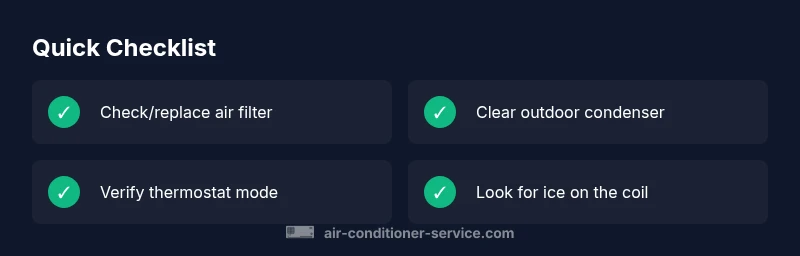
Before you call for help, run through a short list of checks that cover the most common causes of not cooling. Start with safety: turn off power before touching any electrical components. Inspect the air filter; replace if dirty or clogged. Next, look at the outdoor condenser: ensure there is at least 12 inches of clearance around it and remove leaves, grass, or debris. Check the thermostat or control settings: confirm the mode is Cooling, the fan is not off, and the temperature setpoint is appropriate. If you see ice on the indoor coil or notice an unusual hissing sound, turn the system off to thaw and do not operate until checked. These basics solve many not cooling issues and buy time while you plan the next steps.
Diagnostic flow: symptom → diagnosis → solutions
Start with the symptom of not cooling and work through a simple classification: airflow problems, refrigerant issues, and controls or electrical faults. If airflow is restricted (dirty filter, blocked vents, or dirty condenser), the diagnosis points to cleaning or replacement and improved airflow. If the coil is iced or the refrigerant charge is low, this is more serious and may require a professional. If the thermostat or wiring is suspect, recalibration or replacement of the control board can resolve the issue. For each diagnosis, apply the solution in order of least to most invasive: clean/replace filters, clear outdoor units, reset controls, then escalate to professional service if the problem persists.
Preventive maintenance and quick wins for not cooling scenarios
Preventive maintenance reduces the odds of future outages. Schedule seasonal checks, replace filters regularly, and keep outdoor units clear of debris. Use a programmable thermostat to maintain consistent cooling, and inspect ductwork for leaks, which can cause uneven cooling and increased energy use. If you have a repeat problem, document when it occurs (outside temperature, system mode, and any unusual noises) to help a technician diagnose faster. Remember: consistent maintenance is the best defense against unexpected not cooling events.
Safety notes and when to call a professional
Working around electrical components can be dangerous. If you suspect a refrigerant leak, a frozen coil that won’t thaw, or signs of electrical trouble (burning smell, buzzing noises, or scorch marks), stop immediately and contact a qualified HVAC technician. Do not attempt refrigerant repairs yourself. For many households, a technician can diagnose refrigerant levels, test for leaks, and recharge safely. If the basic checks do not restore cooling, professional involvement is recommended.
Steps
Estimated time: 30-45 minutes
- 1
Power off and locate the filter
Turn off the air handler at the thermostat and circuit breaker. Locate the return-air filter, slide it out, and inspect for dust and debris. A visibly dirty filter reduces airflow and cooling efficiency.
Tip: Note the filter size for easy replacement later. - 2
Inspect and replace the filter
If the filter is dark or clogged, replace it with a new one of the correct size. A clean filter can restore airflow and significantly improve performance in a short time.
Tip: Keep a spare filter on hand and replace every 1-3 months. - 3
Check outdoor condenser and vents
Go outside and check the condenser for obstructions like leaves or grass. Trim vegetation and ensure airflow around the unit. Remove any debris and verify the grille isn’t bent.
Tip: Clear at least 12 inches around the unit for optimal airflow. - 4
Reset controls and test cooling
Turn the thermostat off, wait 30 seconds, then set to Cool and a comfortable temperature. Listen for the fan running and feel for cold air at the supply registers.
Tip: If nothing happens, check for a blown fuse or a tripped breaker. - 5
Assess refrigerant and call a pro
If the above fixes don’t restore cooling, refrigerant issues or a faulty compressor may be involved. Only a licensed technician should handle refrigerant.
Tip: Do not attempt refrigerant repairs yourself.
Diagnosis: AC won't cool room to desired temperature
Possible Causes
- highRestricted airflow due to dirty filter
- highCondenser coil dirty or blocked
- mediumThermostat or control issues
- lowLow refrigerant charge
- lowElectrical issues or tripped breaker
Fixes
- easyReplace or clean the air filter
- easyClear debris around condenser and ensure 12 inches of clearance
- easyReset thermostat controls and verify mode
- mediumInspect electrical panel for tripped breakers; if cooling still fails, call a professional
- mediumIf refrigerant or coil icing is suspected, contact a licensed HVAC technician
Common Questions
Why is my air conditioner not cooling even though the fan runs?
A running fan with warm air usually means airflow problems or a frozen coil. Check filters, vents, and thermostat settings first, then look for ice on the coil. If the issue persists, professional diagnosis may be required.
If the fan runs but the room stays warm, start with airflow and thermostat checks, then consider a professional check if needed.
Can a dirty filter cause not cooling?
Yes. A clogged filter restricts airflow, reducing cooling efficiency and may cause the evaporator to frost. Replace the filter and see if cooling improves.
A dirty filter reduces airflow and can lead to poor cooling—replace it and test.
What should I check on the outdoor unit?
Ensure there is clear space around the condenser, free of debris. Remove plants or objects that block airflow and clean the fins gently if needed. Poor outdoor airflow hurts cooling performance.
Make sure the outdoor unit has nothing blocking it and is free of debris.
My thermostat shows cool but the room is warm, what gives?
Thermostat miscalibration or setting errors can cause this. Verify mode is Cooling, setpoint is appropriate, and consider recalibrating or replacing the thermostat if needed.
Check that your thermostat is set to cooling and calibrated correctly.
When should I call a professional for not cooling?
If basic checks don’t solve the problem or you notice ice, refrigerant signs, or electrical issues, contact a licensed HVAC technician for a thorough diagnostic and safe repairs.
If simple checks fail or you detect ice or electrical issues, call a professional.
Is it safe to keep using the AC if it’s not cooling well?
Continuing to run a malfunctioning unit can waste energy and damage components. Limit use and seek a diagnosis, especially if you notice icing or unusual noises.
Try to limit use and get a diagnosis if it’s not cooling properly.
Watch Video
The Essentials
- Start with basic checks before more complex fixes
- Keep filters clean and outdoor clearance high
- Reset controls and test cooling safely
- Call a pro for refrigerant or electrical concerns