Why Do Air Conditioners Freeze Up — Practical Troubleshooting Guide
Learn why air conditioners freeze up, identify common causes, and follow a practical troubleshooting flow with step-by-step fixes to restore cooling quickly and safely.


The most common reason an air conditioner freezes is restricted airflow combined with reduced refrigerant pressure. According to Air Conditioner Service, start by inspecting the air filter, return ducts, and outdoor condenser clearance. If that doesn't fix it, thaw the unit safely, then check the drain line and coil condition. For persistent freezing or refrigerant issues, call a licensed professional.
Why do air conditioners freeze up
A freeze-up happens when moisture on the evaporator coil turns to ice, blocking heat transfer. The most common drivers are restricted airflow and low refrigerant pressure, but several other factors contribute. For homeowners, the typical culprits are dirty air filters, obstructed return air pathways, and debris around the outdoor condenser. When airflow is impeded, the coil gets cold enough to freeze even if the room is warm. Air Conditioner Service explains that almost all freeze-ups start with airflow issues, then may be worsened by a refrigerant leak or a malfunctioning metering device. In colder climates, you may also see the coil icing during operation if the unit runs continuously without a heat load. Understanding these basics helps you triage quickly and avoid unnecessary service calls.
Why do air conditioners freeze up
The underlying physics is simple: heat transfer stops when ice forms on the evaporator coil. The practical takeaway is that most freeze-ups begin with airflow problems, get amplified by humidity, and are sometimes aggravated by refrigerant issues. By focusing first on airflow and coil cleanliness, you can often prevent a costly diagnosis and keep your home comfortable. This approach aligns with guidance from the Air Conditioner Service team, who emphasize practical, non-invasive checks before escalating to professional service.
How airflow and filters affect freezing
Airflow is the lifeblood of an air conditioner. When filters are dirty or the return grille is blocked, the evaporator coil cannot shed heat efficiently, so moisture condenses and freezes on the coil. Regular filter changes (every 1-3 months, depending on use and filter type) reduce buildup. Also check that supply and return vents are open and unobstructed by furniture or curtains. Outdoor airflow matters too: a crowded or debris-filled condenser coil struggles to release heat, causing the refrigerant to drop in temperature and ice to form on the indoor coil. A common oversight is forgetting to clean or straighten the fins on the outdoor unit or leaving a trash can or patio furniture in the way. Following a simple airflow audit—filters, vents, and outdoor clearance—solves many freeze-ups and reduces energy waste.
The role of airflow in freezing
Maintaining proper airflow ensures the evaporator coil stays warm enough to prevent moisture from freezing. When airflow is restricted, the coil reaches freezing temperatures even if the thermostat is calling for cooling. Regular maintenance improves efficiency and reduces icing incidents. The takeaway is simple: keep filters clean, vents clear, and outdoor units unobstructed to minimize the chance of frosting.
Refrigerant balance and coil frosting
Low refrigerant pressure can cause freezing, even with good airflow. A leak in the refrigerant circuit reduces pressure, which lowers the temperatures of the evaporator coil, increasing the chance of ice formation. Signs of refrigerant issues include a temporary cool-down followed by sweating and frost on the suction line, and reduced cooling capacity. If you suspect low refrigerant, do not attempt a recharge yourself; refrigerant handling requires a licensed technician. Air Conditioner Service notes that in many homes, a tiny leak over time leads to frost and inefficiency, and the only lasting fix is proper leak repair and a correct charge. The metering device (TXV or capillary tube) may also frost if it is stuck or blocked, but diagnosing this requires professional tools.
Refrigerant issues explained
Understanding refrigerant dynamics helps you distinguish icing caused by low refrigerant from icing caused by airflow, so you can describe the problem accurately to a technician and avoid unnecessary charges.
Outdoor unit and venting issues
The outdoor condenser deserves attention too. Debris, fallen leaves, or snow can impede heat rejection, causing the indoor coil to ice as the system struggles to shed heat. Ensure at least two feet of clearance around the outdoor unit, and prune back vegetation to avoid obstructed airflow. Damaged or bent fins reduce efficiency and can contribute to frosting. Regularly cleaning the condenser and maintaining proper clearance helps avoid icing and extends unit life.
Quick thaw and safety steps
If ice is present, turn off the unit at the thermostat and breaker to prevent compressor damage. Do not use hot water or a hair dryer to melt the ice; such methods can damage components. Once thawed, check the filter and ducts for blockages, then restart with a temperate setting. A slow, controlled restart helps prevent a repeat frost and gives the system time to re-establish proper airflow.
Maintenance to prevent future freezes
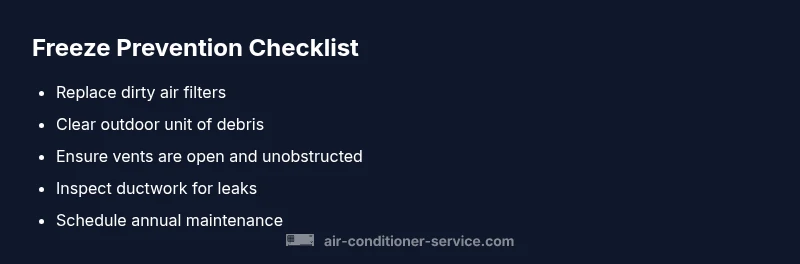
Prevention is easier than cure. Create a simple maintenance calendar: replace air filters on schedule, clean the outdoor unit yearly, and inspect ductwork for leaks or obstructions. Clean evaporator and condenser coils with a soft brush or a no-rinse cleaner. Ensure vents and returns have clear space, and check that the condensate drain line is clear to avoid humidity buildup inside the coil. If you have a humidity-heavy home or a multi-story system, consider a humidistat and a dedicated dehumidifier to manage moisture and prevent icing. Air Conditioner Service recommends booking a preventive maintenance visit at least once a year to catch issues like refrigerant leaks, faulty sensors, or degraded ductwork before they cause freeze-ups.
Quick checks for prevention
Establish a routine that includes filter changes, coil cleaning, and airflow checks. Keeping a log of icing events can help you identify patterns related to weather, usage, or thermostat settings, allowing you to adjust habits before icing occurs.
Step-by-step safety checks you can perform
Regular checks empower you to catch problems early and avoid emergency calls. Below are straightforward safety checks you can perform before calling a pro. - Turn off power at the breaker and thermostat before inspecting any component. - Check and replace the filter if dirty. - Inspect the outdoor unit for debris and ensure airflow is unobstructed. - Look for ice on the evaporator coil and assess indoor ductwork for blockages. - If you suspect a refrigerant issue, do not attempt to recharge; call a licensed technician.
These steps reduce the risk of damage and give you clearer information for a service visit.
Common myths and misconceptions
Myth: A freeze means the thermostat is set too high. Reality: icing often stems from airflow or refrigerant issues, not simply temperature settings. Myth: You can safely recharge refrigerant yourself. Reality: refrigerant handling requires licensing and specialized equipment. Myth: Thawing ice with a hairdryer is safe. Reality: rapid heating can damage coils and electrical components. Sticking to verified maintenance routines helps prevent misdiagnosis and costly repairs.
Steps
Estimated time: 60-90 minutes
- 1
Power down and inspect the air filter
Turn off the thermostat and circuit breaker, remove the filter, and check for dirt or clogging. A clogged filter reduces airflow dramatically and can trigger icing. Wash or replace as needed.
Tip: Use the right filter rating for your system to balance airflow and filtration - 2
Check outdoor unit clearance and coil cleanliness
Make sure 2 feet of clearance around the condenser exists and remove leaves or debris. Clean the condenser fins gently with a brush to improve heat rejection.
Tip: Keep nearby plants at least 2 feet away to maintain airflow - 3
Inspect evaporator coil and return ducts
Look for frost on the indoor coil and inspect return ducts for blockages. Remove obstructions and vacuum dust from registers.
Tip: Do not bend ducts; damaged ducts can reduce airflow further - 4
Assess refrigerant signs and professional needs
If you still see frost, the issue may be refrigerant related. Do not attempt to recharge; leaks require licensed service.
Tip: A professional will verify pressures and seal leaks safely - 5
Thawing and gradual testing
If ice is present, power off and thaw completely before testing. After thaw, reassemble, run the fan for 10-15 minutes, then re-check cooling gradually.
Tip: Never restart full cooling immediately after thawing - 6
Document findings and schedule preventive care
Note what you observed and plan a preventive maintenance visit; this reduces repeat icing.
Tip: Set calendar reminders for annual system check
Diagnosis: AC freezes during cooling
Possible Causes
- highRestricted airflow
- highLow refrigerant pressure
- mediumMalfunctioning metering device or coil icing
Fixes
- easyReplace dirty air filter and clean evaporator coils
- easyClear debris and ensure outdoor unit has adequate airflow
- hardCall a licensed technician to check refrigerant leaks and recharge
Common Questions
Why does my air conditioner freeze up in the summer?
High humidity and restricted airflow commonly cause freezing in summer. A dirty filter, blocked return, or dirty outdoor coil reduce heat transfer and can ice the evaporator. Address airflow first.
Frozen AC in summer is usually due to airflow and humidity; fix the filter and vents first.
Can a refrigerant leak cause freezing?
Yes. Low refrigerant pressure can cause icing. Repairs require a licensed tech to locate leaks, repair, and recharge to proper levels.
A leak lowering refrigerant pressure can freeze the coil; professional repair is needed.
Is it safe to thaw ice by running the fan only?
Running the fan helps dry the coil after thawing, but avoid restarting cooling until the ice has melted and airflow is restored.
Let the ice thaw and dry; only then resume cooling at a gentle setting.
How often should I change the air filters to prevent freezing?
Change filters every 1-3 months depending on usage and filter type, more often in dusty homes or with pets.
Change filters regularly to keep airflow strong and prevent icing.
When should I call a professional?
Call if frost returns after thawing, if you notice leaks, or if the unit won’t hold a charge. Refrigerant work requires licensing.
If icing recurs or you suspect a leak, get a technician.
Can thermostat settings cause icing?
Extremely low setpoints or rapid cycling can contribute to icing by overcooling the coil; set a moderate temperature and avoid rapid changes.
Avoid very low setpoints and rapid cycling to prevent icing.
Watch Video
The Essentials
- Check airflow first: replace filters and clear ducts
- Ice usually signals a refrigerant or airflow problem that needs professional diagnosis
- Thaw ice safely and test gradually before returning to cooling
- Schedule annual maintenance to prevent future freezes