What to Do About Mold in Air Conditioners
Learn practical steps to identify, clean, and prevent mold in your air conditioner. Safe DIY tips, when to call a pro, and maintenance to reduce moisture and recurrence.


Mold in an air conditioner requires prompt, safety-conscious action. For small, surface mold on non-porous parts you can clean with proper PPE, but extensive growth or porous materials usually require professional remediation. This guide walks you through safety, cleaning, and moisture-control steps to reduce health risks and prevent recurrence.
What mold is in air conditioners and why it grows
Mold that appears in air conditioners is a type of fungus that thrives in damp, dark places. Common species may develop on condensate pans, within ductwork, on coil fins, and inside insulation, whenever moisture remains for an extended period. Growth can show up as black, green, or gray fuzzy patches, or as a slimy film along the coil or pan. Mold not only smells musty; it can trigger allergies, asthma flare-ups, or respiratory irritation, especially for sensitive individuals. According to Air Conditioner Service, controlling moisture is the most effective way to prevent mold, because any growth usually begins where humid air meets wet surfaces. Preventive maintenance, such as fixing leaks and ensuring proper drainage, is a cornerstone of mold management that homeowners should prioritize. In many cases, a simple inspection of the condensate drain line, filter condition, and coil cleanliness can reveal hidden moisture sources before they lead to visible growth. The goal is to keep surfaces dry and the system functioning correctly, so mold does not establish a foothold in the cooling cycle.
Common moisture sources and indicators in HVAC systems
Moisture can enter an air conditioning system through several pathways: a leaking condensate tray or drain line, high humidity in the home, poor insulation around ducts, dirty or clogged coils, and refrigerant or water leaks that create persistent dampness. Indicators of moisture problems include a musty odor, visible condensation on coil surfaces, standing water in the pan, and increased allergic symptoms among occupants. Air Conditioner Service analysis shows that moisture control is the key predictor of mold growth in AC systems; even small drips can sustain mold colonies if the area remains damp. Regular inspection of the drain line, prompt repair of leaks, and monitoring indoor humidity are essential preventive steps. If mold is detected near the coil, drain pan, or condensate lines, addressing the moisture source becomes the top priority to halt ongoing growth. A thorough check of insulation quality around ducts also helps, since damp insulation can harbor mold that later re-enters the airflow.
Safety first: protect yourself when mold is present
Before doing any cleaning, prioritize safety. Wear PPE: a properly fitted N95 mask, protective goggles, and disposable gloves. Avoid stirring up spores by using dry brushing or aggressive wiping. Ensure the workspace is well-ventilated, but avoid spreading spores to other rooms. If you have asthma, allergies, or immune-compromised conditions, strongly consider professional remediation. Never mix cleaners indiscriminately, and always follow label directions on any cleaner you use. If electrical components are involved or you notice persistent dampness, slow down and reassess before proceeding. Air Conditioner Service emphasizes safety as the first step, because handling mold improperly can worsen exposure and cause more extensive containment issues.
Immediate steps to take before cleaning
- Turn off power to the AC at the circuit breaker to prevent shocks and fan operation that could spread spores. 2) Put on PPE before approaching the unit and avoid touching mold with bare skin. 3) Isolate the area with plastic sheeting to limit cross-contamination. 4) If possible, fix obvious moisture sources (drains, leaks, humidity) before cleaning. 5) Prepare cleaning supplies: mild detergent, water, microfiber cloths, a soft brush, and a HEPA vacuum if available. 6) Ventilate the space by opening doors or windows where safe, but keep the area contained during cleanup. The goal is to reduce exposure while you work, then dry the space thoroughly afterward.
Cleaning strategies: non-porous vs porous materials
Non-porous surfaces such as metal parts, plastic housings, and the condensate tray can be cleaned with a mild soap solution or an EPA-registered mold cleaner, then rinsed and dried completely. For porous materials like insulation, gasket materials, or drywall near the unit, removal is often necessary because mold can penetrate fibers. Contaminated insulation should be bagged securely for disposal and replaced with new material once the area is dry. After cleaning, vacuum with a HEPA-equipped unit to capture any remaining spores, then wipe surfaces again with a clean, damp cloth. Do not reuse contaminated rags; seal them in a trash bag and dispose of it properly. Drying is critical to prevent rapid regrowth; use dehumidifiers and fans as needed while maintaining airflow away from living spaces.
When to call a professional and what to expect
If mold covers a large area (roughly several square feet), affects the ductwork, or involves porous building materials, professional remediation is advised. Homeowners should consider professional help when mold growth recurs after initial cleaning, or if occupants experience persistent respiratory symptoms. A qualified contractor will typically perform a moisture assessment, remove contaminated materials as needed, disinfect non-porous components, and treat the area to prevent future growth. They may also repair leaks, improve drainage, and seal penetrations to block future dampness. Expect documentation of the mold type, area cleaned, and steps taken. Air Conditioner Service reminds readers that ongoing moisture control is essential to prevent relapse.
Prevention and maintenance to stop mold recurrence
Prevention hinges on moisture control. Fix leaks promptly, ensure the condensate drain line is clear, and maintain proper drainage around the unit. Regularly replace air filters, clean or service coils, and inspect ductwork for dampness or condensation. Keep indoor humidity at reasonable levels and ensure adequate ventilation in rooms with air handling units. Schedule periodic professional inspections, especially in humid climates or after water intrusion events. By staying proactive, you can minimize mold-friendly conditions and extend the life of the AC system. The Air Conditioner Service team emphasizes that consistent maintenance is the best defense against mold recurrence.
Tools & Materials
- PPE kit (N95 mask, safety goggles, disposable gloves)(Ensure proper fit; use NIOSH-certified PPE)
- Detergent or mild soap(Use clear soap with water)
- Water spray bottle(For applying cleaners gently)
- Microfiber cloths(For wiping surfaces; disposable if contaminated)
- Non-ammonia cleaner or EPA-registered mold cleaner(Follow label directions)
- Soft-bristle brush(Use for coils and rough surfaces)
- HEPA-filter vacuum(Essential for capturing spores)
- Plastic sheeting and tape(Contain contamination during cleanup)
- Disposable trash bags(Seal and dispose of contaminated materials)
- Replacement insulation or sealant (optional)(Use only if removal is necessary and area dries)
- Moisture meter or hygrometer (optional)(Helpful to monitor humidity levels)
- Dehumidifier (optional)(Speeds up drying in humid spaces)
Steps
Estimated time: 60-120 minutes
- 1
Prepare and safety-check the area
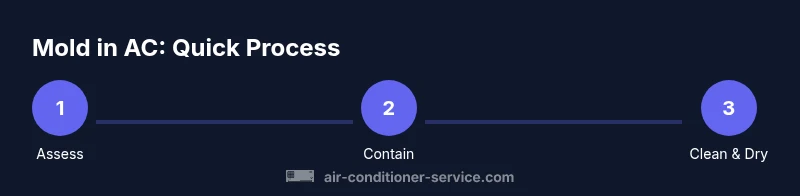
Turn off power to the AC at the breaker, don PPE, and assemble supplies. Set up containment barriers to minimize spore spread. Verifying electrical safety reduces shock risk during cleanup.
Tip: Double-check the breaker to ensure the unit won't energize during cleaning. - 2
Identify mold growth and moisture sources
Visually inspect the unit, drain line, and nearby ducts for visible growth and dampness. Note any leaks or persistent moisture areas to target during remediation.
Tip: Document locations with photos to guide remediation steps. - 3
Contain the work area
Seal off the space with plastic sheeting to prevent spores from drifting to other rooms. Keep doors closed and ensure ventilation does not move air into living spaces.
Tip: Avoid turning on fans that could spread spores before containment is secure. - 4
Clean accessible non-porous surfaces
Wipe metal and plastic parts with a mild soap solution or EPA-approved cleaner, then rinse and dry completely. Use a microfiber cloth and a soft brush for stubborn grime on smooth surfaces.
Tip: Rinse surfaces after cleaning to remove residue that could encourage new mold growth. - 5
Address porous materials and contaminated insulation
Remove contaminated insulation or porous materials if possible and place them in sealed bags for disposal. Replace removed insulation after the area dries to prevent recontamination.
Tip: Do not attempt to salvage mold-damaged insulation; disposal is the safer route. - 6
Dry the unit and surrounding area
Use a dehumidifier or fans to thoroughly dry the space and components. Prolonged dampness invites re-growth, so ensure complete moisture removal before reassembly.
Tip: Aim for thorough drying of coils and condensate pans to prevent rapid mold return. - 7
Reassemble and replace filters
Reinstall cleaned or new filters, reassemble panels, and restore power once dryness is confirmed. Inspect the drain line for proper flow before starting the unit again.
Tip: Test run the system on a low setting to observe condensate behavior and any residual moisture. - 8
Monitor humidity and schedule follow-up
Track humidity levels and inspect for new condensation or odors over the next few weeks. If mold recurs, seek professional assessment to identify hidden moisture sources.
Tip: Keep a maintenance schedule and set reminders for professional checks after humid seasons.
Common Questions
Is it safe to clean mold in my air conditioner myself?
Small, surface mold on non-porous components can be cleaned with PPE and appropriate cleaners. Extensive growth, porous materials, or mold activity near living spaces warrants professional remediation.
You can clean small, surface mold on non-porous parts yourself with proper safety gear, but if growth is extensive or porous materials are involved, consider hiring a professional.
What signs indicate I should replace insulation or coils?
If mold penetrates insulation or coil materials and cannot be effectively cleaned, replacement is recommended. Persistent moisture or recurring growth after cleaning also signals replacement or professional evaluation.
If mold has deeply penetrated insulation or coil materials or keeps coming back, plan for replacement and professional assessment.
Can mold in the AC affect my health?
Yes. Mold exposure can trigger allergy or respiratory symptoms in sensitive individuals. Remediation and moisture control help reduce health risks.
Mold can affect breathing for some people, so remediation and reducing moisture are important for health.
How can I prevent mold from coming back?
Keep humidity low, fix leaks promptly, clean and dry the unit, and replace filters regularly. Regular inspections help catch issues before mold grows.
Lower humidity, fix leaks quickly, and stay on top of cleaning and filter changes to prevent mold.
How often should I have my AC inspected for mold risk?
Have a professional inspect the system after humid seasons or if you notice musty odors, visible growth, or unusual moisture. Regular maintenance reduces the risk of mold.
Have annual or biannual checks, especially after humid periods, to catch mold risk early.
Should I replace the entire AC unit if mold is present?
Replacement is rarely necessary for mold alone; it depends on the extent of contamination and the condition of the unit. A pro can assess whether repair or replacement is best.
Usually not required to replace the whole unit; have a professional evaluate the extent of contamination.
Watch Video
The Essentials
- Identify moisture sources and fix them promptly.
- Protect yourself with proper PPE and contain the area.
- Differentiate cleaning methods for non-porous vs porous surfaces.
- Dry thoroughly to prevent mold recurrence.
- Know when to involve a professional for extensive growth.