How to Get Rid of Air Conditioner Mold: Practical Steps
Learn safe, effective steps to remove mold from your air conditioner, prevent recurrence, and protect indoor air quality with practical homeowner maintenance tips.


This guide provides a practical, safety‑focused path to remove mold from your air conditioner and prevent future growth. You’ll identify contamination, clean accessible components, address moisture sources, and set up a maintenance routine to protect indoor air quality. Follow the steps below and know when to call a professional.
Understanding mold in air conditioners and why it grows
Mold in air conditioners is a common moisture‑related problem. It thrives where heat, humidity, and organic dust combine—typically around condensate pans, evaporator coils, and duct connections. In most homes, mold growth begins when moisture lingers after a spill, a clogged drain line, or a dirty or damp filter allows spores to take hold. Left unchecked, mold can cause musty odors, increased allergic reactions, and, in some cases, respiratory irritation. Addressing the root cause—excess moisture—matters more than applying surface cleaners. By understanding how moisture travels through your system, you can design a more effective remediation plan and reduce the chance of rapid regrowth. The goal is not only to remove visible mold but to create conditions that keep it from returning.
How to identify mold risk areas in your AC system
Mold doesn’t always look like obvious black spots. It can appear as gray or greenish residues, fuzzy patches, or a musty odor that lingers after the unit runs. Common risk zones include the condensate drain pan and line, evaporator coil housing, duct joints near the air handler, and any area where moisture collects. Overly damp basements or humid climates increase risk. If you notice staining on the ceiling or walls near the air intake, or you repeatedly smell mildew after running the unit, take it as a sign to inspect the system more closely. Regularly checking and cleaning these zones can dramatically reduce mold growth and protect your indoor air quality. To document the state, take clear photos before you clean, so you can monitor changes over time.
How to get rid of air conditioner mold: Step-by-step overview
Getting rid of AC mold involves both cleaning and moisture control. DIY cleaning is appropriate for small, surface‑level issues and accessible components. If mold has spread into insulation, ducts, or the evaporator core, or if you have health concerns, professional remediation is advised. The key is using non‑toxic or low‑toxicity cleaners, ensuring proper ventilation, and drying all surfaces thoroughly after cleaning. This article provides a detailed, safe procedure while highlighting when to stop and call a pro. It also covers maintenance strategies to prevent mold from returning, such as humidity reduction and regular filter changes.
Cleaning methods: DIY cleaners vs professional products
For many homeowners, vinegar and hydrogen peroxide offer effective mold relief on nonporous surfaces and accessible metal components. Avoid bleach on coils and organic materials inside the unit, as it can create dangerous fumes and may not fully reach hidden mold. Use a dedicated HVAC coil cleaner following label directions if you have stubborn growth. A damp cloth with mild detergent can remove grime, while a brush helps scrub loosened deposits from coils. For ducts and hard‑to‑reach areas, consider professional remediation if you see mold behind insulation or inside the ductwork. Always wear PPE, work in a well‑ventilated area, and do not mix cleaners. Regular maintenance, like changing filters and controlling humidity, is essential to keep mold from returning.
Prevention: humidity control and routine maintenance to keep mold away
Mold prevention hinges on moisture control. Keep indoor humidity below 50–60% whenever possible, using a dehumidifier in damp climates. Regularly replace HVAC filters according to manufacturer guidance, typically every 1–3 months, and ensure the condensate drain line is clear. Clear surrounding vegetation and debris from outdoor units to improve airflow. Schedule annual professional inspections to verify duct integrity and coil cleanliness. By combining proactive moisture management with periodic cleaning, you lower the risk of mold and maintain better indoor air quality for you and your family.
Tools & Materials
- Nitrile gloves(Powder-free, chemical resistant)
- Safety goggles(Eye protection against splashes)
- Disposable respirator (N95)(Protect against mold spores)
- Plastic drop cloths(Protect floors and surfaces)
- Mild detergent or dish soap(General cleaning grip)
- White vinegar (5%) or hydrogen peroxide (3%)(Use separately; do not mix)
- Baking soda(Deodorizing option)
- Spray bottle(For cleaners and mixtures)
- Soft-bristled brush or microfiber cloths(Gentle scrubbing for coils)
- HVAC coil cleaner (non-bleach)(Follow label directions)
- Wet/dry shop vacuum(Moisture removal if available)
- Replacement air filter (MERV 8–13)(Clean air and humidity control)
- Towels or rags(Drying and catching drips)
Steps
Estimated time: 60-120 minutes
- 1
Power down and safety check
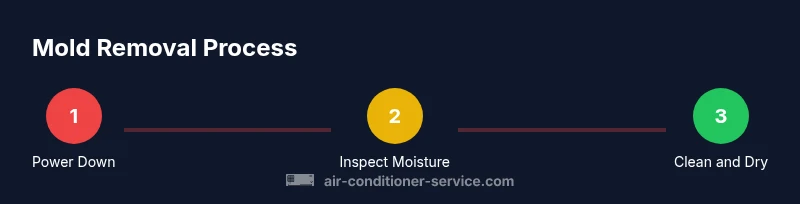
Turn off the HVAC system at the thermostat and circuit breaker. Verify there is no power running to the unit before you begin any cleaning. Gather PPE and set up a contained workspace to minimize spread of mold spores.
Tip: Never start cleaning with power on; recheck breakers if you suspect a switch is stuck. - 2
Inspect mold and moisture sources
Open accessible panels and visually inspect for mold on the evaporator coil housing, drain pan, and nearby duct joints. Look for moisture sources such as a clogged drain line, leaks, or standing water. Document findings with photos for reference.
Tip: Identify moisture path; fixing leaks reduces regrowth more than cleaning alone. - 3
Set up cleaning zone and PPE
Lay down drop cloths, wear PPE, and prepare your cleaning solutions in the spray bottle. Keep a waste bag ready for contaminated rags and avoid cross‑contamination with non‑contaminated areas.
Tip: Ventilate the area; run a fan to improve air circulation during cleaning. - 4
Remove loose debris and rinse surfaces
Gently vacuum or wipe away loose dust and debris from accessible surfaces. Use a mild detergent solution to remove grime from metal components and coil housings without saturating the coil.
Tip: Avoid aggressive agitation that can bend fins or damage coils. - 5
Apply mold‑fighting cleaners
Apply vinegar or hydrogen peroxide to treated surfaces or use a non‑bleach HVAC coil cleaner per label instructions. Do not mix cleaners; apply separately and allow dwell time as recommended.
Tip: Allow contact time to maximize effectiveness; rinse only if the cleaner’s label requires it. - 6
Scrub and scrub again if needed
Gently scrub moldy areas with a soft brush or microfiber cloth. Repeat cleaning on stubborn spots, ensuring you don’t bend delicate coil fins. Wipe with a clean, damp cloth to remove residue.
Tip: Work in small sections to avoid drying cleaners on contact areas. - 7
Clean the drain pan and lines
Clear the condensate drain line with a flexible brush or compressed air if available. Rinse the drain pan with mild soap and water; wipe dry and check for leaks.
Tip: A clogged drain line is a major mold contributor; keep it clear year‑round. - 8
Dry surfaces thoroughly and insert a clean filter
Dry all cleaned surfaces completely with towels. Install a fresh replacement filter and ensure the seal is tight to prevent moisture intrusion.
Tip: Moisture left behind leads to rapid re‑growth; dry thoroughly and monitor humidity. - 9
Run a test and monitor for odors
Reassemble panels, power up the unit, and run a cool cycle to dry the system. Observe for any lingering odors or dampness in the following days and recheck areas if needed.
Tip: Keep humidity controlled for at least 24–48 hours after cleaning.
Common Questions
Is it safe to remove mold from an air conditioner myself or should I hire a professional?
For small, surface‑level mold on accessible parts, DIY cleaning with proper PPE can be safe. If mold is inside ducts, insulation, or shows up after cleaning, or if you have health concerns, professional remediation is recommended.
You can clean small surface mold at home if you take proper precautions; for hidden or spreading mold, call a professional.
What are the signs that my AC has mold growth?
Visible spots, musty odors, increased allergy symptoms, and damp or discolored surfaces near the coil or duct connections indicate mold growth.
Look for musty smells and visible spots around the unit; these suggest mold.
Does vinegar kill mold in an AC, or is other cleaner better?
Vinegar is effective for many mold forms on nonporous surfaces. For stubborn growth, a non‑bleach coil cleaner or hydrogen peroxide may be needed. Always follow product labels and avoid mixing cleaners.
Vinegar helps on many surfaces, but for tough spots you may need a coil cleaner—follow the label.
Can mold in the duct work cause health issues?
Yes. Mold spores can trigger allergies or respiratory symptoms, especially in sensitive individuals. If you have persistent symptoms, consult a healthcare professional and consider a professional duct assessment.
Mold in ducts can affect breathing; see a pro if symptoms persist.
How often should I clean the evaporator coils and drain line?
Clean the accessible coils and drain line during routine maintenance, typically annually or as recommended by the manufacturer, and more often in humid climates.
Do annual checks, or more often if you’re in a humid area.
Can bleach be used to treat mold in an air conditioner?
Bleach can be corrosive to some components and may not reach mold hidden inside ducts. Use non‑bleach cleaners on coils; avoid mixing with ammonia or acids.
Bleach isn’t ideal for AC coils; stick to approved cleaners and avoid mixing chemicals.
What should I do if mold returns after cleaning?
Reassess moisture sources and humidity control. Reclean accessible areas, replace outdated filters, and consider professional help if the problem recurs or expands.
If mold comes back, fix the moisture issue and reclean or call a pro.
Watch Video
The Essentials
- Identify moisture sources and fix leaks promptly
- Use approved cleaners and PPE for safety
- Replace filters and manage humidity to prevent regrowth
- Seek professional help if mold persists or covers ducts
- Document changes and monitor for recurrence