AC Stops Working? Quick Troubleshooting Guide for Homeowners
When your AC stops working, quick, safe troubleshooting can restore cooling. Learn common causes, a diagnostic flow, and step-by-step fixes, plus when to call a professional for reliable results.


If your air conditioner stops working, start with the simplest checks: confirm power to the unit, inspect the thermostat, and listen for unusual sounds. Common causes include tripped breakers, dirty filters, frozen coils, or a faulty capacitor. By following a quick diagnostic flow and advancing to step-by-step fixes, you can regain cooling quickly.
What happens when air conditioner stops working
What happens when air conditioner stops working can vary a lot, but the resulting discomfort is immediate and urgent. In many cases, the problem is not catastrophic: a simple power issue, a clogged filter, or an iced evaporator coil can completely prevent cooling. The Air Conditioner Service team notes that most outages come from easy-to-check causes rather than a failed compressor. You’ll often notice a warm room, uneven cooling, or a unit that runs continually without reaching the set temperature. Recognizing these patterns helps you triage effectively and avoid wasted service calls. This guide explains how the system works and what to check first, so you can decide whether to DIY or request professional help. According to Air Conditioner Service analysis, starting with power and airflow concerns will solve the majority of home problems with minimal risk to you or your equipment.
Quick checks you can do before calling a pro
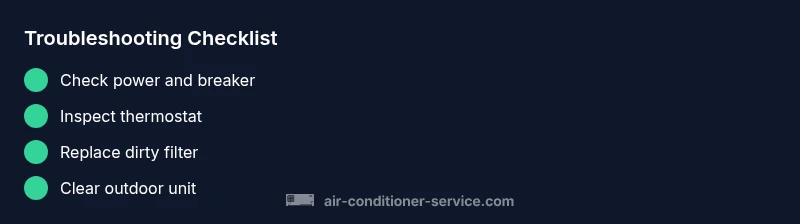
Before you pick up the phone, run through these safe, noninvasive checks. These steps take only a few minutes and protect you from unnecessary service charges. Check the breaker panel for a tripped switch or a blown fuse and reset if safe to do so. Inspect the thermostat, ensure it’s set to cool and at a reasonable temperature, and verify the display shows normal operation. Examine the air filter; a clogged filter restricts airflow and can cause freezing. Look at the outdoor unit; clear any debris, leaves, or vegetation that may block airflow. Finally, listen for loud noises or buzzing—these signals often point to electrical or motor issues that require professional attention. Air Conditioner Service recommends documenting what you observe, including any flickering lights or warm air, to help technicians diagnose quickly.
Common failure modes and what they mean
Many failures fall into a few broad categories. A power issue or tripped breaker is the most common and easiest fix. A dirty air filter reduces airflow and lowers cooling efficiency, sometimes causing the compressor to overwork and shut down. Frozen coils indicate low refrigerant or restricted airflow, often due to dirty filters or blocked return air. A faulty capacitor or contactor can prevent the compressor or fan from starting, producing a non-starting unit. Odd smells usually signal mold, burning insulation, or electrical components overheating. By linking the symptom to a probable cause, you can choose the right fix and avoid unnecessary replacements.
How to approach diagnosis safely: a practical flow
Start with the simplest explanations and escalate only when necessary. Confirm power at the outlet and switch; if power is present, move to thermostat and settings. If the unit still doesn’t start or cool, check airflow and filter condition. If you hear buzzing or see scorch marks, power down the system at the breaker and call a pro immediately. In many cases, a quick reset or filter change is all that’s required. If the problem persists after your basic checks, it’s time to perform a more focused inspection or call a professional for a precise diagnosis. Air Conditioner Service emphasizes safety: never poke around electrical components when the system is energized and never remove panels that require tools or knowledge beyond your comfort level.
Safety, prevention, and maintenance tips
Regular maintenance is your best defense against unexpected outages. Schedule seasonal inspections, replace filters every 1-3 months depending on use, and keep the outdoor unit clear of debris. Use a programmable thermostat to optimize cooling trends and reduce energy waste. Small proactive actions, like cleaning the evaporator coil and drainage system, can prevent costly failures. If you notice continuous cycling or a sudden drop in cooling performance, address it early to avoid larger problems. Always cut power before inspecting internal components and never work on refrigerant lines yourself. If you’re unsure, contact Air Conditioner Service for professional guidance.
note:null}
diagnosticFlow
{ "symptom": "AC won’t start or run", "causes": [ { "cause": "Power issue or tripped breaker", "likelihood": "high" }, { "cause": "Thermostat or control settings fault", "likelihood": "medium" }, { "cause": "Clogged air filter causing restricted airflow", "likelihood": "low" } ], "fixes": [ { "fix": "Check the main breaker and reset if safe; verify outlet power", "difficulty": "easy" }, { "fix": "Verify thermostat settings and voltage to the control board", "difficulty": "easy" }, { "fix": "Replace or clean air filter; ensure outdoor unit is unobstructed", "difficulty": "easy" } ] }
stepByStep
{ "steps": [ { "number": 1, "title": "Verify power and thermostat", "description": "Turn off the system at the breaker, then restore power and confirm the thermostat is set to cool. If the display is blank, check the circuit breaker and GFCI outlets related to the AC. Make sure the thermostat wiring is intact and the display responds to settings.", "tip": "If a reset is needed, wait 60 seconds before turning the breaker back on to reset the control board." }, { "number": 2, "title": "Check airflow and filters", "description": "Open the supply vents and inspect the air filter. A dirty filter reduces airflow and can cause the system to overheat or freeze. Replace disposable filters or clean reusable ones according to manufacturer guidance.", "tip": "Keep spare filters on hand for monthly changes during peak seasons." }, { "number": 3, "title": "Inspect outdoor unit and coils", "description": "Clear any debris from the condenser coil and ensure there are at least 2 feet of clearance around the unit. Trim plants or weeds that block airflow and remove any large blocks.", "tip": "Never damage the fins; use a soft brush or gentle spray to clean the coil." }, { "number": 4, "title": "Check for ice and refrigerant issues", "description": "If you notice ice on the coils, turn the system off and let it thaw. Ice can indicate low refrigerant or airflow problems. Do not attempt to recharge refrigerant yourself.", "tip": "Ice usually means a restriction; avoid running the unit until the ice melts." }, { "number": 5, "title": "Listen for electrical symptoms", "description": "A buzzing, humming, or tripping breaker can indicate capacitor or contactor problems. Do not touch exposed wires. If you hear sizzling or see scorch marks, power down immediately and call a pro.", "tip": "Electrical issues can escalate quickly; prioritize safety and professional help." }, { "number": 6, "title": "Call a professional if needed", "description": "If the unit still won’t start after these checks, schedule a service visit. Provide observable symptoms, the model, age of the unit, and any recent maintenance to speed diagnosis.", "tip": "Document observations and timing to help technicians reproduce the issue." }], "estimatedTime": "30-45 minutes" }
tipsList
{ "tips": [ { "type": "pro_tip", "text": "Always cut power before inspection to avoid shock or injury." }, { "type": "warning", "text": "Do not attempt refrigerant handling yourself; it requires certification." }, { "type": "note", "text": "Keep a small toolkit and spare filters on hand for quick DIYs." }, { "type": "pro_tip", "text": "Note any unusual noises or smells to share with the technician." }, { "type": "note", "text": "Document outdoor unit clearance and filter condition for future maintenance." } ] }
keyTakeaways
["Start with power and thermostat checks.","Ensure proper airflow with clean filters.","Know when to call a professional.","Document symptoms for faster service."]
videoEmbed
{ "videoQuery": "how to troubleshoot an air conditioner not turning on" }
faqSection
{ "items": [ { "question": "Why won’t my air conditioner turn on?", "questionShort": "AC won’t turn on", "answer": "Most often it’s a power issue, a tripped breaker, or a thermostat problem. Check the breaker, reset if needed, and verify thermostat settings before calling a pro.", "voiceAnswer": "Most likely a power or thermostat issue. Start with the breaker and thermostat, then proceed to basic checks.", "priority": "high" }, { "question": "What does it mean if my AC runs but doesn’t cool?", "questionShort": "No cooling", "answer": "This usually signals airflow problems from a dirty filter or blocked return air, or a frozen coil. Check filters and outdoor unit clearance, and inspect for ice on the coils.", "voiceAnswer": "It often means airflow or ice issues; start with the filter and outdoor unit.", "priority": "high" }, { "question": "Is a strange smell dangerous?", "questionShort": "Danger smell", "answer": "A burning or chemical odor can indicate electrical problems or mold. Power down at the breaker if smells are present and contact a professional promptly.", "voiceAnswer": "Smells can indicate electrical risk; stop and call a tech if you detect them.", "priority": "medium" }, { "question": "Should I recharge refrigerant myself?", "questionShort": "Recharge refrigerant", "answer": "Refrigerant handling requires licensed technicians and proper tools. Do not attempt recharge; it’s illegal and dangerous to DIY.", "voiceAnswer": "Refrigerant work is for pros only; don’t try it yourself.", "priority": "medium" }, { "question": "What maintenance prevents AC failures?", "questionShort": "Preventive maintenance", "answer": "Regular filter changes, coil cleaning, and seasonal professional checkups reduce failures. Keep the outdoor area clear and monitor system cycling for early signs.", "voiceAnswer": "Regular maintenance is key to avoiding surprises.", "priority": "low" }, { "question": "When is a professional diagnostic required?", "questionShort": "When to call a pro", "answer": "If basic checks don’t restore cooling or you hear buzzing, see scorching marks, or ice persists, call a licensed technician for a full diagnostic.", "voiceAnswer": "If basics fail or you hear electrical noises, call a pro.", "priority": "low" }] }
mainTopicQuery
air conditioner troubleshooting
Steps
Estimated time: 30-45 minutes
- 1
Verify power and thermostat
Check the main breaker and outdoor disconnects. Confirm the thermostat is set to cool and shows the current temperature. If the display is blank, address electrical issues first before proceeding.
Tip: If the power is off, wait 60 seconds before turning it back on to reset controls. - 2
Inspect filters and airflow
Remove and inspect the air filter for dirt buildup. A too-dirty filter restricts airflow and can cause overheating or ice formation. Replace with the correct size and type.
Tip: Keep a box of spare filters handy for rapid replacements. - 3
Check outdoor condenser and coils
With power off, inspect the condenser for debris. Clear leaves and ensure 2 feet of clearance around the unit. Gently clean fins with a soft brush if needed.
Tip: Never puncture or bend the fins aggressively. - 4
Look for ice or refrigerant signs
If you see ice on the evaporator coil, turn off the system and let it thaw. Ice can signal refrigerant or airflow problems; do not run the system until checked.
Tip: Ice indicates underlying issues awaiting professional assessment. - 5
Listen for electrical symptoms
Buzzing, sizzling, or tripped breakers point to capacitors, contactors, or wiring problems. Do not touch exposed components; power down and call a pro.
Tip: Electrical issues can escalate quickly—prioritize safety. - 6
Call a professional if needed
If basic checks don’t restore cooling, schedule service and provide observed symptoms, age, and recent maintenance to help diagnose faster.
Tip: Documenting symptoms helps technicians reproduce the issue.
Diagnosis: Machine won’t start
Possible Causes
- highPower issue
- mediumThermostat/control issue
- lowBlocked airflow or dirty filter
Fixes
- easyCheck breaker and power at outlet
- easyTest thermostat and replace if faulty
- easyReplace/clean air filter; ensure outdoor unit is clear
Common Questions
Why won’t my air conditioner turn on?
Most likely a power issue, a tripped breaker, or a thermostat problem. Check the breaker, reset if needed, and verify thermostat settings before calling a pro.
Most likely a power or thermostat issue. Start with the breaker and thermostat, then proceed to basic checks.
What does it mean if my AC runs but doesn’t cool?
Common causes are restricted airflow from a dirty filter or blocked return air, or a frozen coil. Inspect filters and ensure outdoor unit clearance.
If it runs but doesn’t cool, check airflow and the outdoor unit.
Is a strange smell dangerous?
A burning or chemical odor can indicate electrical problems or mold. Power down and contact a professional promptly.
Dangerous smells mean you should shut down and call a pro.
Should I recharge refrigerant myself?
Refrigerant handling requires licensed technicians and proper tools. Do not attempt recharge; it’s illegal and hazardous to DIY.
Don’t try to recharge refrigerant yourself—call a pro.
What maintenance prevents AC failures?
Regular filter changes, coil cleaning, and seasonal professional checkups reduce failures. Keep outdoor area clear and monitor system cycling.
Regular maintenance helps prevent most failures.
When is a professional diagnostic required?
If basic checks don’t restore cooling or you hear buzzing, see scorching marks, or ice persists, call a licensed technician for full diagnosis.
If basics fail or you hear electrical noises, call a pro.
Watch Video
The Essentials
- Check power and thermostat first.
- Keep airflow clear with clean filters.
- Escalate to a pro when in doubt.
- Document symptoms for faster service.