Why Your Air Conditioner Leaks Water—and How to Fix It Fast
Learn why your air conditioner leaks water and how to diagnose, fix, and prevent leaks. Practical, homeowner-friendly steps to keep cooling efficiently and safely.


Water leaks usually come from a clogged condensate drain or a frozen coil. Shut off power, clear the drain, and check the pan. If leaks persist, call Air Conditioner Service for a proper inspection.
What causes water leaks in air conditioners
According to Air Conditioner Service, most leaks originate from a blocked condensate drain or a faulty drain pan. When the condensate line gets clogged, water backs up and overflows into the indoor space or collects around the outdoor unit. A leaky line can also draw moisture into electrical components, creating a safety risk. In many homes, poor installation or aging equipment causes a slow leak that worsens during high-humidity days. The evaporator coil may freeze if airflow is restricted, and when it thaws, the resulting water can overflow the pan. Regular maintenance, including cleaning coils and checking the condensate trap, reduces the chance of leaks. By understanding these sources, you can address the issue quickly and safely with basic tools, or know when to call a pro from Air Conditioner Service.
- Common causes: clogged condensate drain, damaged drain pan, frozen evaporator coil, improper insulation, misaligned drainage.
- Quick recognition signs: water pooling near the furnace, damp ceiling, musty odor, visible mineral buildup around the drain.
- Immediate safety note: never operate with a damaged electrical cover loose; turn off power at the breaker before inspecting.
How to diagnose leaks: common symptoms and checks
Leaks may be obvious, or very subtle. Start by checking the condensate drain and looking for damp spots on the ceiling or walls. Inspect the evaporator coil through the access panel for ice buildup, unusual frost, or blocked airflow from dirty filters. Verify the condensate tray or pan is intact and properly sloped toward the drain. Listen for gurgling sounds, which can indicate a clog. If you detect a foul odor, there may be standing water causing mold growth. Airflow issues can be as simple as a clogged filter, blocked return-air registers, or a misaligned duct. Air Conditioner Service recommends a systematic approach: shut off power if you suspect a safety risk, then work from the indoor unit outward to the outdoor unit.
Safe quick checks you can perform now
Before you pick up tools, ensure personal safety by turning off the power at the breaker. Check the condensate drain line for visible blockages, and inspect the drain pan for cracks. If water is dripping from joints, tighten fittings with the appropriate tool and reseal with non-corrosive sealant. Make sure the evaporator coil has unobstructed airflow and that air filters are clean. If you see ice, turn off the system and let it thaw before testing. Keep pets and children away from the work area, and never attempt refrigerant handling unless licensed.
Step-by-step: fix the most common cause (clogged condensate drain)
This section expands on the practical steps to clear a clogged condensate line and restore proper drainage. The guide covers locating the line, safely disconnecting if needed, and using methods like a wet/dry vac, flushing, and re-testing. It also covers checking the pan and slope and scheduling maintenance if leaks persist.
Safety tips and warnings
Working on an air conditioner involves electricity, water, and refrigerant. Always shut off power at the breaker before inspection, and avoid working near the outdoor unit while it operates. Wear protective eyewear and gloves, and never use sharp tools on plastic drain lines. If you smell gas or suspect a refrigerant leak, treat it as a high-risk situation and contact a licensed tech immediately.
Maintenance to prevent future leaks
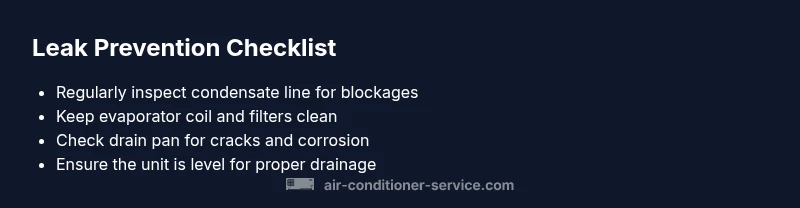
Routine maintenance is the best defense against water leaks. Replace or wash filters regularly, clean the evaporator coil when accessible, and visually inspect the condensate pan for corrosion. Ensure the condensate line remains clear during humid seasons, and confirm the unit sits level so the drain works correctly. Consider scheduling a professional inspection at least once a year, especially before peak cooling months. Regular preventive care reduces the risk of unexpected water leaks and extends system life.
Steps
Estimated time: 30-45 minutes
- 1
Power down the system
Turn off power at the thermostat and main breaker to prevent shocks or compressor damage during inspection.
Tip: Use a non-contact voltage tester to confirm the unit is de-energized. - 2
Locate the condensate drain
Find the primary condensate drain line and access the trap; many systems use a PVC pipe leading to a drain or outside.
Tip: Have a bucket ready; you may see standing water. - 3
Clear the drain line
Use a wet/dry vacuum to suck out obstructions from the line or gently flush with warm water and mild detergent.
Tip: Do not use chemical cleaners unless specified by the manufacturer. - 4
Check the drain pan and slope
Inspect the pan for cracks or rust and verify the drain line has a proper downward slope toward the drain.
Tip: Repair small cracks with epoxy designed for condensate pans. - 5
Test and monitor
Turn the system back on and watch for proper drainage; ensure nothing leaks from joints or fittings.
Tip: Place a shallow tray under the drain to catch any residual water.
Diagnosis: Water near or inside the indoor air handler or along the condensate line
Possible Causes
- highClogged condensate drain line
- mediumDamaged or cracked drain pan
- lowFrozen evaporator coil due to restricted airflow
Fixes
- easyClear the condensate line using a wet/dry vac or flush with clean water
- easyRepair or replace the drain pan and ensure proper slope
- mediumThaw the coil and fix airflow issues (replace dirty filter, remove obstructions)
Common Questions
Why is my air conditioner leaking water?
Most leaks come from a clogged condensate drain, a damaged drain pan, or a frozen evaporator coil. Inspect these components and address blockages promptly to prevent water damage. If the leak continues after basic fixes, contact a professional.
Most leaks come from a clogged condensate drain, a damaged drain pan, or a frozen evaporator coil. Start with those checks and reach out if the problem persists.
Can a dirty filter cause a leak?
Yes. A dirty filter restricts airflow, which can cause the evaporator coil to freeze. When it thaws, water can overflow the drain pan. Replacing or cleaning the filter often resolves minor leaks.
A dirty filter can cause the coil to freeze, leading to leaks when it thaws.
Is a leak around the outdoor unit a problem?
Water near the outdoor unit can be normal if humidity is high and the unit condensates, but persistent or excessive leakage may indicate a drainage or coil issue that needs inspection.
Water near the outdoor unit can be normal, but persistent leaks should be checked.
Should I turn off power if I notice water?
Yes. For safety, switch off the unit at the breaker before inspecting or handling any components.
Turn off the power at the breaker before inspecting.
How much does it cost to fix a leaking drain line?
Costs vary depending on the cause and repair needed. A professional diagnostic is recommended to determine whether you need cleaning, resealing, or replacement.
Prices vary; a professional diagnosis helps determine the exact repair.
When should I call a professional?
If you cannot safely identify and fix the blockage, if the problem recurs after basic fixes, or if you smell refrigerant, you should call a licensed technician.
Call a professional if leaks persist or you suspect refrigerant issues.
Watch Video
The Essentials
- Identify leaks early to avoid water damage
- Clear clogged condensate drains promptly
- Maintain filters to prevent freezes
- Know when to call a professional
- Air Conditioner Service can assist with complex repairs