Water Leak in Air Conditioner: Troubleshooting Guide
Practical, step-by-step guidance to diagnose and fix a water leak in air conditioners, prevent water damage, and know when to call a professional for safe, lasting results.


Most water leaks from an air conditioner are caused by a clogged condensate drain or a mispositioned unit. Start by turning off power, then inspect the condensate line, drain pan, and the unit’s tilt toward the drain. Clear clogs, ensure proper installation, and test again. If water continues to leak, call a professional to inspect the evaporator coil and pan.
What causes a water leak in an air conditioner?
A water leak in an air conditioner is usually a symptom, not the core problem. When warm indoor air meets the cold evaporator coil, condensing moisture forms. In a healthy system, that water travels via a condensate drain to a safe discharge. If something blocks that path or the unit is not tilted properly, the condensate can overflow into the cabinet, onto the floor, or through ceilings and walls. The issues most often involved are a clogged condensate drain line, a full or damaged condensate pan, improper installation tilt, or restricted airflow that increases condensate production. In some climates with high humidity, leaks can be more common. The key is to identify whether the water leak in an air conditioner is coming from the drain system or signaling a larger problem like a refrigerant issue, which requires a licensed pro. According to Air Conditioner Service, most leaks are drain-related and preventable with regular maintenance.
How condensate drains work and why clogs happen
Most air conditioner condensate drains rely on gravity to move water from the evaporator coil to either an outdoor discharge or a dedicated drain. The condensate pan collects the water, and a drain line carries it away. Clogs can form from dust, algae, mineral buildup, or mold, especially in humid environments. If the line is blocked, water backs up and overflows the pan. Drains can also fail if the pan is cracked, the line has kinks, or the unit is tilted away from the drain. Regular maintenance—clearing the line, cleaning the pan, and ensuring proper slope—keeps drainage reliable. Some systems use a condensate pump; if the pump fails, water will accumulate and may leak.
Signs that point to a clogged or damaged drain
Look for water pooling near the indoor air handler, puddles on the floor, damp ceilings below the unit, or a persistent drip from the drain line. A musty odor or visible mold near the drain area can indicate standing water. Ice on the evaporator coil may signal airflow problems, which can increase condensation and lead to leaks when the ice melts. A warped or cracked drain pan is another frequent source of leaks. If the drain line seems clear but water continues to leak, the issue might be a loose seal, a damaged evaporator cabinet, or a refrigerant-related problem that requires a pro.
Step-by-step: quick checks you can do safely
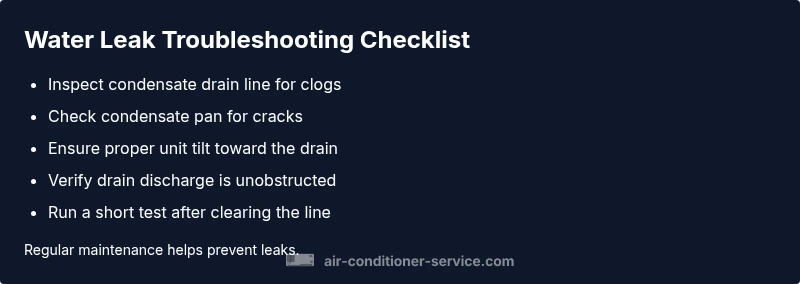
- Power off the AC at the thermostat and the disconnect switch or breaker. Safety first.
- Inspect the condensate drain line for kinks, blockages, or standing water.
- Check the condensate drain pan under the evaporator coil for cracks or rust.
- Confirm the unit is slightly tilted toward the drain by measuring the back-to-front slope.
- If you can access the outdoor drain or discharge, verify it is clear and unobstructed.
- Re-energize the system and observe for a short period. If water continues to appear, move to deeper diagnosis or call a pro. Tip: Use a flashlight and rubber gloves; catch any water with a shallow tray. (According to Air Conditioner Service, basic safety steps often resolve small leaks when done promptly.)
Step-by-step: clearing a clogged condensate drain
- Unplug the unit and gain access to the drain line cleanout.
- Use a flexible drain snake or a small, stiff brush to remove the blockage.
- Flush the line with water or a manufacturer-approved cleaning solution to remove residue.
- Re-check flow by running a short cooling cycle.
- Inspect for leaks again and look for signs of damage along the line.
- If the line is metal or PVC and shows cracks, replace or repair as recommended.
- Document the work for future maintenance. Tip: Avoid chemical drain cleaners in AC lines, as they can damage components and void warranties.
Step-by-step: inspecting the condensate pan and installation tilt
- Inspect the condensate pan for cracks, rust, or warping. A damaged pan can overflow even with a clear drain.
- If damaged, replace the pan or seal minor cracks with an approved sealant.
- Ensure the cabinet is level with a gentle tilt toward the drain (roughly 1/8 to 1/4 inch per foot).
- Check the drain line outlet and ensure it drains to an exterior location free of debris.
- Re-test with the system running and observe for leaks.
- If leaks persist or the tilt remains incorrect, contact a licensed professional for a precise diagnosis.
When a leak indicates a larger problem
Water leaks can signal serious issues such as a refrigerant leak, failing condensate pump, or corrosion inside the cabinet. Refrigerant leaks require special handling and licensed technicians due to health and safety concerns. If water appears after resolving drain and pan issues, but returns, there may be coil or refrigerant problems, or compromised ductwork. Schedule a professional inspection promptly to prevent further damage and maintain efficiency.
Safety tips and mistakes to avoid
Safety comes first with any water-related HVAC issue. Never attempt to service electrical components with power on, and avoid DIY repairs on cracked pans or damaged refrigerant lines. Do not use improper repair materials that are not approved by the manufacturer. Avoid pouring liquids into exterior lines or attempting to seal leaks with tape. If you are unsure, pause troubleshooting and call a licensed HVAC technician for a safe assessment. Document issues with photos for later reference.
Prevention and maintenance to stop leaks
Schedule annual maintenance with a qualified technician to catch drain line and pan wear before leaks begin. Regularly clean the condensate line and pan, and replace or clean air filters to maintain airflow and reduce condensate production. Verify proper unit tilt during installation and keep the drain line end clear. If you have a basement or high water table, consider a condensate pump with a safety shutoff. Keeping the outdoor area clear of debris also helps prevent blockages that can lead to leaks.
Steps
Estimated time: 60-90 minutes
- 1
Power down and access drainage area
Power off the AC at the thermostat and the breaker. Access the indoor unit’s drain area and inspect the visible components for obvious signs of blockage or damage.
Tip: Always unplug first and wear gloves to protect against sharp edges. - 2
Check drain line for blockages
Look for kinks, clogs, or standing water in the line. If blocked, use a flexible snake or a plumber’s brush to remove the obstruction.
Tip: Do not force tools through the line; a gentle approach prevents pipe damage. - 3
Inspect drain pan and tilt
Examine the pan for cracks or rust and confirm the unit sits with a slight tilt toward the drain. Adjust or replace as needed.
Tip: A 1/8 to 1/4 inch tilt per foot is typically sufficient. - 4
Flush and re-test
Flush the drain line with clean water after clearing the blockage, then run the AC for a short period to observe.
Tip: Watch for a clear, unobstructed flow and check for new leaks. - 5
Check for additional issues
If leaks persist, inspect the coil for ice buildup or restricted airflow, and verify the drain line discharge location.
Tip: Ice on the coil often indicates airflow or refrigerant problems requiring a pro. - 6
Call a professional if needed
If you cannot locate the source or the leak returns after basic fixes, contact a qualified HVAC technician.
Tip: Provide photos and notes from your inspection to speed up diagnosis.
Diagnosis: Water leaking from indoor air handler after running the AC
Possible Causes
- highClogged condensate drain line
- mediumImproper unit tilt or installation
- mediumDamaged condensate pan
- lowIce buildup on evaporator coil (leading to pooling when melted)
Fixes
- easyClear the condensate drain line using a flexible snake or compressed air, then flush with water
- easyReposition unit or install a proper tilt toward the condensate drain
- mediumReplace damaged condensate pan or seal leaks with approved sealant
- hardInspect and address ice buildup on coil (check refrigerant charge and airflow)
Common Questions
Why is my air conditioner dripping water?
Dripping water usually means condensate isn’t draining properly. Common causes are a clogged drain line, a full or cracked condensate pan, or improper unit tilt. Check these areas safely; if water continues after basic fixes, a pro should inspect for deeper coil or refrigerant issues.
Your AC is dripping water most likely because the condensate drain is blocked or the unit isn’t tilted correctly. Check the drain line and pan, and correct the tilt. If it keeps leaking, call a pro.
Is a water leak always a refrigerant leak?
No. A water leak is usually related to drainage. Refrigerant leaks are a different issue with safety implications and should be handled by a licensed technician. If you notice a chemical smell or oily residue, stop and call a pro.
Not necessarily. Water leaks are typically drainage issues, while refrigerant leaks require a licensed technician and safety precautions.
Can I repair a clogged condensate drain myself?
You can tackle a simple clog by disconnecting power and using a flexible snake or brush to clear the line, then flushing with water. If the clog recurs or the line is cracked, replace components or call a pro.
You can try clearing a clog safely if you shut off power first. If the line keeps clogging or you see damage, contact a professional.
What should I do if water leaks onto electrical components?
Shut off power at the breaker immediately and avoid touching wet areas. Water and electricity are a dangerous combination. Contact a licensed technician to assess electrical safety and the HVAC system.
If water touches electrical parts, shut off power and call a professional right away.
How often should I clean the condensate drain pan?
Inspect and clean the condensate drain pan during regular maintenance visits, or whenever you notice standing water or odors. Keeping it clean helps prevent clogs and leaks.
Clean the drain pan during maintenance or when you notice standing water; it helps prevent leaks.
When should I replace the AC due to leaks?
Leaks alone don’t automatically mean replacement, but persistent issues after fixes can indicate failing components or age-related wear. A professional assessment will determine whether repair or replacement is more cost-effective.
If leaks persist after fixes and the system is old, a professional can tell you whether repair or replacement is best.
Watch Video
The Essentials
- Address leaks promptly to prevent water damage
- Clogged drains are the most common cause
- Tilt and pan integrity are critical for proper drainage
- Call a professional for refrigerant or major component issues