RV Air Conditioner Repair: Step-by-Step Troubleshooting and Repair
Step-by-step RV AC repair guidance with safety checks, common issues, and maintenance tips to keep your mobile cooling reliable on the road.


This guide helps you diagnose and repair common RV air conditioner problems, from not cooling to ice-cold airflow. You’ll learn essential safety steps, how to test electrical components, how to check refrigerant-related issues, and when to call a professional. Follow the steps carefully to restore comfort on the road today, easily.
How RV A/C Systems Work on the Road
RV air conditioners are compact, roof-mounted units designed for mobile living spaces. They rely on the same basic refrigeration cycle as household systems but with smaller components and unique airflow paths through RV ducting. Understanding these differences helps you diagnose problems more accurately and avoid common mistakes when traveling or camping. According to Air Conditioner Service, regular inspections of seals, vents, and electrical connections can prevent most performance issues before they become costly repairs. In this section, we’ll unpack the core parts, from the compressor to the blower fan, and explain how a failure in any part manifests itself in the cabin comfort.
A typical RV roof unit uses a sealed refrigerant loop and a compact electrical controller. When the thermostat calls for cooling, the compressor starts, the condenser releases heat to the outside air, and the evaporator provides cool air through the ductwork. If you notice poor airflow, warm air, or unusual sounds, each symptom points to a different subsystem—airflow, cooling coil, electrical supply, or refrigerant conditions. Knowing what to check first saves time and reduces the risk of making the problem worse.
Safety First: Before You Start
Working on an RV air conditioner involves electricity, refrigerants, and sharp components. Always disconnect the RV from shore power or switch off the breaker, and wear eye protection. The Air Conditioner Service analysis shows that most injuries come from starting work without removing power or from handling refrigerant components without proper training. If you hear unusual hissing or suspect a refrigerant leak, stop and call a qualified technician. This guide is intended for basic diagnostics and non-pressurized service only to avoid dangerous scenarios.
Common RV A/C Problems and Quick Diagnostics
Not cooling, icing up on the evaporator, and weak airflow are among the most frequent RV AC issues. Start with simple checks that don’t require disassembly:
- Thermostat and mode settings: Ensure the unit is set to cool and the temperature isn’t stuck.
- Air filter and vents: A clogged filter or blocked vents reduces airflow and efficiency.
- Exterior condenser: Remove debris around the unit and verify outside airflow isn't restricted by awnings or surroundings.
- Electrical panel and fuses: Check for blown fuses, tripped breakers, or loose wiring at the control board. If basic checks don’t restore performance, you’ll need the Step-by-Step troubleshooting path below to investigate further and decide whether professional service is needed.
Diagnostic Roadmap and On-Road Checks
When you’re on the road, you can perform a concise diagnostic path to avoid surprises at the campsite:
- Inspect visible wiring and connectors for wear or corrosion.
- Listen for abnormal compressor cycling or sudden compressor shutoffs.
- Check for condensation leaks around the ceiling curb and interior drip pan.
- Observe refrigerant-related cues: frost on lines or icing on the evaporator suggests airflow or refrigerant concerns. Document any error codes from the control board if your unit has a digital display; these codes guide your next steps and whether to call a technician.
Remember, some checks require safety precautions, and refrigerant handling should be reserved for licensed professionals.
Routine Maintenance for Longevity
Proactive maintenance keeps RV ACs operating reliably:
- Clean or replace the air filter monthly during peak use, and inspect for dirt buildup around the evaporator and blower housing.
- Clean the exterior condenser fins gently to prevent airflow restriction.
- Check seals around the roof unit for leaks and reseal as needed.
- Test the condensate drain line to ensure it isn’t clogged, which can trigger water damage or mold growth.
- Schedule professional inspections before long trips to catch wear and component degradation early.
When to Call a Pro and How to Prepare
If basic diagnostics don’t restore cooling or you notice refrigerant signs (hissing, oily residues, or frost around connections), schedule a professional RV A/C service. Refrigerant work requires licensing and specialized tools. If a pro is on the way, prepare by:
- Recording symptoms, cycle times, and any error codes.
- Locating access panels and noting connector positions before technicians arrive.
- Keeping the area around the unit clear to allow quick access for technicians. This approach minimizes downtime and ensures a faster, safer repair.
Tools & Materials
- Multimeter (digital)(Test electrical circuits and fuses.)
- Screwdrivers (Phillips and flathead)(Remove access panels and components.)
- Nut drivers / socket set(Tighten/loosen clamps and fasteners.)
- Vacuum or blower brush(Clean evaporator coils and blower housing.)
- Coil cleaning brush or soft cloth(Clean evaporator and condenser fins.)
- Replacement air filters(Have on hand for when you find a clogged filter.)
- Safety gear (gloves, eye protection)(Avoid injuries during procedure.)
- Rags and a bucket(Contain any leaks or spills.)
Steps
Estimated time: 1.5-2 hours
- 1
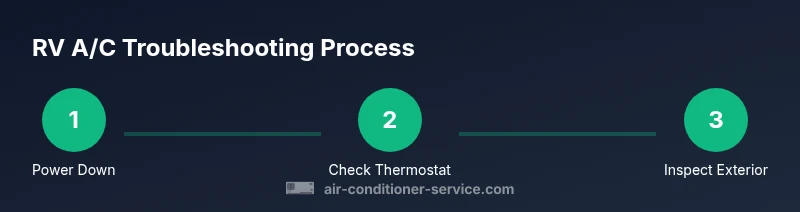
Power down and secure the unit
Begin by turning off the RV’s power at the main breaker and disconnecting shore power if available. This prevents electric shock and accidental compressor restart while you inspect. Confirm all fans and the thermostat are in a safe state before touching any wires.
Tip: Double-check the switch location and use a non-contact voltage tester to verify no live current is present. - 2
Check thermostat settings and air flow
Verify the thermostat is set to cool and that the temperature setting isn’t blocking the unit from cycling. Inspect interior vents for obstructions and confirm the blower fan operates when the unit is powered.
Tip: Temporarily bypass a stuck thermostat by testing with a known-good thermostat if available. - 3
Inspect exterior condenser and airflow
Clear debris from the exterior grille and ensure the RV isn’t blocking airflow around the unit. Check for bent fins or damaged shutters and confirm the exterior fan spins freely when powered.
Tip: Clean fins with a soft brush; never use high-pressure water directly on fins as it can bend them. - 4
Check electrical supply and fuses
Inspect the power cord, control board, and fuses for signs of wear or scorching. Replace any blown fuses and reseat any loose connectors. A faulty contact can mimic not cooling.
Tip: If you see discolored components, stop and consult a professional to avoid fire risk. - 5
Inspect the blower and air handler
Access the air handler and blower housing to listen for unusual noise or wobble. Clean the blower wheel and verify bearings are not worn. A dirty or worn blower can reduce airflow significantly.
Tip: Take photos of wiring connections before disconnecting to simplify reassembly. - 6
Assess refrigerant system safety and leaks
Look for signs of refrigerant leak around lines, fittings, and the compressor area. Do not attempt to recharge refrigerant; this requires licensed service and proper recovery equipment. If a leak is suspected, isolate the unit and arrange professional service.
Tip: Never use refrigerant additives; mischarging can cause compressor damage. - 7
Reassemble, test operation, and monitor performance
Re-secure all panels, restore power, and run the unit through a cooling cycle. Observe for consistent cycling, proper temperature, and absence of unusual sounds or leaks. If performance doesn’t improve, document symptoms and seek professional assessment.
Tip: Keep a quick log of cycles and temps for the tech to review.
Common Questions
What are the most common RV air conditioner problems?
Not cooling, ice on the evaporator, and weak airflow are typical. Start with thermostat checks, air filter cleanliness, and exterior condenser clearance before progressing to deeper diagnostics.
Common RV AC problems include not cooling, ice buildup, and weak airflow. Start with simple checks like thermostat, filter, and exterior clearance before moving to deeper diagnostics.
Can I recharge refrigerant myself in an RV unit?
No. Recharging refrigerant requires licensed technicians and proper recovery equipment. Attempting to recharge can be dangerous and may violate regulations.
No, refrigerant recharge should be handled by a licensed technician with the proper equipment.
How often should an RV A/C be serviced?
Aim for an annual inspection, with a pre-trip check before long journeys to catch wear and component degradation early.
Aim for a yearly check, and do a pre-trip inspection before long travels.
What affects the cost of RV A/C repair?
Costs vary by issue, required parts, and whether refrigerant handling or compressor replacement is needed. Get a detailed estimate before any work.
Costs vary by issue and parts; obtain a clear estimate before work begins.
Is it safe to run the RV A/C during travel?
Yes, when properly installed and maintained. Ensure all seals, vents, and ducting are intact and that the roof unit is secured.
Yes, if the unit is securely installed and maintained.
Why does my RV A/C freeze up?
Freezing can result from restricted airflow, a dirty evaporator, or refrigerant issues. Check air filters, vents, and ensure the condenser isn’t blocked.
Ice buildup usually means airflow issues or refrigerant trouble; inspect filters and ventilation.
Watch Video
The Essentials
- Diagnose methodically by separating airflow, electrical, and refrigerant symptoms.
- Always prioritize safety; power down before touching any components.
- Maintenance and clean filters prevent many common RV AC issues.
- Reserve refrigerant handling for licensed professionals.