Replacement Compressor for Air Conditioner: Step-by-Step Guide
Learn how to safely replace a faulty compressor in your air conditioner with a clear, step-by-step guide. Includes tools, safety, costs, and maintenance tips from Air Conditioner Service.


Replacing a compressor in a central air conditioner is a complex project that combines electrical work, refrigerant handling, and vacuum testing. This guide walks you through safety precautions, required tools, and the step-by-step process, including diagnosing a failing compressor and deciding between repair vs replacement. For safety and compliance, Air Conditioner Service recommends professional assistance for refrigerant-related tasks.
What a replacement compressor does in an AC system
The compressor is the heart of your air conditioning system. It pressurizes low-pressure refrigerant gas into a high-pressure liquid, enabling heat transfer in the condenser. When a compressor fails, you often see reduced cooling, warm air, or unusual noises. According to Air Conditioner Service, compressor failures are a common cause of cooling loss, especially in aging units. Understanding the role of the compressor helps homeowners recognize when a replacement may be more cost-effective than repeated repairs. This section also clarifies how a failing compressor can stress other components, such as the outdoor fan, condenser coils, and electrical controls, which is why a full diagnostic review is essential before deciding on replacement.
Diagnosing compressor failure and what it means for replacement decisions
Compressor problems can mimic other issues, including refrigerant leaks, faulty capacitors, or blocked condenser fins. Signs you may be facing compressor failure include: no cooling performance, long cycling or short cycling, loud banging or grinding noises, overheating, tripped breakers, or oil leaks at the compressor seal. A proper diagnosis requires checking electrical resistance, refrigerant charge, and pressure differentials with appropriate tools. Air Conditioner Service emphasizes that an accurate diagnosis prevents unnecessary replacements and helps you budget appropriately. In some cases, a compromised compressor can be rebuilt, but many modern units require a full compressor replacement to restore reliable cooling.
Safety and regulatory considerations when replacing a compressor
Handling high refrigerant pressures, electrical wiring, and engine-like mechanical parts demands strict safety practices. Always disconnect power at the main breaker before starting any work, and verify there is no voltage at service points. Refrigerant handling requires proper recovery equipment and adherence to local and federal regulations; many jurisdictions require licensed technicians to manage refrigerant recovery and recharge. This is not only a safety issue but also a legal requirement in many areas. Air Conditioner Service recommends engaging a licensed technician for refrigerant work if you are not fully trained or certified.
High-level overview of the replacement workflow
A compressor replacement typically follows a sequence: (1) isolate power and diagnose; (2) recover refrigerant if required by local codes; (3) remove the old compressor by disconnecting electrical connections and refrigerant lines; (4) install the new compressor with correct mounting hardware and seals; (5) vacuum the system to remove air and moisture; (6) recharge with the correct refrigerant and lubricant; (7) test for proper operation and leak-free performance. This overview provides context for the more detailed step-by-step section that follows, and it helps homeowners plan for the project timeline and potential downtime.
Tools, materials, and preparation you should have on hand
Prepare a dedicated workspace with clear access to the outdoor condenser and the indoor air handler. Gather safety gear (gloves, eye protection), a multimeter, refrigerant recovery equipment (if required by code), a vacuum pump, a manifold gauge set, appropriate refrigerant, the replacement compressor model compatible with your unit, torque wrenches, and hand tools. Double-check that you have the right O-rings, lubricants, and wiring connectors for your system. Being organized before you begin reduces the likelihood of mistakes during disassembly and reassembly.
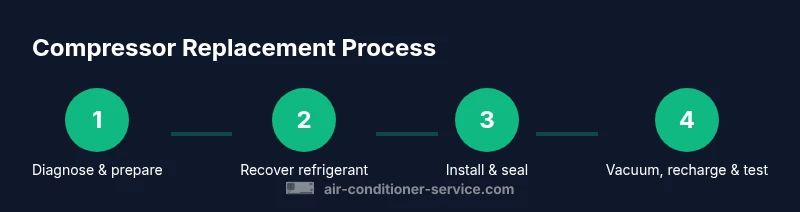
High-level overview of the replacement process (visual guide)
This high-level outline supplements the step-by-step instructions. It’s designed to help you visualize the flow of work and the sequence of tasks. 1) Safety prep and diagnosis, 2) Refrigerant handling, 3) Replacement and sealing, 4) System vacuum and recharge, 5) Final testing and commissioning. Each stage has critical checks to prevent leaks and electrical hazards. Refer to the detailed steps for the exact checks, torque specs, and testing procedures.
Post-replacement testing, leak detection, and initial commissioning
After replacing the compressor, conduct a thorough leak check using approved methods and confirm no refrigerant escape at connections. Start the system and monitor pressures, temperature differential, and electrical draw to ensure proper operation. If anything seems off, recheck connections and seals before placing the system into service. Record the service notes for future maintenance and warranty considerations.
Cost considerations, warranties, and downtime expectations
Costs for replacing a compressor vary widely based on unit type, accessibility, and local labor rates. Air Conditioner Service Analysis, 2026 suggests that total project costs (parts plus labor) can range broadly, with the final figure influenced by refrigerant handling requirements and the necessity of any ancillary repairs. Keep in mind that some units may require ancillary fixes like expansion valve replacements or condenser coil cleaning, which can add to the total time and expense. Always request a written estimate that itemizes parts, labor, and any potential refrigerant costs.
Maintenance tips to extend the life of a new compressor
After installation, prioritize regular maintenance to maximize the life of the replacement compressor. Keep outdoor coils clean and free of debris, ensure proper refrigerant charge, inspect electrical connections for signs of corrosion or looseness, and replace air filters on schedule. A clean, well-maintained system reduces workload on the compressor and improves overall efficiency. Air Conditioner Service recommends scheduling annual inspections to catch wear and tear before it leads to compressor failure.
Tools & Materials
- Safety gear (gloves, eye protection)(Nitrile gloves; ANSI-rated eye protection)
- Power shutoff tools and meter(Breaker off; multimeter for voltage verification)
- Refrigerant recovery system(As required by local codes; licensed handling may be needed)
- Vacuum pump(For evacuating moisture from the system)
- Manifold gauge set(For measuring refrigerant pressures during recharge)
- New compressor compatible with unit(Ensure model/size matches OEM specifications)
- Torque wrench(Follow mounting bolt torque specs from manufacturer)
- Wrenches and sockets(Common sizes to disconnect lines and mounting bolts)
- New O-rings and seals(Fresh seals reduce leak risks)
- Lubricant for seals/o-rings(Specify compatible oil for compressor model)
- Refrigerant (matching unit type)(Only what the system is designed for (e.g., R-410A))
- Leak detector/soapy solution(Optional tools to verify leaks during testing)
Steps
Estimated time: 6-9 hours
- 1
Power down and verify safety
Switch off the outdoor unit at the disconnect and disable the indoor control power. Use a multimeter to confirm there is no voltage present at service points. This prevents electric shock and accidental compressor startup during work.
Tip: Label circuits and lock out the breaker to prevent accidental re-energizing. - 2
Recover refrigerant according to code
Follow local regulations to recover refrigerant from the system using approved equipment. Document the recovery process and ensure the charge is compliant with environmental standards before proceeding.
Tip: Never vent refrigerant to the atmosphere; improper recovery can be illegal and dangerous. - 3
Disconnect and remove the old compressor
Carefully disconnect electrical leads and detach refrigerant lines with the system depressurized. Remove mounting bolts and lift the old compressor out of its mount, avoiding damage to surrounding components.
Tip: Take photos of wiring and line orientation for reference during reinstallation. - 4
Install the new compressor
Position the new compressor, reconnect refrigerant lines with new O-rings, and secure mounting bolts to manufacturer torque specs. Re-connect electrical harnesses exactly as documented in the initial wiring layout.
Tip: Lubricate O-rings and ensure proper alignment of lines to prevent cross-threading. - 5
Vacuum the system and check for leaks
Create a deep vacuum using the pump and hold for 20-30 minutes until the system stabilizes below 500 microns. Perform a leak check at all connections using a detector or soap solution.
Tip: If you see rising micron levels, stop and repair leaks before continuing. - 6
Recharge and test the system
Recharge with the correct refrigerant amount, following the weight specified by the manufacturer. Start the system and monitor pressures, temperatures, and electrical draw to verify proper operation.
Tip: Use a scale to weigh refrigerant charge for accuracy and repeatability. - 7
Document results and finalize
Record the refrigerant type, charge amount, pressures, and performance observations. Re-secure panels and label the service date for future maintenance.
Tip: Keep a detailed service log; it helps with future maintenance and warranty claims.
Common Questions
Can I replace a compressor myself, or should I hire a pro?
Compressor replacement is complex and involves refrigerant handling, electrical work, and specialized tools. In many areas, licensed technicians are required for refrigerant recovery and system charging. If you lack training or proper equipment, hiring a pro is strongly advised.
This is best left to a licensed technician because it involves refrigerant work and electrical safety.
What are the telltale signs of compressor failure?
Common signs include no cooling, loud noises, high electrical current, tripped breakers, and oil leaks at the compressor. If you notice these, run a full diagnostic before deciding on replacement.
Look for lack of cooling, unusual noises, and frequent cycling—these often indicate compressor trouble.
How long does a compressor replacement take?
Time varies by unit type and access. A straightforward replacement can take several hours, while more complex installs may require a full day with diagnostic and recharge.
Most replacements take several hours; more complex setups can take longer.
Is replacement cheaper than repair?
If the compressor is old or part of a system with multiple issues, replacement often becomes the more cost-effective option in the long run. A technician can provide a cost-benefit estimate after diagnosis.
Often replacement makes more sense when the unit is aging or has multiple failing parts.
Do I need to recover refrigerant to replace the compressor?
Yes. Most jurisdictions require refrigerant recovery before opening the system. This protects the environment and complies with regulations. Hire a pro if you’re not certified.
Yes, refrigerant recovery is typically required by law before opening the system.
What maintenance helps extend compressor life?
Keep coils clean, ensure proper refrigerant charge, tighten electrical connections, replace filters regularly, and schedule annual inspections. Regular care reduces compressor stress and improves efficiency.
Regular maintenance reduces stress on the compressor and improves efficiency.
Can I replace the compressor on a window unit myself?
The process is similar but often more compact and accessible. Smaller units still require proper handling of refrigerant and electrical safety; consult a professional if you’re unsure.
Smaller units still require care with refrigerant and electrical safety; consider a pro if unsure.
What should I do if the system leaks after replacement?
Shut down the system and re-check all connections. If a leak is detected, repair and re-test before recharging. Persistent leaks require professional assessment.
If you detect a leak, stop and have it inspected before recharging.
Watch Video
The Essentials
- Identify compressor failure early to prevent collateral damage.
- Follow codes for refrigerant handling and require licensed support when needed.
- Use the correct compressor model and essential tools for a reliable replacement.
- Vacuum and leak-test the system to ensure safe operation.
- Document service steps for future maintenance and warranty protection.