How to Replace Air Conditioner Compressor: A Practical Guide
Learn how to replace air conditioner compressor with a step-by-step approach, safety checks, and cost considerations. This guide covers compatibility, tools, and when to hire a professional.


Replacing a damaged compressor is a high-skill job that involves refrigerant recovery and electrical hazards. If you’re looking to replace air conditioner compressor, follow these steps, safety checks, and local code considerations. This guide is designed for experienced DIYers or professionals; when in doubt, hire a licensed technician. Expect proper tools, precise measurements, and careful leak testing.
What you should know before you start
Replacing a damaged compressor is a major repair that affects the core cooling cycle. Before you begin, confirm your unit's model and the refrigerant type (R-22, R-410A, etc.), and ensure you have the exact replacement compressor that matches the OEM specifications. This is not a casual DIY task; improper replacement can lead to insufficient cooling, refrigerant leaks, or electrical hazards. According to Air Conditioner Service, verifying compatibility and having a clear plan are the two most important early steps. If you’re unsure about pressures, oil type, or torque specs, consult a pro. Also check local codes; many jurisdictions require licensed refrigerant handlers for any repair involving the refrigerant circuit. Proper PPE, a clean workspace, and a dedicated recovery container are essential. This pre-check reduces the risk of damaging the system or releasing refrigerant into the atmosphere.
Safety and prerequisites
Safety comes first. Begin by shutting off power at both the outdoor disconnect and the indoor service panel. Lockout-tagout if available and verify with a non-contact voltage tester that the circuit is de-energized before touching any wires. Wear chemical-resistant gloves, safety goggles, and a long-sleeve, flame-resistant shirt. Refrigerant handling is regulated in many areas; in most cases, only licensed technicians may recover refrigerant. Ensure you have a clean, dry workspace with good lighting and a place to store removed parts to prevent contamination. Have a fire extinguisher nearby for electrical hazards and confirm you know the coolant type and charge procedure. By planning safety first, you minimize the risk of injury and accidental refrigerant release.
Compressor compatibility and replacements
The replacement compressor must match your outdoor unit’s layout, mounting pattern, electrical connections, and refrigerant type. Check the compressor’s model number, shaft orientation, and oil fill requirements to ensure compatibility with your system. If you’re unsure, consult the unit’s service manual or contact the manufacturer. Mixing an incompatible compressor can cause improper lubrication, overheating, or a total failure of the system. In many cases, you’ll choose between an OEM replacement and a high-quality aftermarket option; both require correct refrigerant compatibility and proper oil charge. Remember that incorrect installation voids warranties and can create safety hazards. Air Conditioner Service emphasizes confirming compatibility and torque specs before committing to removal.
Step-by-step overview
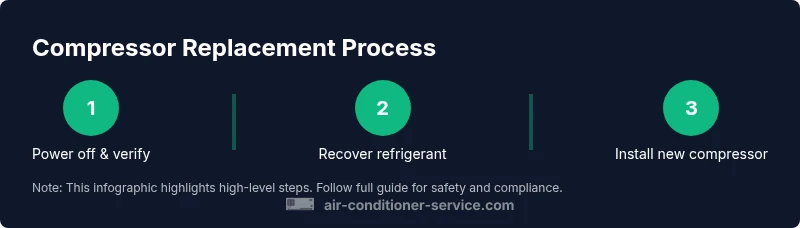
Here is a high-level view of the major stages involved in replacing an AC compressor: verify model and safety, recover refrigerant, disconnect electrical and line sets, remove old compressor, install the new unit, reconnect lines and wiring, evacuate air and test for leaks, recharge with the correct refrigerant, and perform a full system test. Each step demands careful attention to torque values, seal integrity, and proper lubrication. This overview sets the stage for the detailed steps that follow in the step-by-step section.
Tools, equipment, and setup
Preparation is essential. Gather PPE (gloves, eye protection), a full set of hand tools (screwdrivers, nut drivers, wrenches), a torque wrench, a vacuum pump, a micron gauge, a refrigerant recovery machine (where legally required), a manifold gauge set, leak detector, and the replacement compressor that matches your system. Also have the correct refrigerant type on hand and design an orderly workflow to minimize exposure to hot components and refrigerant. Ensure you have a clear path to move the old compressor out and the new one in, with a stable surface for working and a means to capture any residual oil safely.
Common failure modes and troubleshooting
Even with careful work, compressor replacements can encounter failures if the system isn’t charged correctly or if there are leaks in line sets or fittings. Common issues include insufficient refrigerant charge causing under-performance, overcharging leading to high head pressures, and oil starvation that shortens the new compressor’s life. Leaks around brazed joints or service valves are frequent culprits. Troubleshooting focuses on verifying pressures against manufacturer specs, confirming that the system holds a vacuum before charging, and rechecking for leaks after the recharge. If the system shows abnormal vibrations, noise, or temperatures, stop and re-evaluate the installation. A slow, methodical approach helps avoid repeating costly mistakes.
Cost, time, and professional considerations
Compressor replacement is one of the more expensive HVAC repairs because it blends parts cost with professional labor, refrigerant handling, and potential rework. Costs vary with unit complexity, refrigerant type, and service region. For many homeowners, the decision hinges on the availability of qualified technicians and the expected reliability of a DIY repair. Air Conditioner Service notes that, in some cases, replacement parts and proper refrigerant charges can’t be guaranteed without professional equipment. If you lack the proper tools, the space to work, or the required licenses, hiring a licensed technician is the safer, more reliable path. Weigh the risks and benefits carefully before proceeding.
Aftercare and maintenance
After installation, run the system for a full cycle to confirm proper operation. Listen for unusual noises, observe pressure readings, and check for any signs of refrigerant leakage. Inspect soldered or brazed joints for cooling efficiency and ensure electrical connections are tight and protected from moisture. Schedule periodic maintenance checks—especially after a compressor replacement—to catch any developing issues early. Proactive maintenance reduces the risk of future failures and extends the life of your system. The final test should verify that the system maintains correct pressures, cools effectively, and operates within safe temperatures.
Authority sources
To verify best practices, consult authoritative sources on refrigerant handling, safety, and HVAC maintenance. The U.S. Department of Energy provides guidelines on energy-efficient cooling systems and service best practices. The Environmental Protection Agency offers regulations related to refrigerant recovery and handling in Section 608. OSHA guidance on electrical safety and worker protection is also relevant when performing any high-voltage repair. Following these sources helps ensure you comply with regulations while protecting yourself and your home.
Tools & Materials
- Safety PPE(Safety glasses, chemical-resistant gloves, long-sleeve shirt, and hearing protection if needed)
- Electrical tool kit(Screwdrivers, nut drivers, wrenches, and a torque wrench)
- Vacuum pump(High-quality vacuum pump capable of achieving deep vacuum)
- Micron gauge(Monitors vacuum level and leak testing accuracy)
- Manifold gauge set(For monitoring pressures during charging and testing)
- Refrigerant recovery machine(Only where legally required and training is available)
- Replacement compressor(Ensure model and mounting pattern match your outdoor unit; include proper oil charge)
- Riser hoses and line set seals(New seals for refrigerant line connections to prevent leaks)
- Electrical wiring kit(Ensure connectors match your unit's controls and safeties)
- Thermal paste/oil(Oil for the compressor depending on model; follow OEM guidance)
Steps
Estimated time: 4-8 hours
- 1
Verify unit model and safety
Power down the system at the disconnect and main breaker. Confirm the exact model of the outdoor unit and the refrigerant type, then locate the replacement compressor that matches the OEM specifications. This alignment reduces fit issues and ensures correct lubrication and oil charge for the new unit.
Tip: Double-check model numbers and labeling on the compressor and outdoor unit before removal to avoid buying the wrong part. - 2
Recover refrigerant and depressurize
If allowed by local codes, use a certified recovery machine to remove refrigerant and evacuate the system. Do not vent refrigerants to the atmosphere. This step is essential for environmental safety and legal compliance.
Tip: Only licensed technicians should perform refrigerant recovery in areas with strict regulations. - 3
Disconnect electrical and line sets
Label and disconnect all electrical leads and service valves. Cap all exposed ends to prevent contamination and moisture ingress. Note the orientation of the old compressor for correct installation of the new unit.
Tip: Take photos of the wiring and valve positions before removal for reference during reassembly. - 4
Remove the old compressor
Unbolt the compressor from its mount and carefully detach the line sets. Capture any residual oil and prevent spills. Handle the compressor with support to avoid damaging surrounding components.
Tip: Support the compressor as you release the last mounting bolt to prevent a drop that could cause injury or damage. - 5
Prepare mounting and install the new compressor
Position the new compressor, align mounting holes, and tighten bolts to the manufacturer-specified torque. Reconnect line sets with new seals and verify the orientation and fit of all connections.
Tip: Always torque fasteners to spec; overtightening can damage housings and seals. - 6
Reconnect electrical and controls
Reconnect all electrical leads according to the labels or photos taken earlier. Reinstall control modules, safety switches, and contactors as per OEM wiring diagrams.
Tip: Use a multimeter to verify continuity and absence of shorts before powering up the system. - 7
Vacuum, leak test, and recharge
Evacuate the system with a vacuum pump to remove air and moisture, then perform a leak test. Charge the system with the correct refrigerant amount as per the service manual or manufacturer specifications. Start the unit and monitor for abnormal pressures.
Tip: Do not charge while still under vacuum; ensure the system holds a deep vacuum before charging. - 8
Test operation and finalize
Run the system through a complete cycle, verify cooling performance, and confirm no leaks or odd noises. Re-check connections and ensure the outdoor unit is free of obstructions and debris.
Tip: Record operating pressures and temperatures for future reference and maintenance planning.
Common Questions
Is compressor replacement a DIY task or a job for a pro?
Compressor replacement involves refrigerant handling and electrical work; in many regions, a licensed technician is required. If you have the right training and tools, you can proceed with caution, but be prepared for a high-complexity repair.
Compressor replacement is usually best left to a licensed technician because of refrigerant and electrical safety requirements.
What factors determine if I should repair or replace the compressor?
If the compressor is seized or heavily burnt, replacement is often more reliable than a repair. If the cooling system has multiple issues, replacing the compressor may not address other underlying problems.
If the compressor is damaged beyond repair or incurs frequent failures, replacement is usually the better option.
Do I need to evacuate and recharge the system after replacement?
Yes. Evacuation removes moisture and air, and a proper recharge ensures correct pressures and cooling performance. This is essential for system longevity and efficiency.
Yes. You must evacuate and recharge the system to prevent leaks and poor cooling.
Can I reuse the old refrigerant?
Refrigerant should be recovered, not reused, and recharged only with the correct type and amount for your system. Improper refrigerant charge can damage the compressor and reduce efficiency.
Refrigerant should be recovered and replaced with the correct type and amount.
What safety precautions are most important?
Power off the system, wear PPE, and follow local codes for refrigerant handling. Prevent accidental energization and ensure a leak-free installation.
Power off, wear PPE, and follow local refrigerant handling rules.
Watch Video
The Essentials
- Confirm compatibility before purchasing the replacement compressor
- Follow refrigerant handling regulations and safety protocols
- Use proper tooling and torque specs to ensure a reliable install
- Test the system thoroughly after replacement to prevent future failures