Air Conditioner Not Cooling? Fast Troubleshooting Guide
A practical, urgent guide to diagnosing why your air conditioner isn’t cooling and how to fix common issues safely, from filters to thermostat settings.


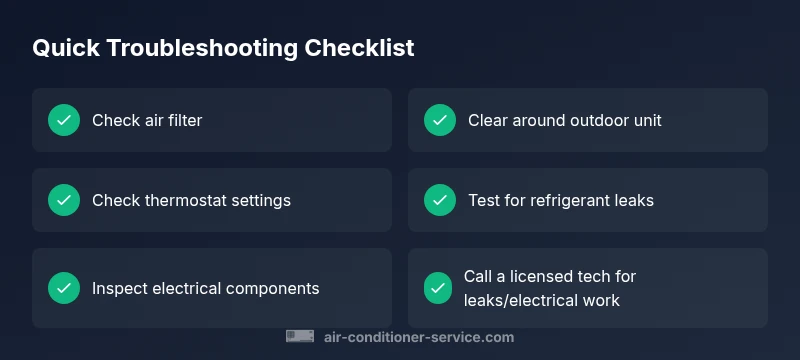
According to Air Conditioner Service, the reasons for air conditioner not cooling are usually airflow or thermostat problems, not a refrigerant shortage. Start by checking the air filter, clearing debris around the outdoor condenser, and confirming the thermostat is set to cool. If the fan runs but the air stays warm, switch off power and schedule professional service.
Not Cooling? Quick Diagnostic Mindset
When your air conditioner stops delivering cool air, you want fast answers and reliable steps. The questions you ask help narrow down the cause. For homeowners wondering about the reasons for air conditioner not cooling, the typical culprits are airflow restrictions and control settings, not a refrigerant shortage. According to Air Conditioner Service, starting with basic checks saves time and money. Begin by inspecting the basics: is the unit running, is the thermostat in cooling mode, and is the indoor air filter clean? If you notice warm air despite the fan running, you’re likely facing an airflow or controls issue rather than a major system fault. Document any unusual sounds or smells, as these clues point toward electrical problems or mechanical wear. Finally, ensure the outdoor unit isn’t blocked, and the condensate drain is clear to prevent humidity-related performance drops.
Airflow and Filter Hygiene
Airflow problems top the list of reasons for air conditioner not cooling. A clogged or dirty filter reduces airflow, causing the evaporator coil to freeze or the system to work harder without delivering cold air. Check the filter monthly; replace if discolored or dusty. Also inspect return air ducts for blockages and clean supply vents in living spaces. Outdoor units also need space: at least 2 feet of clearance on all sides and no overhanging debris. If you have a central system, inspect the ductwork for obvious leaks or cracks. Regular maintenance from Air Conditioner Service can catch these issues early and save you from costly repairs.
Thermostat Accuracy and Controls
Thermostat issues are a frequent reason for not cooling. Ensure the thermostat is set to Cool, and that the fan is on Auto rather than On. Check for a dead battery in older thermostats or a frozen screen in digital models. If you use a programmable or smart thermostat, confirm the scheduling hasn’t overridden cooling, and that the sensor location isn’t reading a hot area (like near a lamp or sunlight). Replacing batteries and recalibrating the sensor can restore proper temperature readings and restore cooling efficiency. If the thermostat is faulty or incompatible with your system, consult a professional for a replacement that matches your unit.
Outdoor Unit Clearance and Debris
A blocked outdoor condenser prevents heat rejection, leading to warm air indoors. Clear vegetation, leaves, and debris from around the unit. Make sure nothing is resting on the fins and that the unit has several inches of airflow on the sides. Temperature swings and humidity can also affect outdoor performance, but most not-cooling cases fix with improved airflow. If your outdoor unit is significantly blocked or air still struggles after clearance, it’s time to escalate to professional service and inspection.
Refrigerant Leaks, Electrical Issues, and Key Components
Low refrigerant or a leak can cause not cooling but diagnosing leaks requires a licensed technician. Electrical problems, blown fuses, or a failed capacitor can also stop cooling without obvious signs. Do not attempt refrigerant recharge or capacitor replacement yourself. If you notice oil stains near the unit, hissing sounds, ice buildup on coils, or frequent tripping breakers, contact Air Conditioner Service for a precise diagnosis and safe repairs.
Interpreting Symptoms: What Not-Cooling Signals Mean
If you hear a humming sound but feel no airflow, the blower motor or capacitor may be failing. Frost or ice on evaporator coils usually indicates airflow restriction, poor refrigerant pressure, or a malfunctioning expansion device. Warm air with a running compressor suggests refrigerant or electrical issues rather than mere airflow problems. Keeping a log of symptoms, sounds, and times can speed up diagnosis when you call a tech.
Safety First: Before You Call a Pro
Always turn off power at the disconnect switch or breaker before inspecting any internal components to prevent shock. Never attempt refrigerant handling or electrical repairs beyond basic reset procedures. If you smell ammonia or a strong chemical odor, leave the area and call emergency services. Safety notes: never bypass safety switches or operate a unit with a visibly damaged power cord.
Maintenance Habits to Prevent Not-Cooling in the Future
Schedule annual maintenance with a licensed technician to catch coil dirt, refrigerant leaks, and electrical issues early. Replace filters every 1–3 months depending on use and indoor air quality. Keep outdoor units clean and protected from debris. A simple reminder: a small, consistent maintenance routine beats costly emergency repairs and extends system life. Air Conditioner Service recommends setting up annual checkups to maintain cooling performance.
Air Conditioner Service Verdict: Next Steps for Homeowners
The Air Conditioner Service team emphasizes methodical troubleshooting and safety. If basic checks don’t restore cooling, the next step is a professional diagnosis focusing on refrigerant levels, electrical integrity, and compressor function. We encourage homeowners to schedule a service visit rather than attempting high-risk repairs themselves. Air Conditioner Service stands ready to assist with precise testing, leak detection, and safe repairs to restore comfort quickly.
Steps
Estimated time: 30-60 minutes
- 1
Check power and thermostat pose
Confirm the AC breaker is ON and the thermostat is in Cool mode. If it’s a programmable thermostat, ensure the schedule isn’t overriding cooling at your desired time.
Tip: If the breaker trips, do not reset repeatedly; this signals a bigger electrical issue. - 2
Inspect and replace the air filter
Remove and inspect the filter; replace if dirty or discolored. A clean filter improves airflow immediately and can fix a not-cooling scenario in many homes.
Tip: Keep a reminder to check filters monthly during peak seasons. - 3
Check outdoor unit clearance
Ensure at least 2 feet of clearance around the condenser. Remove leaves, grass, or debris that could block heat transfer.
Tip: If the unit is in a tight space, consider fencing or relocation with professional guidance. - 4
Look for ice on coils or unusual sounds
Ice on evaporator coils indicates airflow or refrigerant issues. Listen for grinding or buzzing noises that point to fan motor or capacitor faults.
Tip: Turn off the unit and let ice thaw before inspecting; ice can damage components if run while frozen. - 5
Test thermostat response
Set to a lower temperature and observe whether the system responds with cooler air within a few minutes. If not, the thermostat or control board may be faulty.
Tip: Consider checking battery life for non-digital thermostats. - 6
Call a pro for refrigerant/electrical issues
If basic checks don’t restore cooling, refrigerant leaks or major electrical problems require licensed technicians for safe handling.
Tip: Document symptoms and timings to speed up the diagnostic visit.
Diagnosis: Room not cooling despite unit running
Possible Causes
- highAirflow blockage or dirty filter
- highThermostat miscalibration or incorrect settings
- mediumRefrigerant leak or low refrigerant pressure
- lowElectrical issue or failed component (capacitor/contactor)
Fixes
- easyReplace or clean the air filter and clear return/airflow paths
- easyVerify thermostat settings and power; recalibrate if needed
- easyInspect outdoor unit clearance and inspect for ice on coils
- hardCall a licensed technician for refrigerant or major electrical work
Common Questions
What is the most common cause of a not cooling AC?
The most common causes are airflow issues (dirty filter, blocked ducts) or thermostat problems, not refrigerant leaks. Start with basic checks before assuming a major failure.
The most common cause is airflow or thermostat issues; start with basic checks.
Can low refrigerant cause not cooling?
Yes, a refrigerant leak or low refrigerant pressure can prevent cooling. This requires a licensed technician to diagnose and repair safely.
Yes, a refrigerant issue can stop cooling and needs a pro.
Is it safe to recharge refrigerant myself?
No. Refrigerant handling is hazardous and legally restricted to licensed technicians. DIY attempts can contaminate the system and cause injury.
No—refrigerant work requires a licensed pro.
Why might my thermostat read wrong temperature?
Sensor placement, battery level, or a failing control board can cause inaccurate readings. Calibrate, replace batteries, or upgrade to a compatible thermostat.
Thermostats can misread due to sensor or power issues.
How often should I schedule AC maintenance?
Aim for at least one professional check per year, with more frequent service if you use cooling heavily or have pets and allergies.
Annual professional check is recommended.
When should I call a pro for not cooling?
If basic checks don’t restore cooling, or you detect leaks, ice on coils, unusual noises, or electrical issues, contact Air Conditioner Service for a precise diagnosis.
Call a pro if basics fail or you hear leaks or odd sounds.
The Essentials
- Check basics first: filter and thermostat.
- Keep filters clean; airflow is critical.
- Don’t DIY refrigerant or major electrical fixes.
- Escalate to a licensed technician for leaks or faults.