Is AC Giving Hot Air? Practical Troubleshooting for Homeowners
Learn practical steps to diagnose and fix an air conditioner that blows hot air. From thermostat checks to professional refrigerant work, restore cooling fast.


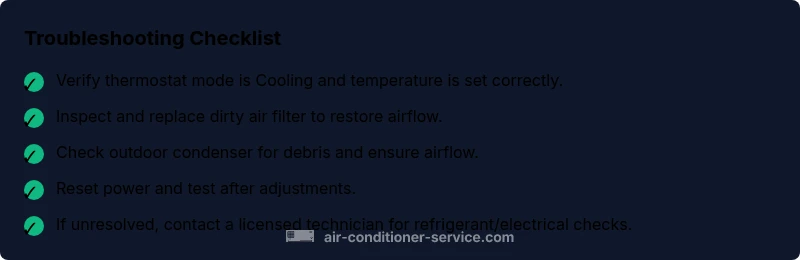
Set the thermostat to cooling mode and lower the temperature, then replace or clean a clogged air filter. Check outdoor unit airflow and ensure coils aren’t blocked. If the problem persists, inspect for refrigerant issues and contact a licensed technician. These steps address the most common causes of warm air quickly.
Understanding why your AC blows hot air
If you’ve ever asked, is ac gives hot air, the short answer is that several safe, simple conditions can cause warm air or no cooling. According to Air Conditioner Service, many hot-air episodes come from setup mistakes or airflow restrictions rather than a failed compressor. Start by confirming the system is in cooling mode and the thermostat is set lower than the room temperature. A quick check of the basic settings can restore cooling in minutes without tools. If cooling still doesn’t return, this guide takes you through a systematic, safe troubleshooting approach that homeowners can perform before calling a technician. This is especially important for homeowners who rely on quick cooling during heat waves. Remember: small setup issues often masquerade as bigger problems, so start with the simplest checks. The question is not if the AC can cool, but whether it is configured to do so.
Quick checks you can perform safely
Before you tear into components, run through these simple checks. First, verify the thermostat is in cooling mode and the temperature is set appropriately. Next, inspect the air filter; a dirty filter blocks airflow and makes the coil freeze up. Check the outdoor unit for obstructions like leaves or tall grass and ensure the grille is clean. Finally, listen for the indoor blower; if it isn’t running, you may have a blown fuse or tripped breaker. If any step seems unclear, stop and seek professional guidance.
Common causes and symptoms
There are several frequent reasons a working AC can blow warm air. The most common is a thermostat set to heat or an incorrect mode. A clogged air filter reduces airflow, and a dirty filter can cause the evaporator coil to freeze, followed by warm air when the system cycles off. An obstructed outdoor condenser or a dirty coil can limit heat rejection, causing warm air inside. Refrigerant leaks or low refrigerant can also push temperatures up and may indicate a leak. In rare cases, a failing compressor or electrical fault prevents proper operation. Each cause has distinct symptoms and fixes, which guides the next steps.
Diagnostic flow you can follow
Symptom: AC is not cooling or blows warm air. Possible cause: Thermostat misset (high likelihood). Fix: Correct mode and temperature; verify settings after a reset. If not resolved, evaluate: Airflow problems (high likelihood) → check filter and blower. If still unresolved: Outdoor unit airflow (medium likelihood) → remove debris and ensure proper clearance. If refrigerant issues suspected: refrigerant leak or low level (medium) → contact a licensed tech. Note: Use this as a guide; adapt steps to your system. Always ensure power is off when inspecting electrical components.
Step-by-step fixes for the most common cause
The most common cause of warm air is incorrect thermostat settings or a dirty filter. Follow these steps:
- Turn off or switch thermostat to cool mode; set a comfortable temperature (e.g., 72°F/22°C). Then wait a few minutes to see if the indoor air cools. Tip: take a photo of your current settings for future reference.
- Replace or clean the air filter. A standard 1-inch filter takes a few minutes; a dusty filter can drop airflow by up to 30%. Tip: set a reminder to check every month.
- Inspect the outdoor condenser: remove debris, trim plants away 12 inches, and ensure the unit has at least 24 inches of clearance. Tip: clean the coils with a gentle brush or a garden hose (on low pressure) from the outside in.
- Reset the thermostat and the indoor air handler by turning off power at the breaker for 60 seconds; then restore power and retest. Tip: avoid touching wiring unless you’re confident.
- If you still have warm air after these steps, check the refrigerant smell or listen for hissing; do not attempt to add refrigerant yourself. Tip: refrigerant handling requires licensed technicians.
- If the above steps don’t fix it, call a professional. Provide your service history and notes.
EstimatedTime: 45-60 minutes
Safety tips and when to call a professional
Safety first: never attempt to repair refrigerant lines or electrical components beyond your comfort level. Always shut off power at the breaker before inspecting a unit. If you smell refrigerant, hear hissing, or see oily residue near lines, evacuate and contact a licensed HVAC technician immediately. For common issues like thermostat misconfiguration or clogged filters, you can usually fix them yourself. When in doubt, schedule a professional diagnostic to avoid safety risks or further damage to the system.
Prevention tips to avoid future hot-air days
Regular maintenance is the best defense. Schedule annual professional checkups and replace filters every 1-3 months depending on usage and filter type. Keep outdoor units free of debris and ensure adequate clearance around the condenser. Use a programmable thermostat to maintain consistent cooling and reduce the likelihood of manual mode errors. Finally, monitor refrigerant levels during routine service; early detection of leaks saves time and money.
Steps
Estimated time: 45-60 minutes
- 1
Check thermostat settings
Verify that the system is in cooling mode and the setpoint is lower than room temperature. If needed, reset the thermostat and allow a few minutes for the system to respond.
Tip: Take a quick photo of current settings for reference. - 2
Inspect and replace the air filter
Locate the air filter, remove it, and inspect for dirt and clogs. Replace with a new filter or wash if it’s a reusable type. Slower airflow is the #1 cause of warm air.
Tip: Check every month; consider 1-inch filters for easy maintenance. - 3
Check outdoor condenser and surrounding area
Ensure the outdoor unit has at least 24 inches of clearance and is free of leaves, grass, or debris. Clean the fins carefully with a soft brush and avoid high-pressure spraying.
Tip: Keep plants trimmed back to improve airflow year-round. - 4
Reset power and test again
Turn off the breaker for 60 seconds, then restore power and set to cool. Give the system several minutes to respond and check for a change in temperature.
Tip: A simple reset fixes many minor control glitches. - 5
Assess refrigerant and electrical health
If cooling remains insufficient after the above steps, suspect refrigerant issues or electrical faults. Do not attempt to recharge refrigerant yourself.
Tip: Document any hissing sounds or oily spots and share with the technician. - 6
Call a professional if needed
If the unit still blows warm air, there may be a leak, failing compressor, or electrical problem requiring a licensed HVAC technician.
Tip: Provide service history and notes to the tech for faster diagnosis.
Diagnosis: AC is blowing hot air or not cooling
Possible Causes
- highThermostat set to heat or wrong mode
- highAir filter clogged
- mediumRefrigerant leak or low refrigerant
- mediumOutdoor unit blocked or condenser dirty
- lowCompressor failure or electrical fault
Fixes
- easySet thermostat to cooling mode and correct temperature
- easyReplace or clean the air filter
- easyClear debris and improve airflow around outdoor condenser
- mediumInspect for refrigerant leaks and contact a licensed HVAC technician
- mediumCheck electrical connections and fuses; call a pro if unsure
- hardIf compressor failure is suspected, avoid DIY and contact a professional
Common Questions
Why is my AC blowing hot air even though it’s on?
Common causes include thermostat misconfiguration, a dirty air filter, or outdoor unit airflow restrictions. Start with thermostat settings and filter checks before calling a tech.
If your AC is blowing hot air, first check the thermostat settings and filter; if unresolved, move to outdoor unit checks.
Can a dirty air filter cause hot air?
Yes. A clogged filter reduces airflow, causing the evaporator to work harder and warm air to circulate. Replacing the filter often resolves the issue.
A dirty filter can cause warm air—replace or clean it and test cooling.
What if the outdoor unit isn’t running?
Check the breaker and switch; ensure the unit has clearance and is free of debris. If still not running, call a professional to inspect electrical components.
If the outdoor unit won’t run, reset the breaker and check for obstructions; if unresolved, contact a pro.
Could refrigerant leaks cause hot air?
Yes, leaks can lower cooling efficiency and cause warm air. Only a licensed technician should handle refrigerant repairs and recharge.
Refrigerant leaks require a licensed HVAC technician.
When should I call a professional?
If basic checks don’t fix the issue or you suspect refrigerant/electrical problems, contact a licensed HVAC technician for a diagnostic.
If simple fixes fail, call a professional for a thorough diagnosis.
Can a failing compressor cause hot air?
A failing compressor can lead to poor cooling. This is a hard repair that typically requires replacement and professional service.
Compressor failure is a serious issue best handled by a pro.
Watch Video
The Essentials
- Check thermostat and mode first.
- Dirty filters are a common source of warm air.
- Outdoor airflow and condenser cleanliness matter.
- Refrigerant issues require a licensed technician.
- Preventive maintenance reduces future hot-air days.