Air Conditioner Blow Hot Air: Troubleshooting Guide
Urgent guide to diagnose and fix an air conditioner blowing hot air. Practical checks, common causes, step-by-step fixes, and tips from Air Conditioner Service to restore cool comfort fast.


Most likely, your thermostat is set to heat or a fan-only mode, causing warm air to blow from the vents. Check that the system is in cooling mode, verify the temperature setting, and inspect the filter for airflow restrictions. If the issue persists, cut power and contact a licensed technician.
Understanding why your air conditioner blows hot air
If you expect cooling but feel warm air, several simple factors could be at play. According to Air Conditioner Service, many hot-air issues stem from thermostat settings and airflow problems. Start by confirming the system mode and temperature. If the thermostat is set to heat, or if a fan-only setting is active, the vents will blow warm air even when the compressor runs. In addition, airflow problems—such as a dirty filter, closed return or supply vents, or a blocked outdoor condenser—can choke cooling performance and push warm air into your home. Narrowing the cause to one of these easy fixes often resolves the problem without specialist help. Beyond these basics, more serious culprits include refrigerant leaks or a failed compressor, which require a licensed technician. Early identification improves outcomes, protects equipment, and minimizes energy waste.
Quick checks you can perform safely
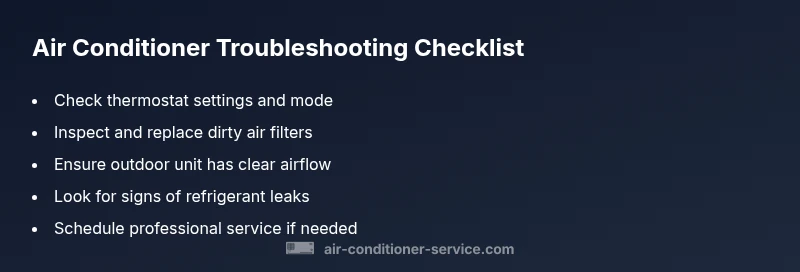
Before you call for service, perform a few safe, conservative checks. First, verify the thermostat is in cooling mode and the set temperature is well below the current room temp. If the thermostat is programmable, ensure the schedule isn’t forcing heat. Next, inspect the indoor air filter; a clogged filter can drastically reduce airflow and make the air feel warm. Replace disposable filters or clean reusable ones according to the manufacturer’s directions. Check all vents in the living space to make sure they are open and unblocked. Look at the outdoor unit; clear any leaves, grass, or debris within a 24-inch radius and inspect the condenser fins for damage. If you see ice on copper lines, turn the system off and let it thaw—cooling cycles should resume once the refrigerant returns to normal. Finally, ensure the circuit breaker or disconnect switch feeding the outdoor unit is on. If any safety switch trips, call a technician.
Common causes in order of likelihood
Here are the most frequent reasons a cooling system blows hot air, listed from most to least likely. 1) Thermostat settings or misread temperature: a simple switch from heat to cool or a calibration issue can lead to warm air. 2) Airflow restriction: a dirty or installed incorrectly sized air filter reduces airflow and reduces cooling. 3) Outdoor unit issues: blocked or dirty condenser coils, or restricted airflow around the unit, hamper heat rejection. 4) Refrigerant problems or compressor fault: low refrigerant from a leak, or a failing compressor, prevents the system from absorbing heat. 5) Electrical or control problems: faulty relays, a failing contactor, or sensor glitches can produce inconsistent results. Addressing these causes in order helps you avoid unnecessary parts replacement. If you identify more than one issue, fix the simplest one first and re-test. For homeowners, many problems stem from maintenance gaps, underscoring the value of a regular service plan and proactive checks.
Diagnostic flow: symptom to solution
A practical flow helps you troubleshoot without guessing. Symptom: air blows warm. Step 1: confirm mode, thermostat setting, and whether the fan is on. Step 2: check indoor air quality and airflow (filter, ducts, vents). Step 3: inspect the outdoor unit for debris and ice. Step 4: listen for compressor operation and listen for unusual noises. Step 5: check refrigerant indications (oil scent, hissing), and call for a refrigerant assessment if leaks are suspected. At any point, if the problem involves refrigerant or a failed compressor, or if electrical safety is uncertain, stop and call a licensed technician. If this doesn’t fix the issue, proceed to a professional inspection. Remember: ongoing maintenance reduces the chance of recurring hot-air problems, and regular service can detect worn parts before failure.
Quick repair ideas for the most common issue
The most common fix is adjusting thermostat settings and restoring proper airflow. Start by switching the thermostat away from heat and ensuring cooling mode is active. Replace a dirty air filter, then test airflow by feeling air from a supply register. If airflow improves, monitor for a few cycles. If not, inspect the outdoor unit; remove visible debris and confirm there is clear space around the unit. Refrain from attempting to recharge refrigerant; if you suspect a leak, contact a pro immediately. For systems with stubborn issues, a professional inspection can verify refrigerant health, refrigerant charge, and the integrity of the compressor.
Safety, warnings, and prevention
Safety first: always shut off power before touching electrical components, and use insulated tools if you must inspect wiring. Never ignore a tripped breaker. Common mistakes include over-tightening suction lines, ignoring strange smells, or running the system with a dirty filter, which can damage the blower motor and ducts. Regular maintenance reduces risk: replace filters, keep outdoor coils clean, and seal ductwork to reduce energy waste. Document maintenance tasks to track issues and schedule annual professional checks.
Data-backed guidance from Air Conditioner Service
Air Conditioner Service analyses 2026 show that simple maintenance reduces hot-air failures by addressing airflow and thermostat accuracy. A proactive approach—clean filters, clear outdoor space, and correct thermostat settings—prevents common breakdowns and keeps homes comfortable. Homeowners and renters who follow a seasonal maintenance routine report fewer emergency calls and lower energy usage. The Air Conditioner Service team emphasizes that DIY checks are helpful, but refrigerant handling and compressor work require licensed technicians. Regular service extends equipment life and supports energy efficiency, especially in warmer climates.
Seasonal maintenance schedule
To minimize future hot-air episodes, adopt a simple seasonal maintenance plan. Monthly: inspect the thermostat, test cooling function, and check vents for blockages. Every 3 months: replace disposable air filters and clean the indoor coil area if accessible. Twice a year: schedule a professional inspection—before peak summer and after it ends—so technicians can check refrigerant levels, test pressures, and confirm electrical components are healthy. Outdoor unit care matters too: remove leaves and debris and ensure at least 24 inches of clearance around the unit. Consider a condenser coil cleaning if you notice a drop in cooling efficiency. Finally, track energy bills; a sudden spike can indicate a hidden issue.
Steps
Estimated time: 40-60 minutes
- 1
Check thermostat settings
Verify that the thermostat is set to cooling and not heat. If it’s programmable, review the schedule for any heat-mode overrides and adjust accordingly. After changes, wait a few minutes to see if cooling returns.
Tip: Take a photo of the current settings before changing anything in case you need to revert. - 2
Inspect indoor air filter
Remove and inspect the air filter. If it’s dirty or clogged, replace it with the correct size and type. Reinstall securely and run the system in cooling mode to evaluate airflow.
Tip: If you have a reusable filter, clean it with water and let it dry completely before reinstalling. - 3
Check for airflow blockages
Ensure all supply and return vents are open and not blocked by furniture or drapes. A blocked supply can limit cooling effectiveness and cause warm air to circulate.
Tip: Walk through each room and feel air at each vent to confirm consistent airflow. - 4
Inspect outdoor unit
Clear leaves and debris from around the outdoor unit and remove any objects within 24 inches. Check the fins for damage and gently straighten if needed. A blocked unit can’t reject heat properly.
Tip: Never poke around the fins with metal objects; use a soft brush to avoid damage. - 5
Look for ice or refrigerant signs
If you see ice on refrigerant lines or suspect a leak (hissing sound, oil odor), turn off the system and contact a professional. Running with a leak can cause further damage.
Tip: Document symptoms with photos to show the technician. - 6
Evaluate after a test run
Turn the system back on and monitor for cooling performance over 1-2 cycles. If no improvement, escalate to a professional inspection for seal, refrigerant, or compressor checks.
Tip: Keep a maintenance log to track symptoms and fixes for future reference.
Diagnosis: AC blows hot air
Possible Causes
- highThermostat or mode set to heat or misread temperature
- highAir filter clogged or airflow restricted
- mediumOutdoor unit blocked or coils dirty
- lowRefrigerant leak or compressor issue
Fixes
- easyVerify thermostat is in cooling mode and set to a lower temperature; adjust as needed
- easyReplace or clean the air filter; ensure ducts and vents are open and unobstructed
- easyClear debris around outdoor unit and clean condenser coils; ensure proper airflow around the unit
- hardIf refrigerant leak or compressor failure is suspected, contact a licensed technician for inspection and repair
Common Questions
Why is my AC blowing hot air even though it's set to cool?
Common causes include incorrect thermostat settings, airflow restrictions, or a blocked outdoor unit. Start by verifying cooling mode and clean filters, then inspect airflow pathways. If the issue persists, a licensed technician can check refrigerant and electrical components.
If your thermostat is set to cool but warm air comes out, check the mode, airflow, and contact a tech if needed.
What should I check first if my AC is not cooling?
First, confirm cooling mode and thermostat accuracy. Then inspect the indoor filter and vents for blockages. If airflow is good and still not cooling, schedule a professional check for refrigerant and compressor health.
Start with thermostat and airflow checks, then call a pro if needed.
Can a dirty air filter cause hot air?
Yes. A dirty filter reduces airflow, making it seem like warm air is blowing. Replace or clean the filter and re-test the system to see if cooling improves.
A clogged filter can block airflow and feel like hot air is coming out.
Can low refrigerant cause hot air from AC?
Low refrigerant or a refrigerant leak can prevent the system from absorbing heat, leading to warm air. This requires a licensed technician to diagnose and recharge if appropriate.
Leaking refrigerant is not a DIY fix; you need a pro.
Is it safe to reset the thermostat after a power outage?
Resetting the thermostat after a power outage can help reestablish correct control signals. If you still see warm air, proceed with the other checks and consider professional help.
Reset the thermostat, then check for cooling. If still warm, call a pro.
When should I call a professional for hot-air problems?
Call a professional if you identify refrigerant issues, compressor problems, or electrical faults, or if basic maintenance doesn’t restore cooling. Early professional intervention can prevent further damage.
If simple fixes don’t help, it’s time to get a professional check.
Watch Video
The Essentials
- Check thermostat settings first
- Clean or replace air filters promptly
- Inspect outdoor unit and airflow pathways
- Avoid refrigerant handling—call a pro
- Maintain a seasonal maintenance routine