Air Conditioner Blowing Hot Air: Troubleshooting Guide
If your air conditioner is blowing hot air, this practical troubleshooting guide helps you diagnose and fix common causes fast. Start with quick checks, then follow the step-by-step fixes, safety tips, and prevention strategies. Air Conditioner Service provides actionable advice for homeowners and renters dealing with not-cooling or warm-air issues.


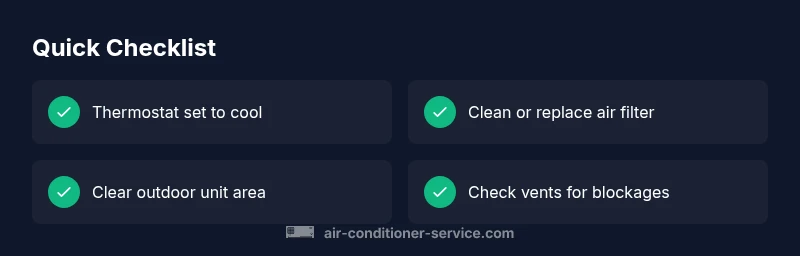
Quick fix: check thermostat settings, clean or replace the air filter, and clear debris around the outdoor unit. Set the thermostat to cool and ensure the mode isn’t on emergency heat. If you still feel hot air, don’t ignore it—continue with the diagnostic flow outlined below to identify less obvious causes like refrigerant, compressor, or duct issues. Consult Air Conditioner Service if you’re unsure.
Why an air conditioner blowing hot air happens
When an air conditioner starts blowing hot air, it’s a signal that heat isn’t being moved from inside your home to the outdoors efficiently. In many cases, the root cause is a simple setting or an airflow constraint. For homeowners and renters, understanding the most common triggers helps you take fast, safe steps. The keyword to remember is air conditioner blowing hot air: even this alarming problem often begins with routine maintenance or a quick thermostat check. According to Air Conditioner Service, many hot-air issues stem from a handful of easy fixes you can perform without specialized tools. You’ll find practical steps below to diagnose and fix the issue or determine when to call a pro.
The goal is to restore proper cooling quickly while avoiding safety hazards. Keeping a cool home matters, especially in peak heat, and timely troubleshooting can save energy and prolong the life of your unit. Air Conditioner Service’s approach combines simple home checks with professional guidance when needed.
Quick checks you can do in minutes
Before diving into deeper diagnostics, perform these fast checks. They cover the majority of cases where a unit blows hot air and often return your system to normal cooling without specialized tools.
- Verify thermostat settings: ensure it’s on cooling mode and not on heat or emergency heat.
- Check the fan setting: set to AUTO so the blower runs only when cooling is needed.
- Inspect and replace the air filter: a dirty filter blocks airflow and makes the system work harder.
- Clear debris around the outdoor condenser: leaves, grass, and dirt reduce heat transfer.
- Confirm all supply and return vents are open and unblocked by furniture or debris.
If these steps don’t resolve the issue, proceed with the diagnostic flow to identify less obvious problems such as refrigerant leaks, compressor faults, or ductwork issues. The Air Conditioner Service team notes that many not-cooling issues stem from airflow and thermostat settings, rather than major mechanical failures.
Diagnosing refrigerant, compressor, and heat-related causes
Not cooling or blowing hot air can result from refrigerant problems, compressor faults, or heat pump components like the reversing valve. Refrigerant leaks are a critical issue that typically requires a licensed technician; never attempt to repair a leak yourself. Look for signs such as hissing sounds, oily residue near service ports, or frost on coils, which indicate improper refrigerant levels. A malfunctioning compressor can struggle to generate sufficient pressure, leading to inadequate cooling. Heat pumps have a reversing valve that, if stuck, may send hot heat into the living space instead of cool air. If you notice unusual noises, tripping breakers, or frequent cycling, these are strong indicators that professional assessment is needed.
Air Conditioner Service emphasizes safe handling and proper diagnosis when refrigerant and compressor issues arise. If you suspect any refrigerant-related problem or a failed compressor, contact a licensed HVAC professional promptly to prevent further damage or safety risks.
Checking airflow, ducts, and indoor blower
Even with a properly charged refrigerant system, poor airflow can cause warm air to feel like not enough cooling. Inspect ductwork for leaks, loose connections, or crushed sections which reduce airflow and create zones of warm air inside the home. Return air ducts should be clear to allow the system to pull in enough cool air. The indoor blower (fan) should operate smoothly without rattles or grinding sounds. A clogged or collapsed duct can mimic other problems, so measuring airflow at several vents helps pinpoint weak points. In many homes, simple duct repairs and vent cleaning restore proper cooling efficiency.
Outdoor unit maintenance and environmental considerations
The outdoor condenser must exchange heat efficiently; if it’s shaded or blocked, or if the coils are dirty, the unit can overheat and underperform. Ensure at least 2 feet of clearance around the condenser, remove nearby plants, and trim back vegetation. Clean the condenser coils gently with water and a soft brush to remove dirt and pollen. Inspect the fan for damage or wobble, and listen for unusual noises during operation. Efficient heat transfer relies on clean coils and unobstructed airflow, so routine outdoor maintenance significantly reduces the chance of hot air blowing into your living spaces.
Electrical checks and safety reminders
Electrical issues can masquerade as cooling problems. Check the outdoor unit’s disconnect switch and the indoor furnace/air handler for signs of a tripped breaker, loose wiring, or burnt smells. Capacitors and contactors control the blower and compressor; if these components fail, the system may run but not deliver cold air. Do not attempt to replace capacitors or contactors unless you’re trained to do so. Always shut off power at the breaker before inspecting electrical components. If you smell burning or notice melted insulation, stop immediately and call a professional.
When to call a professional and what to expect
Some problems are not safe or feasible for a DIY fix, such as refrigerant leaks, major electrical work, or a suspected failing compressor. If the unit continues to blow warm air after basic checks, schedule service with a licensed HVAC technician. A pro will perform pressure tests, inspect electrical components, and assess the heat exchange process. Expect a diagnostic visit to include system pressure measurements, coil inspection, airflow evaluation, and a discussion on replacement parts or refrigerant recharge if needed. Proper diagnosis helps you avoid unnecessary replacements and unnecessary expenses.
Prevention tips to keep your AC running cool
Routine maintenance dramatically reduces the likelihood of hot-air issues. Schedule seasonal inspections, replace filters regularly (every 1-3 months depending on use and outdoor conditions), keep the outdoor unit clear, and install a programmable thermostat to avoid energy waste. Consider scheduling professional checkups at least once a year, especially before hot seasons begin. Simple steps today save comfort and money tomorrow. Air Conditioner Service’s preventative guidance emphasizes consistent care and quick action when you notice any change in cooling performance.
Common myths and what to ignore
Some homeowners believe that adding more refrigerant is a simple fix for a warm-air problem. This is risky and can damage compressor seals, increase costs, and violate safety regulations. Another myth is that a noisy outside unit means a major problem; often, a small alignment adjustment or coil cleaning resolves the issue. Focus on safe, proven steps first—thermostat settings, airflow, and professional evaluation for refrigerant or compressor concerns are the correct path to lasting cooling.
Steps
Estimated time: 40-60 minutes
- 1
Power down and verify thermostat
Turn off power at the breaker to the AC unit for safety, wait 60 seconds, then restore power. Recheck thermostat settings to ensure cooling mode and the fan on Auto. If the thermostat is part of a smart system, refresh the device to clear any stuck commands.
Tip: Never bypass safety controls; a reset helps avoid ghost readings from the thermostat. - 2
Inspect and replace air filter
Locate the filter, remove it, and check for heavy dust or debris. If dirty, replace with a clean filter of the correct size. A clean filter improves airflow and reduces heat buildup in the evaporator coil.
Tip: Make filtering a monthly habit during peak seasons. - 3
Check outdoor unit clearance and coil
Clear 2 feet around the condenser. Gently brush dirt from the coils with a soft brush and rinse with a gentle spray from the inside-out to avoid bending fins. Ensure the fan blade rotates freely and isn’t rubbing.
Tip: Avoid high-pressure hoses that can bend fins; use a light touch. - 4
Assess indoor airflow
Check supply vents and return grilles for obstructions. Confirm the air handler blower is running and no strange noises are present. If air feels weak, there may be a duct or blower issue that requires professional assessment.
Tip: Consider a duct cleaning if you have seasonal allergies or heavy dust. - 5
Evaluate refrigerant and electricals
If you notice oily residue near service ports, hissing, or ice formation on coils, do not run the system. Refrigerant issues require licensed technicians. For electrical concerns, ensure all breakers are properly seated and inspect for signs of arcing or burnt smells.
Tip: Avoid refrigerant handling yourself; it's hazardous and regulated. - 6
Test after adjustments and set expectations
Power up the unit and test cooling. If it’s still not cooling, record any unusual sounds or indicators (pressure readings, err codes) and prepare for a professional service call. A pro may need to recharge refrigerant or replace defective components.
Tip: Document symptoms with time stamps to speed up diagnosis.
Diagnosis: Air conditioner blowing hot air
Possible Causes
- highThermostat settings wrong (heat mode or emergency heat)
- highDirty or blocked air filter restricting airflow
- highOutdoor unit obstructed by debris or vegetation
- mediumLow refrigerant or refrigerant leak
- lowFaulty compressor or reversing valve (heat pump)
Fixes
- easyVerify thermostat is set to cooling, not heat or emergency heat
- easyReplace or clean the air filter and clear around the outdoor unit
- easyClear and clean ducts; ensure vents are open
- hardIf refrigerant issues suspected, contact a licensed technician for pressure check and leak repair
- mediumInspect electrical components (capacitors, contactors); seek professional service if needed
Common Questions
Why is my air conditioner blowing hot air even though the thermostat is set to cooling?
Common causes include the thermostat being set to heat or emergency heat, a malfunctioning sensor, or an uncalibrated thermostat. Verify cooling mode, then test by adjusting the setpoint and observing airflow and temperature changes.
If your thermostat is in cooling mode and the air still blows warm, check the sensor and consider a quick reset or replacement if readings are off.
Can I fix a refrigerant leak myself?
No. Refrigerant leaks require a licensed HVAC technician and proper recovery equipment. Handling refrigerant improperly can be dangerous and is often illegal.
Refrigerant work is not a DIY task—call a pro for safety and compliance.
How often should I replace the air filter for optimal cooling?
Most homes benefit from replacing filters every 1-3 months, depending on usage, pets, and allergen exposure. A clean filter supports better airflow and efficiency.
Change your filter every couple of months, or monthly in high-demand seasons.
If the outdoor unit is blocked by debris, can that cause hot air inside?
Yes. Debris around the condenser reduces heat transfer, causing the system to work harder and deliver warmer air. Clear debris and maintain clearance around the unit.
Make sure the outdoor unit has at least a couple of feet of clearance; clean nearby debris.
When should I call a professional for not-cooling issues?
Call a professional if basic checks don’t restore cooling, if you suspect refrigerant issues, unusual noises, or electrical concerns. A pro will diagnose refrigerant, compressors, and airflow problems safely.
If basic checks fail, or you hear odd noises or smell burning, contact a licensed HVAC tech.
Watch Video
The Essentials
- Start with simple checks (thermostat, filter, outdoor clearance)
- Poor airflow is the leading cause of hot air from AC units
- Refrigerant leaks require licensed technicians
- Professional help speeds up safe, lasting fixes
- Regular maintenance prevents hot-air issues