Air Conditioner Blowing Hot Air: Quick Home Fix Guide
This practical guide helps homeowners diagnose why an air conditioner blows hot air and what to check first. Learn a safe diagnostic flow, practical fixes, and prevention tips from Air Conditioner Service.


Most likely the unit is in heat mode or a dirty filter, with outdoor condenser obstructions or a refrigerant/duct issue behind the hot air. First, verify thermostat settings and switch to cool, then check and replace the filter. Clear debris from the outdoor unit and ensure correct airflow. If the problem persists, contact Air Conditioner Service for a professional check.
Why this happens
A blowing-hot-air condition isn't always a single problem; it's usually a combination of airflow, refrigerant, and control issues. According to Air Conditioner Service, the most common causes fall into four buckets: thermostat or mode errors, airflow restrictions, outdoor unit problems, and refrigerant or duct issues. If the thermostat is set to HEAT or the fan is forced to ON, you may feel warm air even when cooling is requested. A dirty air filter reduces airflow, which can cause the evaporator coil to overheat and blow warm air. Debris around the outdoor condenser can choke heat exchange, while leaks or a low refrigerant charge compromise cooling capacity. Finally, leaky or poorly sealed ducts let treated air escape, so rooms stay warm. Understanding these categories helps you triage quickly and safely; addressing the easier items first often restores comfort without a service call. Air Conditioner Service recommends starting with simple checks and moving toward professional help when needed.
Quick checks you can perform safely
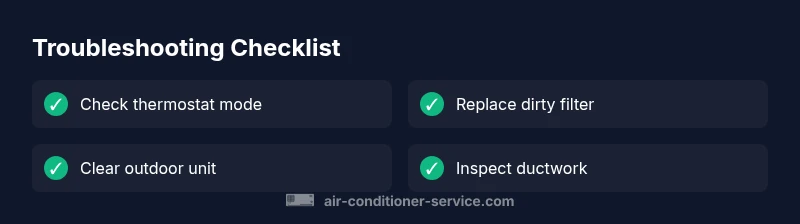
Before calling for help, try these quick, safe checks. Start with the thermostat: ensure it's in COOL mode, not HEAT, and that the setpoint is comfortable. Next, inspect the air filter; if it's visibly dirty or clogged, replace or clean it. Then inspect the outdoor condenser for obstructions—remove leaves, grass, or debris; ensure at least 2 feet of clearance on all sides and that the grille is clean. Finally, confirm that the indoor vents are open and unobstructed to maximize airflow. If you notice weak airflow or a sudden drop in cooling, turn off the unit and schedule a professional inspection.
Common causes in more detail
Thermostat and mode: Even a small misadjustment can flip the system into HEAT or FAN ON, producing warm air. Airflow restrictions: A dirty filter or closed dampers reduces airflow; the evaporator coil can overheat and blow warm air if the coil is blocked or ice forms due to insufficient return air. Outdoor unit problems: Debris buildup, poor clearance, or a non-functioning condenser fan can prevent proper heat rejection, causing warm air to blow indoors. Refrigerant or duct issues: A refrigerant leak lowers cooling capacity, and leaking or poorly sealed ducts let cooled air escape, reducing perceived cooling. If any of these are suspected, prioritize the easiest checks first and call Air Conditioner Service for a definitive assessment if symptoms persist.
Diagnostic flow at a glance
Symptom: AC blows hot air. Then check: thermostat mode, air filter, outdoor unit clearance, indoor duct openness. If resolved, you’re done; if not, move to more in-depth checks: verify seals around return ducts, listen for refrigerant-scent or hiss, and assess refrigerant charge with professional tools. When in doubt, especially with refrigerant concerns, stop diagnostics and contact a licensed technician from Air Conditioner Service.
Safety-first and professional thresholds
Safety comes first. Always cut power at the main breaker before inspecting electrical components or touching wiring. Do not attempt refrigerant handling; it requires certification and proper equipment. If you smell refrigerant, hear hissing, or notice oily spots on lines, evacuate the area and call a licensed technician immediately. Use insulated tools and wear eye protection when working near electrical panels. These steps help prevent shock, burns, and accidental refrigerant exposure.
Prevention tips to avoid hot-air issues
Regular maintenance is the best defense against hot-air problems. Schedule professional inspections at least once a year, replace or clean filters every 1–3 months during peak seasons, and keep the outdoor condenser free from leaves, grass, and debris. Check ductwork for leaks and seal visibly damaged joints. Finally, track performance changes—noticeable drops in cooling or increased run time often signal an issue that should be addressed early.
Steps
Estimated time: 45-60 minutes
- 1
Check thermostat and mode
Power off the unit, then verify the thermostat is set to COOL with an appropriate setpoint. If your thermostat has a separate fan setting, ensure it’s on AUTO and not ON, which can circulate warm air when cooling is needed. After adjusting, power the system back on and test for cooled air.
Tip: If you use a smart thermostat, run a quick app-based diagnostic to confirm mode and connectivity. - 2
Inspect and replace air filter
Locate the air filter at the return air path, remove it, and visually inspect for dirt and clogging. If dirty, replace with the correct size; if reusable, clean according to the manufacturer instructions and reinstall. Then run the system to see if airflow improves.
Tip: Note the filter type ( fiberglass vs pleated) for correct replacement cadence. - 3
Clear the outdoor condenser area
Turn off power at the disconnect or breaker. Check the condenser for leaves, grass, or other debris. Trim back vegetation so there is at least 2 feet of clearance on all sides and ensure the grille is clean and unobstructed. Turn the unit back on and observe performance.
Tip: Keep a seasons-long maintenance schedule to prevent future buildup. - 4
Assess indoor airflow
Walk through the house and feel air at multiple vents. If airflow is weak or inconsistent, there may be duct leaks or blockages. Use dampers to balance airflow if your system supports it, and ensure no furniture is blocking vents.
Tip: A simple manometer test by a pro can quantify duct pressure leaks if needed. - 5
When to call a professional
If steps 1–4 don’t restore cooling or you suspect refrigerant issues, contact Air Conditioner Service for a professional diagnosis. Refrigerant handling and leak repair require licensed technicians and proper safety measures.
Tip: Note symptom details, thermostat settings, and any audible or scent clues to speed up service.
Diagnosis: AC blows hot air
Possible Causes
- highThermostat set to heat or misconfigured mode
- highClogged or dirty air filter restricting airflow
- highOutdoor condenser blocked or dirty
- mediumRefrigerant leak or low refrigerant charge
- mediumDuct leaks or poor return airflow
Fixes
- easySet thermostat to COOL and ensure fan is on AUTO
- easyReplace or clean the air filter
- easyClear debris around the outdoor unit and maintain 2 ft clearance
- hardSchedule professional refrigerant charge/repair
- mediumInspect and seal ductwork for leaks
Common Questions
Why is my AC blowing hot air even though it's on cool?
Common causes include thermostat mode, dirty filter, blocked outdoor unit, or refrigerant issues. Start with verifying mode, changing the filter, and clearing the outdoor condenser. If unresolved, contact Air Conditioner Service for a professional assessment.
If your AC is on cool but blows hot air, check thermostat mode, replace the filter, and clear the outdoor unit. If it still persists, call Air Conditioner Service.
How can I tell if my refrigerant is leaking?
Look for oily spots on refrigerant lines, hissing sounds, ice on the evaporator coil, or a noticeable drop in cooling. If you suspect a leak, avoid charging refrigerant yourself and contact a licensed technician.
Watch for oil around lines, hissing, or ice on coils. If you suspect a leak, rely on a professional.
Can a dirty air filter really cause hot air?
Yes. A clogged filter restricts airflow, causing the system to work harder and sometimes blow warm air. Replacing the filter usually restores proper cooling.
Yes, a dirty filter can cause warm air by reducing airflow. Replace the filter and test.
Should I run the fan continuously to fix hot air?
Running the fan on, say, ON can help mix air but won’t fix underlying issues like refrigerant or duct problems. Use the AUTO setting for cooling and let the system regulate.
No—use AUTO for cooling. Continuous fan won’t fix refrigerant or duct problems.
When should I call Air Conditioner Service?
If simple checks fail or you suspect refrigerant leaks or unusual noises, schedule a professional inspection. A licensed technician can diagnose and repair refrigerant or ductwork safely.
If basic checks don’t fix it, or you suspect a refrigerant leak, call Air Conditioner Service.
Is it safe to check refrigerant myself?
No. Refrigerant handling requires certification and specialized equipment. Do not attempt to recharge or repair refrigerant lines yourself.
Handling refrigerant is for licensed technicians only.
What maintenance prevents hot-air issues?
Regular filter changes, annual professional inspections, and keeping ducts sealed and clean reduce chances of hot-air problems.
Regular maintenance helps prevent hot air by ensuring clean filters and sealed ducts.
Watch Video
The Essentials
- Check thermostat settings and switch to COOL first.
- Replace dirty filters to restore airflow.
- Keep the outdoor condenser clear for proper heat rejection.
- If issues persist, refrigerant checks require a pro.
- Regular maintenance prevents future hot-air problems.