How to Tell If Your Air Conditioner Is Frozen
Urgent, practical guide to spotting a frozen AC coil, safely thawing, and preventing future freezes with homeowner-friendly maintenance tips.


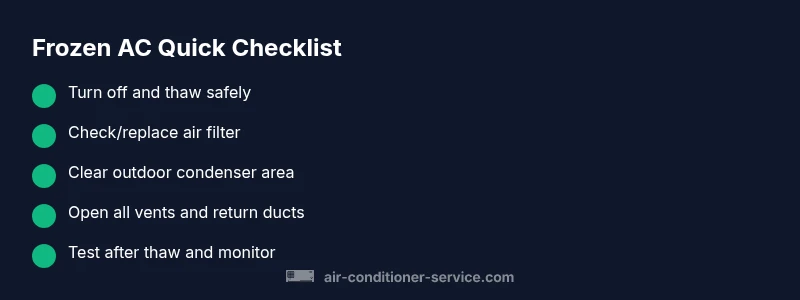
Most likely your AC is frozen due to restricted airflow or a dirty filter. Quick steps: Step 1 – turn the thermostat Off and leave the unit off until ice melts. Step 2 – switch the indoor fan to On to promote thawing. Step 3 – check and replace the air filter. Step 4 – inspect the outdoor coil for debris. Step 5 – wait 20–40 minutes before restarting.
Why the AC Can Freeze
When the evaporator coil gets too cold, moisture in the air turns to ice. This is commonly caused by restricted airflow from a dirty filter, blocked return air duct, or closed vents. In rarer cases, incorrect refrigerant charge or a malfunctioning blower can also contribute. The crucial point for homeowners is recognizing that most freezes come from airflow problems rather than mysterious refrigerant leaks. According to Air Conditioner Service, understanding these causes helps you address the issue quickly and safely. If you’re asking how to tell if air conditioner is frozen, pay special attention to changes in airflow, visible ice on the coil, and reduced cooling. Taking prompt, correct action can prevent compressor damage and high energy costs in 2026.
Signs Your AC Is Frozen
Visible ice on the evaporator coil inside the air handler or along refrigerant lines is the most obvious signal your system is frozen. Frost on the suction line, a thick layer of ice around the service valves, or a cold, damp temperature at the return vent are telltale clues. Even if the air feels cool initially, a freeze can still be there under the surface. You may notice dramatically reduced airflow and vents that blow barely any air. This is not just a nuisance—it can mask underlying problems like a restricted filter, blocked ductwork, or low refrigerant. When you see ice, treat it as an urgent warning sign and start thawing and inspection steps. According to Air Conditioner Service, early recognition can prevent compressor damage and keep energy costs down in 2026.
Quick, Safe Checks You Can Do Now
Safety first: power off at the thermostat and the outdoor unit if accessible, and never poke ice with metal tools. Start with airflow: replace the filter if dirty and ensure the air handler’s return grille is open and clear. Check for obstructions in return ducts, including furniture blocking vents. Inspect the outdoor condenser: remove leaves, grass, or debris that reduce heat rejection. Look for obvious ice on lines when you touch them briefly from a distance. If you see ice, allow thawing for 20–40 minutes before rechecking. After thaw, test breathing-like air from vents and confirm the thermostat reads cooling. If the room doesn’t start cooling again, proceed to advanced checks or consider calling a professional.
How Temperature and Humidity Impact Freezing
Freezing occurs more readily when outdoor temperatures are mild but humidity is high, or when the system runs for long periods without adequate airflow. A dirty filter or a blocked return path increases the temperature differential across the evaporator coil, causing moisture to freeze on contact. Low refrigerant can also contribute by forcing the compressor to work harder, which lowers coil temperatures. Regular maintenance—changing filters, cleaning coils, and keeping returns clear—reduces this risk. Air Conditioner Service's 2026 analysis underscores that simple air movement and cleanliness are the first line of defense against freezes. If you’re routinely seeing frost, you may have a more serious airflow problem or a leak somewhere in the system that requires professional inspection.
Diagnostic Flow: Symptom to Diagnosis to Fix
Start with the symptom you observe: the unit runs but delivers little cooling or ice forms on coils. Next, generate possible causes: blocked filter (high likelihood), closed vents or blocked return (medium likelihood), low refrigerant (low likelihood). For each cause, apply a fix: replace the filter (easy), open vents and remove blockages (easy), consult a licensed tech to check refrigerant and leak repairs (hard). This logical progression helps avoid unnecessary repairs and ensures you address the root cause. If you correct airflow and still see ice or if the ice reoccurs after thaw, the problem is likely beyond user-serviceable scope and needs professional attention.
Step-by-Step Troubleshooting: Quick Overview
This section guides you through a safe thaw and recovery process, emphasizing airflow restoration, ice management, and verification after thaw. Avoid applying direct heat to coils; use natural thaw and allow the system to rest before re-testing HVAC output. Remember, if you suspect refrigerant issues or persistent ice after thaw, a licensed HVAC technician should step in to prevent further damage.
Safety and When to Call a Pro
If you suspect a refrigerant leak, hear hissing noises, or see ice along refrigerant lines, stop and contact a licensed HVAC technician immediately. Do not attempt to recharge refrigerant yourself. Electricity and refrigerants are hazardous. If the ice forms again after thaw, there is likely a deeper airflow issue or a leak requiring professional inspection. Schedule a service call promptly to prevent compressor damage and costly repairs.
Prevention: Keeping Your AC Ice-Free
To prevent future freezes, prioritize airflow and cleanliness: replace filters regularly (every 1–3 months in peak season), keep the outdoor condenser clear of debris, ensure all vents are open and unobstructed, and have refrigerant levels checked during routine maintenance. A well-maintained system runs cooler and more efficiently, reducing frost risk. The Air Conditioner Service team recommends scheduling annual professional maintenance to catch developing problems before they cause a freeze.
Steps
Estimated time: 25-60 minutes
- 1
Power down and thaw
Turn the thermostat to Off and silence the outdoor unit if accessible. Allow ice to melt naturally for 20–40 minutes. Avoid using heat guns or hair dryers on coils, which can damage components. Use a fan to help gently circulate air around the unit while it thaws.
Tip: Patience during thaw prevents further coil damage and reduces the risk of shock when you power the system back on. - 2
Inspect and replace the air filter
Remove the air filter from the return panel and check for dirt, dust, or moisture. Replace the filter with a new one of the correct size if dirty. A clean filter improves airflow and reduces the chance of freezing in the future.
Tip: Note the filter type (flat vs. pleated) and replace at the recommended interval to maintain optimum airflow. - 3
Check ducts and outdoor unit
Inspect return ducts for blockages and ensure vents are open. Clear any leaves or debris from the outdoor condenser coils to improve heat rejection. Poor airflow here is a common freeze trigger.
Tip: Keep plants and landscaping a safe distance from the outdoor unit to maintain airflow. - 4
Test restart and monitor
Reconnect power and set the thermostat to cool. Observe airflow and the indoor coil area for any signs of frost as the system cycles. If warming air returns and ice does not reform, the issue is resolving.
Tip: If you see frost form again quickly, power down and consult a professional before running further tests. - 5
Verify performance after thaw
Repeat a full cooling cycle and compare indoor temperatures to outdoor conditions. If cooling remains weak or ice recurs, there may be a refrigerant or structural airflow problem that needs professional assessment.
Tip: Document any odd sounds or smells to share with the technician. - 6
Call a professional if unresolved
If the ice returns after thaw or there are suspicious refrigerant signs, contact an HVAC technician promptly. Do not attempt to recharge refrigerant yourself.
Tip: Ask about preventative maintenance and refrigerant leak checks during the visit. - 7
Prevent future freezes
Schedule regular maintenance visits and replace filters on a fixed schedule. Ensure the outdoor unit stays clean and unblocked, especially in the spring and summer.
Tip: Set reminders for filter changes and annual professional tune-ups.
Diagnosis: AC blows warm air or very little cooling with ice on coils
Possible Causes
- highblocked or dirty air filter
- mediumblocked return air path or closed vents
- lowlow refrigerant charge or extreme outdoor temperature
Fixes
- easyReplace or clean air filter; ensure proper airflow
- easyClear return ducts and open all vents to restore airflow
- hardCall a licensed technician to check refrigerant and recharge if needed
Common Questions
What are the most common causes of a frozen air conditioner?
The most common causes are restricted airflow from a dirty filter, blocked return ducts, and closed vents. Less frequent factors include low refrigerant and blower issues. Addressing airflow usually resolves the problem.
The main culprits are airflow problems like a dirty filter or blocked ducts. Clearing those usually fixes a freeze.
Is it safe to operate a frozen AC to thaw it?
Avoid running the system while frozen. Let it thaw with the thermostat off and the fan set to On to promote even warm air circulation.
Don’t run the AC while it’s frozen—let it thaw and then check airflow.
How long does it typically take to thaw a frozen coil?
Thaw time varies with ice depth and ambient temperature but generally takes 20–60 minutes. After thaw, recheck airflow and cooling performance.
It usually takes about 20 to 60 minutes to thaw, depending on conditions.
Can a frozen system cause damage?
Yes. Prolonged freezing can strain the compressor and other components, potentially increasing repair costs if not addressed promptly.
Yes, persistent freezing can damage the compressor and should be checked by a pro if it continues.
How can I prevent freezing in the future?
Prevent freezing with regular filter changes, keeping the outdoor unit clean, and scheduling annual maintenance to verify refrigerant levels and airflow.
Regular maintenance and clean airflow help prevent freezes.
When should I call a professional?
Call a professional if the ice returns after thaw, if you suspect a refrigerant leak, or if you’re unsure about safety steps or electrical components.
If ice keeps coming back or you suspect a leak, call a pro.
Watch Video
The Essentials
- Check airflow first; blocked filters are a common cause
- Thaw ice safely and avoid direct heat on coils
- Open and clear all vents to restore proper airflow
- Call a professional for refrigerant or persistent freezes
- Schedule regular maintenance to prevent future freezes