How to Recharge Car AC: A Practical Step-by-Step Guide
Learn how to recharge car AC safely with a practical, step-by-step approach. This Air Conditioner Service guide covers tools, safety, troubleshooting, and professional tips for homeowners and renters.


To recharge your car AC, locate the service port, attach a gauge-equipped refrigerant can, and charge until the gauge reads within the vehicle’s specified range. Avoid overcharging to prevent compressor damage and leaks. If you’re unsure, consult a professional to protect the system and ensure safe operation properly in all situations.
What is car AC refrigerant and why recharge?
Car air conditioning relies on a sealed system filled with refrigerant and oil. Over time, small leaks or wear can reduce the amount of refrigerant, lowering cooling performance. If you’ve ever wondered how to recharge air conditioner in car, this guide provides a practical overview. In simple terms, a recharge restores the correct pressure to the low- and high-side circuits, allowing the compressor to circulate refrigerant and the evaporator to remove heat more effectively. Recharging is not a substitute for fixing a leak or replacing worn components. Always verify the root cause before charging, because a temporary boost won’t solve a leak or a faulty component. Properly performed recharges improve cooling and may extend the life of your AC system when used as part of a broader maintenance plan.
The process should be approached with care: using the correct refrigerant type for your vehicle, following the can’s directions, and honoring safety precautions. If your vehicle model requires a newer refrigerant (such as R-1234yf), do not substitute with older fluids. This is not only about performance but also about environmental responsibility and legal compliance. Proper handling reduces the risk of inhalation exposure, eye irritation, or frostbite from cold spray. In many cases, a recharge is best done after locating and fixing a leak, then testing for proper operation and cooling efficiency.
Safety and legal considerations for car AC recharge
Recharging a car’s AC involves handling refrigerants that can be hazardous in concentrated form. Wear safety glasses and gloves, work in a well-ventilated area, and keep refrigerant away from open flames. Refrigerants are regulated substances in many regions, and improper handling can be illegal or require certification. Always check your vehicle’s manual for the correct refrigerant type—most older vehicles use R-134a, while newer models may use R-1234yf. If your system shows signs of a leak, corrosion, or a failed compressor clutch, avoid charging and seek professional assistance. A professional can perform a precise leak test and recover refrigerant safely if needed. After charging, run the AC with the blower on high and set to cold to verify cooling performance, ensuring that the system remains within safe operating pressures.
When recharge is appropriate vs when you need a professional
Recharge procedures are appropriate when the system loses refrigerant modestly due to minor leaks or after maintenance tasks that require opening the system. If performance remains weak after a recharge, or you detect oily residue, loud noises, or an unresponsive compressor clutch, the problem may be a leak, a failed component, or a compressor issue. In those cases, a professional diagnostic is necessary. Do not repeatedly top off refrigerant without identifying a leak; repeated charging can mask underlying damage and harm the environment. Regular maintenance, including leak checks and component inspection, helps prevent unexpected failures and preserves cooling efficiency. For DIY enthusiasts, this guide provides safe, practical steps, but remember that some repairs require tools and expertise beyond at-home fixes.
Tools, materials, and setup for DIY recharge
Before you start, gather the essentials: the correct refrigerant for your vehicle, a manifold gauge set or gauge-equipped can, a service adapter, eye protection, and gloves. A clean workspace with adequate lighting makes the process safer and more accurate. Leaks are best confirmed with UV dye and a blacklight or dedicated leak detector. If you don’t have the right refrigerant type or you cannot confirm a leak is present, do not proceed. After securing the equipment, position the vehicle in a stable, shaded area with the engine off and the A/C system depressurized. This minimizes the risk of accidental sprays and refrigerant loss. Familiarize yourself with the vehicle’s service ports and ensure you connect only to the correct low-pressure port. A misconnection can lead to improper charging and potential system damage. Finally, store any leftover refrigerant upright and away from heat sources to preserve its quality.
Step-by-Step overview and what to expect
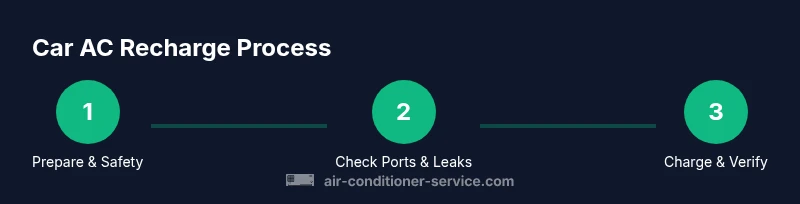
Charging a car AC is a multi-step process that involves safety checks, leak assessment, connector setup, and careful charging while monitoring pressure gauges. The job can take from 30 to 90 minutes depending on your familiarity and whether the system requires additional leak repairs. Expect a brief learning curve if you’re new to A/C work. Once the system reads within its expected range, run the car and test airflow on high, with the recirculation mode engaged to maximize cooling. Remember, a single recharge is often enough to restore performance, but persistent issues require a professional evaluation to prevent further damage and environmental harm.
Maintenance and best practices after recharge
After a recharge, monitor cooling performance for several days and check for any new signs of leaks or odd smells. Schedule periodic inspections, especially before summer heat waves. Keep the area around the service ports clean and free of dust, and avoid introducing moisture into the system. When storing refrigerant cans, follow the label directions and keep them away from heat sources. Overall, a well-maintained A/C system with routine checks will stay efficient longer, reducing overall energy use and avoiding sudden failures.
Tools & Materials
- Refrigerant can with gauge (correct type for your vehicle)(Check compatibility: R-134a or R-1234yf as per vehicle manual)
- AC pressure gauge set or gauge-equipped can(Important for accurate reading and safe charging)
- Service port adapter(Connects can to the low-pressure service port)
- Safety glasses and nitrile gloves(Protect eyes and skin from refrigerant spray)
- Ventilated workspace and flashlight(Good visibility and air circulation reduce risk)
- Rag or microfiber cloth(Clean ports and wipe any spills)
Steps
Estimated time: 45-90 minutes
- 1
Prepare the vehicle and safety checks
Park on a level surface, engine off, and set the parking brake. Put on safety glasses and gloves. Verify you have the correct refrigerant for your vehicle and read the can instructions.
Tip: Warm engines and ambient temperatures can affect readings; wait for the system to cool slightly if it’s hot. - 2
Locate and inspect service ports
Open the hood and locate the A/C service ports. Identify the low-pressure port, which is typically larger and marked. Do not connect to the high-pressure port.
Tip: Clean the area around the ports before connecting to prevent contamination. - 3
Check existing refrigerant level and leaks
If you have a gauge, note the current readings. Look for signs of oil leaks around hoses and fittings. If a leak is suspected, stop and consult a pro.
Tip: Use dye with a UV flashlight to help locate leaks later on. - 4
Attach the can to the gauge and port
Connect the can’s nozzle to the low-pressure port using the adaptor. Ensure the connection is secure and the engine remains off during setup.
Tip: Do not pressure-fill the system; keep everything steady to prevent spills. - 5
Begin charging slowly
Start the can and allow coolant to flow in gradually while watching the gauge. Keep the engine off for initial charging and avoid overfilling.
Tip: Charge in short bursts, pausing to recheck readings after each increment. - 6
Monitor gauges and stop at the target range
Continue charging until the gauge shows the range recommended by the vehicle manual. If cooling improves but readings are uncertain, stop and re-test later.
Tip: If the gauge shows high pressure, stop immediately to avoid compressor damage. - 7
Finish, test, and dispose
Run the AC on high with the blower and recirculation mode. Confirm cold air and comfortable intake. Properly store any leftover refrigerant and dispose of used cans per local regulations.
Tip: Document readings and any leaks for future maintenance.
Common Questions
Can I recharge my car's AC myself?
Yes for simple systems if you follow safe practices and use the correct refrigerant, but there are risks. Leaks, overcharging, and improper handling can damage the compressor or release refrigerant improperly. If you’re unsure, consult a professional.
Yes, you can, but only if you know the correct refrigerant type and follow safety steps. If in doubt, hire a pro for safety and effectiveness.
What refrigerant type should I use?
Check your vehicle manual to confirm the exact refrigerant. Most older cars use R-134a, while newer models may require R-1234yf. Using the wrong type can damage seals and reduce cooling performance.
Refer to your manual to confirm whether your car uses R-134a or R-1234yf. Using the wrong refrigerant can harm the system.
How do I know when the recharge is complete?
Recharge is complete when the gauge reads within the manufacturer's recommended range and cooling performance is restored. If the temperature does not improve, there may be a leak or another failure.
When the gauge is in range and you feel cold air from the vents, the recharge is likely done.
Why isn’t it cooling after recharge?
Possible leaks, a failing compressor, clogged orifices, or a faulty expansion valve can prevent proper cooling. The system may still have a leak even after charging.
If there’s no improvement after charging, there might be a leak or a component problem that needs professional attention.
Is it legal to vent refrigerant into the air?
No. Releasing refrigerant into the atmosphere is illegal in many places and harmful to the environment. Use proper recovery equipment and dispose of cans according to local regulations.
No—do not vent refrigerant. Follow local rules and dispose of cans properly.
Watch Video
The Essentials
- Know your refrigerant type and vehicle specs before charging.
- Always wear safety gear and work in a ventilated area.
- Charge gradually and monitor gauges to avoid overcharging.
- If leaks or poor cooling persist, seek a professional diagnosis.
- Regular maintenance helps prevent future failures.