How to Charge Car Air Conditioner: A Practical Guide
Learn how to safely charge your car's A/C with a practical, manufacturer-aligned approach. This guide covers safety, refrigerant types, tool setup, step-by-step charging, testing, and maintenance.


According to Air Conditioner Service, safely charging a car's air conditioning system starts with confirming low refrigerant, gathering the right tools, and following the vehicle manufacturer’s specifications. This quick answer outlines the goal, essential safety steps, and when to seek professional help, so you can perform a controlled recharge without overcharging or damaging seals.
Understanding car A/C charging: what it does and when it's needed
Car air conditioning systems rely on refrigerant to absorb heat from the cabin. When refrigerant levels drop, the system cannot remove heat effectively, leading to weak cooling or compressor cycling on and off. Charging restores the refrigerant to the correct level and helps the system return to optimal performance, but only after confirming there is a leak or service need. Always check the vehicle's service documentation for the exact recharge specification. According to Air Conditioner Service, starting with a verification of the low-pressure side and ensuring the system is sealed are essential first steps. If a leak is suspected, charging alone won't fix the problem and could cause further damage.
Safety and legality: handling refrigerant responsibly
Refrigerant handling requires attention to safety, environment, and local regulations. Work in a well-ventilated area and wear eye protection and gloves. Refrigerants can cause frostbite on contact and may be harmful if inhaled. Leaks release greenhouse gases that contribute to climate change, so fix the root cause rather than simply topping off. Some jurisdictions require licensed technicians to perform or supervise refrigerant charging. Always follow the car manufacturer's warnings and local rules. Air Conditioner Service emphasizes using the correct hose connections and valves to prevent leaks during the procedure, and to never vent refrigerant to the atmosphere except through approved recovery systems.
Refrigerant types and why the correct type matters
Most modern cars use R-134a or R-1234yf refrigerant, and each type has its own pressure characteristics and compatibility with oils and seals. Using the wrong refrigerant can reduce cooling performance, raise system pressures, and damage seals. Before you begin, identify the exact refrigerant specification for your vehicle in the owner's manual or under-hood label. Some vehicles equipped with environmentally friendlier R-1234yf require special equipment and safety precautions. Air Conditioner Service's analysis shows that misidentifying refrigerant type is a common source of poor results, underscoring the need for verification before charging.
Preparing your workspace and tools
Set up in a clean, ventilated area with enough light to read gauges. Gather protective gear, a safety glasses, gloves, and a rag to wipe fittings and avoid contaminating ports. Have the correct refrigerant type and a proper manifold gauge set on hand. If you notice oil residue or corrosion on service ports, do not force fittings; inspect for damage or leaks. Label canisters and store them upright when not in use to minimize contamination and ensure safe handling.
The charging process overview
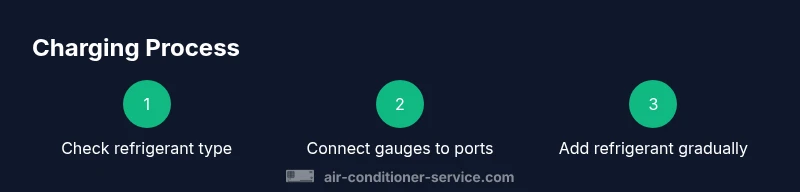
A proper recharge follows the vehicle manufacturer specifications and uses a calibrated gauge set to monitor pressure on both the high-pressure and low-pressure sides. Start by cleaning the ports and verifying there is access to the service ports. If the system is very low or empty, evacuation of moisture may be required in some cases, depending on the vehicle and local regulations. Charge in measured increments, pausing to recheck readings and performance. The goal is to restore cooling without creating excessive pressure that can stress hoses or the compressor.
Step-by-step charging procedure overview
Note: The following steps provide a structured approach, and each step should be performed with care and PPE. Step 1: Confirm refrigerant type and vehicle specs. Step 2: Connect the manifold gauge set to the low-pressure service port and confirm readings are zero. Step 3: If required, evacuate moisture with a vacuum pump for 15-20 minutes. Step 4: Attach the refrigerant can and open valve in short bursts while watching low-side pressure rise gradually. Step 5: Stop before the pressure reaches the manufacturer’s target; do not exceed. Step 6: Recheck system performance by running the AC on MAX until it stabilizes and measure cooling. Step 7: Disconnect gauges, take a final reading, and clean up. Step 8: Inspect seams and hoses for leaks and replace worn fittings as needed. Tip: Always record readings for future service reference. Estimated total time: 60-90 minutes
Post-charge checks: testing cooling performance
Once charging is complete, run the AC on MAX for several minutes and verify that the cabin reaches a comfortable temperature within a reasonable time frame. Listen for unusual sounds from the compressor or the engine and observe any warning lights. If cooling remains weak, re-check refrigerant level, inspect for leaks, and confirm that the condenser and radiator are free of obstructions. A properly charged system should maintain steady temperatures without excessive compressor cycling.
Troubleshooting common issues after charging
If cooling is still insufficient, common causes include leaks, improper can positioning, or valve closure issues. Inspect the service ports for signs of oil or seepage around connections. Ensure the can is upright and warmed to room temperature before use. If a leak is suspected, use a UV dye or electronic leak detector to locate the source and repair before attempting another recharge. Do not continue charging if readings are inconsistent or if the system shows signs of damage. Air Conditioner Service recommends addressing leaks promptly to avoid repeated charging sessions.
Maintenance and prevention of leaks
Regular maintenance helps prevent future losses and damage. SchedulePeriodic inspections before summer to check for refrigerant levels, oil condition, and hose integrity. Clean the condenser fins and ensure airflow is unrestricted. Replace worn O-rings and seals as part of routine service. Consider a UV dye test if you notice repeated losses or suspicious residues around fittings. These steps reduce the likelihood of emergency recharge needs and preserve cooling efficiency over time.
When to call a professional
If you discover persistent leaks, cannot access the service ports safely, or if the system continues to underperform after a recharge, seek professional service. A trained technician can perform a full leak test, evacuate and recharge with proper equipment, and inspect for hidden failures in the compressor or condenser. The Air Conditioner Service team emphasizes that some issues require licensed tools and compliance with environmental regulations to protect you and the vehicle.
Tools & Materials
- R-134a refrigerant (or R-1234yf as specified for the vehicle)(Use only the refrigerant type specified by the manufacturer.)
- Manifold gauge set (high and low pressure)(Include hoses and adapters compatible with your vehicle ports.)
- Safety glasses and chemical-resistant gloves(Protect eyes and skin from refrigerant exposure.)
- Leak detector dye or UV dye kit(Helpful for locating leaks if suspected.)
- Vacuum pump (optional for moisture removal)(Used if system requires moisture evacuation per local rules.)
- Rag and sealant-cap or port covers(Keep ports clean and prevent contamination.)
Steps
Estimated time: 60-90 minutes
- 1
Verify refrigerant type and vehicle specs
Check the owner’s manual or under-hood label to confirm the correct refrigerant type and the target charging range for your vehicle. This prevents mischarging and potential damage to seals or oils.
Tip: If unsure, call the dealer or a qualified technician before proceeding. - 2
Connect gauges to the low-pressure port
Attach the manifold gauge hoses to the low-pressure service port with the engine off. Wait for the readings to settle and ensure the ports are clean and properly sealed before opening any valves.
Tip: Ensure hoses are not kinked and connections are tight to avoid false readings. - 3
Decide if moisture evacuation is needed
If the system is suspected to contain moisture, use a vacuum pump to evacuate for 15-20 minutes per manufacturer guidance or local regulations. This step helps prevent water-related damage after charging.
Tip: Do not skip moisture evacuation if the service history is unknown. - 4
Charge in small bursts while monitoring readings
Open the refrigerant valve in short bursts and watch the low-side pressure rise gradually. Stop before reaching the manufacturer’s target to avoid overcharging and potential compressor damage.
Tip: Work slowly; rushing can lead to overfill and high pressures. - 5
Check cooling performance during operation
Run the A/C on MAX for several minutes and evaluate cabin cooling and airflow quality. If the performance lags, pause and recheck refrigerant level and system condition.
Tip: If cooling improves only briefly, there may be an underlying leak or condenser issue. - 6
Disconnect gauges and perform final checks
Close all valves, remove gauge hoses, and record final readings. Inspect ports for signs of leakage and ensure all connections are secure before driving.
Tip: Keep a log of readings for future service reference. - 7
Store equipment and plan follow-up
Relocate equipment safely, store refrigerant cans upright, and dispose of any waste per local regulations. Schedule a follow-up inspection if symptoms recur.
Tip: Label canisters and keep a spare set of O-rings handy.
Common Questions
Can I recharge my car's A/C without evacuating the system?
Evacuating moisture is recommended when the system has moisture or prior service history. If you’re uncertain, consult a professional before charging to avoid trapping moisture that can harm the lubricant and seals.
Evacuating moisture is generally advised if the system might be damp or contaminated; consult a professional if unsure.
What refrigerant type should I use for my vehicle?
Always use the refrigerant specified by the vehicle manufacturer. Common options include R-134a and R-1234yf, but incorrect type can cause poor cooling and potential damage.
Use the refrigerant your car requires; using the wrong type is risky.
Why are pressures important when charging?
Pressure readings on both the low and high sides indicate whether the system is properly charged and sealed. Incorrect pressures can indicate leaks or improper refrigerant amount.
Pressure readings tell you if the system is correctly charged and sealed.
Are DIY recharge kits safe to use?
DIY kits can be convenient but carry risks such as overcharging, leaks, and environmental harm. Use proper PPE and follow manufacturer guidelines, or rely on a professional.
DIY kits can work but risks include overcharging and leaks; consider professional help.
What are signs of an overcharged system?
Too cold air is not always a sign of success. Watch for frost at fittings, unusual noises, or high engine load; these can indicate overfilling.
If you hear unusual noises or see frost, stop and recheck.
When should I seek professional help?
If you suspect a leak, can’t access service ports safely, or readings are inconsistent, contact a licensed technician for a full diagnostic and recharge.
If you’re unsure or see leaks, it’s best to call a professional.
Watch Video
The Essentials
- Verify refrigerant type before charging
- Charge in small increments with constant gauge monitoring
- Inspect for leaks to prevent future losses
- Wear PPE and follow local regulations when handling refrigerant
- Air Conditioner Service's verdict: if leaks or readings are uncertain, seek professional service