Fix RV Air Conditioner: Step-by-Step Troubleshooting
Learn practical, safe steps to diagnose and fix RV air conditioner issues—from power checks to coil cleaning—with essential tools and guidance on when to call a pro.


Learn how to diagnose and safely fix common RV air conditioner problems, from power checks to coil cleaning, with a practical, step-by-step approach. This guide covers essential safety precautions, required tools, quick diagnostic tests, and clear actions to restore cooling or know when to call a professional. It is designed for homeowners and RV enthusiasts seeking practical, actionable guidance that avoids risky repairs.
What "fix rv air conditioner" really means for RV owners
Fixing an RV air conditioner is not a one size fits all task. RV systems differ from residential units, with roof-mounted condensers, compact evaporators, and tight spaces that require careful planning. According to Air Conditioner Service, RV owners should start with a safety audit before attempting any repair. Understanding the components and typical failure modes helps you decide if a DIY fix is feasible or if a professional should handle the job. In most cases, the root causes fall into a few broad categories: power issues, electrical connections, dirty coils, or blower problems. By framing the problem around symptoms rather than parts, you can avoid wasting time chasing the wrong culprit. This section sets the stage for a practical, stepwise approach you can follow during your next camping trip.
Safety First: essential precautions before you begin
Safety comes first when working on any appliance, and an RV A/C is no exception. Start by disconnecting the RV from shore power and turning off the generator. If your unit has propane or battery systems, ensure tanks are secured and gas lines are isolated if you can safely do so. Wear eye protection and insulated gloves whenever you handle electrical components or metal panels. Keep a clear, dry workspace; avoid working in rain or on wet surfaces. If you smell burning or see signs of arcing, stop immediately and consult a professional. Air Conditioner Service emphasizes that a cautious start reduces the risk of shock, fire, or refrigerant exposure.
Tools and workspace setup you need before you start
Before you touch anything, gather the following tools and materials: safety goggles, insulated screwdriver set (Phillips and flat-head in several sizes), a multimeter or voltage tester, a flashlight or headlamp, non-conductive gloves, a soft brush, coil cleaner, a fin comb, and some duct tape or sealant for temporary fixes. Keep spare fuses or relays and a small container for fasteners. Establish a clean, shaded workspace on top of the RV or inside the service area if you’re working on a ground unit. A tidy setup reduces the chance of dropped parts and makes scanning wires easier. Also have a notebook or phone to record wiring colors and connector positions for reassembly.
Diagnostic framework: turning symptoms into actions
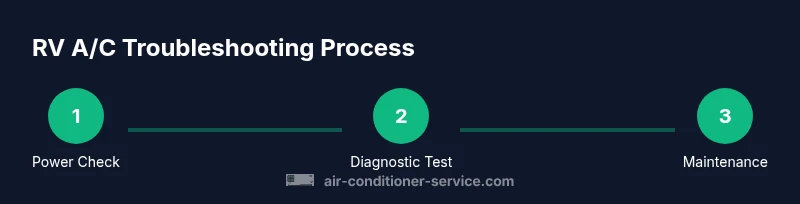
A methodical approach helps you stay focused. Start with simple, safe checks: confirm power at the outlet and inside the RV, inspect fuses, and verify the thermostat settings. If the unit powers on but doesn’t cool, focus on the refrigerant loop, coils, and the blower. For unusual noises, check the blower wheel and motor. If the display is blank, inspect the control board connections. Air Conditioner Service notes that most RV A/C failures stem from loose connections, dirty condensers, or a stuck blower. Keep a checklist so you don’t miss a step, and document what you test and the results for future reference.
Electrical troubleshooting essentials
Electrical problems are a common reason RV A/Cs fail. Start by confirming the unit receives the correct voltage (12V for controls, 120V for the compressor when connected to shore power). Use a multimeter to test at the service panel and at critical connectors. Check fuses, circuit breakers, and inline fuses in the power path. If you detect a weak ground or corroded terminal, clean and reseat it firmly. When testing, disconnect nonessential loads to avoid tripping breakers. If the capacitor is suspected, carefully discharge it and test with an appropriate meter or replace it if you’re unsure. Remember that refrigerant leaks require licensed techs and should not be handled casually.
Understanding the refrigeration cycle in an RV A/C
An RV air conditioner relies on a closed refrigeration loop: compressor, condenser, expansion device, and evaporator. The compressor pressurizes refrigerant, turning it into a hot, high-pressure gas that the condenser then cools into a liquid. The liquid passes through an expansion device, dropping in pressure and temperature, and becomes a cold mixture that absorbs heat from the evaporator. A blower circulates air across the evaporator to distribute cooled air into the RV. Problems can arise if any part of this cycle is compromised, including refrigerant leaks, dirty coils, a blocked condenser, or a faulty expansion valve. Understanding this cycle helps you interpret symptoms and target fixes more accurately.
Cleaning and maintenance to improve cooling
Dirty coils are a frequent cause of reduced efficiency. Clean the condenser and evaporator gently with a soft brush and coil cleaner, being careful not to bend delicate fins. Rinse thoroughly and allow time to dry before reassembly. Inspect air filters (if your unit has them) and replace or clean as needed. Check ductwork for cracks or loose seals and seal with appropriate tape or foil-backed duct sealant. Fin combs can restore bent aluminum fins, improving airflow. Regular cleaning, especially after exposure to dust, pollen, or coastal salt air, can substantially improve performance and prolong the life of the unit.
Quick fixes you can try today
If the unit powers up but struggles to cool, first verify the thermostat is set to the desired mode and temperature. Clean the condenser and evaporator coils to restore heat transfer. Check the blower for obstructions and ensure the air intake is not blocked by debris. Tighten loose connections and reseat any loose plugs. If you find a blown fuse, replace it with the same rating and monitor for reoccurrence. For stubborn issues, take photographs of wiring before attempting any disassembly so you can reassemble correctly. Always defer refrigerant handling to a licensed technician.
When to call a pro and what to expect
Some tasks exceed DIY scope, especially refrigerant handling, leaks, or failed compressors. If after your checks the unit still fails to cool, or you notice oil around refrigerant lines, call a professional. A trained RV tech will perform pressure testing, leak detection, and safe refrigerant recovery if needed. Expect a service call to include inspection of electrical connections, thermostat calibration, blower operation, and potentially a capacitor or control board replacement. Pro guidance is essential for warranty compliance and to prevent further damage.
Seasonal prep and storage for RV A/C
Before you store the RV for an off-season, run through a light maintenance routine. Clean coils, replace air filters, and lubricate moving parts as needed. Inspect seals and gaskets for signs of wear and replace if necessary to prevent moisture ingress. Store any protective covers properly to avoid moisture buildup, and ensure the unit is dry before covering. If you winterize your RV, ensure the A/C access panels are closed and protected from debris. Regular seasonal checks help you head into the next camping season with confidence.
Common mistakes that waste time and coolant
Rushing into disassembly without a power check frequently leads to shocks or blown fuses. Neglecting to test the thermostat and control wiring can mislead you into replacing parts that are functioning. Using the wrong fan speed or bypassing safety switches can cause overheating and damage. Overlooking dirty coils or blocked air intakes reduces cooling efficiency and strains the compressor. Avoid refrigerant handling unless you are licensed to do so and always follow local regulations for environmental and safety compliance.
Troubleshooting road scenarios: not cooling on the road
Not cooling while traveling presents unique challenges. High ambient heat can overwhelm the system, especially when airstream is limited. Check for loose mounting or movement that dislodges ductwork or panels. Verify that the roof vents and interior ducts are unobstructed and sealed against air leaks. Temperature differences between the supply air and ambient air can help you diagnose where the bottleneck is. In vehicles, the availability of shore power may be inconsistent, so verify battery and alternator health if controlling the unit via vehicle power.
Tools & Materials
- Safety goggles(Eye protection during panel removal and coil cleaning)
- Insulated screwdriver set(Phillips and flat-head, several sizes)
- Multimeter or voltage tester(Check 12V and 120V circuits)
- Replacement fuses and spare relays(Keep on hand for quick swaps)
- Non-conductive gloves(Protection when handling wiring)
- Flashlight or headlamp(Illumination inside panels)
- Soft brush and coil cleaner spray(Gentle cleaning of coils)
- Fin comb(Restore bent fins on condenser coils)
- Duct tape or foil-backed duct sealant(Temporary sealing if needed)
- Penetrating oil or silicone spray(Lubricate moving parts if needed)
- Notebook and camera or phone(Document wiring and steps for reassembly)
- Leak-detection dye or refrigerant leak detector(Only for licensed techs; do not attempt DIY refrigerant work)
Steps
Estimated time: 40-60 minutes
- 1
Power down and safety check
Begin by disconnecting shore power and turning off the generator. Confirm that the RV battery is isolated if applicable. Visually inspect the unit for obvious signs of damage, corrosion, or loose connections. This prevents accidental shocks and accidental gas or water exposure during repairs.
Tip: Always test voltage at the service panel before touching any wiring. - 2
Access and inspect the roof or in-wall unit
Remove access panels carefully and inspect the electrical harnesses and connection points. Look for loose wires, oil leaks around the compressor, or corrosion on terminals. Re-seat any loose connectors and note any signs of wear for replacement.
Tip: Take photos of each connector before removal to ensure correct reassembly. - 3
Check power supply and fuses
With power disconnected, inspect fuses and circuit breakers. Use the multimeter to verify that the unit receives the correct voltage at the control board and compressor inputs. Replace any blown fuses with the same rating and ensure connections are clean and dry.
Tip: If a fuse keeps blowing, there may be a short or overload downstream. - 4
Test thermostat and control wiring
Set the thermostat to cooling mode and confirm the control wiring is signaling the compressor. Check for a working relay and solid contact at the control board. If the display is dim or flickering, the control board or display may need replacement.
Tip: Keep the thermostat away from heat sources to avoid inaccurate readings. - 5
Inspect and clean coils and fan
Remove any dirt from the condenser and evaporator coils using a soft brush and coil cleaner. Rinse carefully and allow to dry completely. Check the blower wheel for obstructions and ensure the fan spins freely without rubbing.
Tip: Never use metal tools on the coils; you can bend fins or damage coil sheets. - 6
Assess refrigerant circuit (if licensed)
Look for obvious signs of refrigerant leakage around connections and seals. Do not attempt refrigerant charging; only a licensed tech should handle refrigerant. If leakage is suspected, seal and arrange professional service as refrigerant handling is regulated for safety and environmental reasons.
Tip: If you suspect a leak, document color and area, then call a pro immediately. - 7
Reassemble and test run
Carefully reassemble panels and ensure all fasteners are snug but not overtight. Reconnect power, set the thermostat, and observe if the unit engages and cools effectively. Monitor for abnormal noises, vibrations, or leaks during the initial run.
Tip: Leave time to observe, as some issues only appear after the unit runs for several minutes. - 8
Document results and plan next steps
Record what you tested, what passed, and what didn’t. If the problem persists, compare symptoms to this guide and decide whether DIY adjustments are enough or if professional service is required. Create a maintenance reminder for future checks.
Tip: Keep a simple log of dates, symptoms, and fixes for faster troubleshooting later.
Common Questions
Can I fix an RV air conditioner myself?
Some basic checks and maintenance are safe for DIY, such as cleaning coils and inspecting wiring. More complex tasks like refrigerant handling or compressor replacement should be done by a licensed technician. Always consider warranty and safety before proceeding.
You can do some simple checks yourself, but refrigerant work and compressor repairs should be left to a licensed technician.
What tools do I need to diagnose an RV A/C?
A basic set includes safety goggles, insulated screwdrivers, a multimeter, a flashlight, and coil cleaning supplies. Having spare fuses and a tape measure for panel gaps also helps. Keep notes or photos for reassembly.
You'll want goggles, insulated screwdrivers, a multimeter, a flashlight, coil cleaner, and some spare fuses.
Why isn't my RV A/C cooling properly?
Common causes include dirty coils, low airflow due to a blocked duct or bad blower, electrical issues, or a refrigerant leak. A systematic check of power, controls, and coils usually reveals the problem.
Most not-cooling problems come from dirty coils, blocked airflow, or a control/electrical issue. Check each area step by step.
How can I tell if the capacitor is failing?
Capacitors help start the compressor and fan. Look for swelling, leakage, or a audible hum when the unit tries to start. Use a multimeter to test capacitance if you have the right setting and safety procedures, otherwise replace it and test again.
A failing capacitor may bulge or leak, and the unit may struggle to start. If unsure, have a technician test it.
When should I replace the RV air conditioner?
If repeated repairs exceed a practical cost or reliability expectation, or if the unit has persistent refrigerant leaks or a failed compressor, replacement is often the most cost-effective option. Consider overall efficiency and vehicle compatibility.
If repairs stack up in cost or the unit keeps failing, replacement is usually the wiser choice.
Watch Video
The Essentials
- Prioritize safety before any testing or disassembly.
- Follow a logical diagnostic flow to identify root causes.
- Regular cleaning and inspection prevent breakdowns.
- Know your limits; refrigerant work requires a licensed tech.