Fix Air Conditioner Compressor: Step-by-Step Guide
Air Conditioner Service walks homeowners through diagnosing and safely fixing a failing compressor, weighing repair vs replacement, and practical steps for DIY care and when to call a pro.


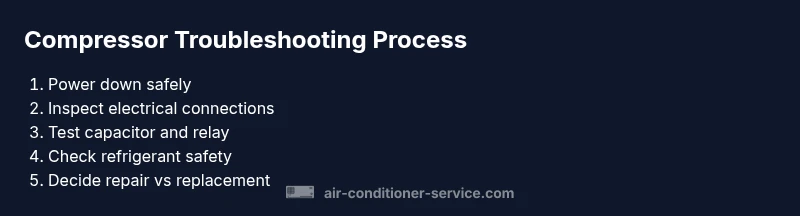
By the end of this guide, you will know how to safely diagnose and fix an air conditioner compressor that isn’t cooling. You’ll learn how to identify electrical faults, test capacitor health, verify refrigerant conditions, and determine when a compressor repair or replacement is necessary. This process emphasizes safety, proper tools, and practical steps homeowners can perform or prepare for with a licensed technician.
Understanding the compressor role in a cooling system
The compressor is the heart of an air conditioning system. It moves refrigerant through the outdoor condensing unit and indoor evaporator coil, creating the pressure and temperature changes that absorb heat from inside your home. When the compressor fails, the system may run but fail to produce cool air, or it may not start at all. Understanding its function helps you spot symptoms early and avoid unnecessary repairs. In many homes, addressing a compressor issue can save energy and extend system life. Air Conditioner Service emphasizes a methodical approach so you can verify symptoms without risking personal safety or damaging other components.
Safety first: risk awareness and when to call a pro
Working on high-voltage HVAC equipment carries serious risk. Before you touch any parts, power down the system completely and use a proper lockout/tagout procedure. Never handle refrigerant or attempt to repair major electrical failures without proper training and certification. If you smell burning insulation, hear arcing, see melted wire coatings, or the system is still hot after powering down, stop and call a professional. The goal is to prevent shocks, burns, or Further damage to the compressor or control board.
Before you start: tools, setup, and prep
Gather the essential tools and safety gear before you begin. A quality set of insulated hand tools, a digital multimeter, a capacitance tester, and a flashlight are your basics. Wear safety glasses and insulated gloves rated for electrical work. Have your service manual on hand for model-specific instructions, and prepare a clean workspace around the condenser and access panels. If you’re unsure about any step, consult a licensed technician to avoid voiding warranty or causing injury.
Diagnosing faults you can verify without refrigerant work
Many compressor symptoms arise from electrical faults rather than the compressor itself. Check the outdoor disconnect switch and the indoor blower blower for proper operation. Look for tripped breakers, blown fuses, or damaged condensate wiring that could be triggering safety interlocks. Inspect outdoor wiring for signs of wear, corrosion, or loose connections. Tighten connections gently to avoid stripping terminals, and document readings for later reference.
Testing electrical and control components
With power safely removed, test the contactor coil, start relay, and capacitor health. A failing capacitor can prevent the compressor from starting or cause short cycling. Use a capacitance meter to confirm the rating matches the label; replace any capacitor that reads outside tolerance or shows bulging or leakage. Measure voltage at the compressor terminals to ensure it matches the system design. If the voltage is inconsistent or low, investigate the source in the control circuit or main panel. Remember: refrigerant work requires a licensed professional, and attempting it without certification can be illegal and dangerous.
Next steps: repair vs replacement planning and documentation
If tests point to a faulty compressor, weigh repair vs replacement. Compressors are expensive, and failure risk often leads to higher energy use and potential future faults. Get a written assessment from a qualified technician, including part costs, labor, and a comparison of single- vs multi-stage efficiency. Keep a record of readings, fault codes, and photos of wiring or damaged components for future service visits. This documentation speeds up diagnosis if a technician is called in later.
Tools & Materials
- Insulated gloves(ANSI-rated, 600V insulation; consider leather overgloves for protection)
- Safety glasses(Impact-rated; ensure side shields)
- Digital multimeter(Prefer a meter with low-resistance mode and current measurement)
- Capacitance meter / capacitor tester(Test run/start capacitor values; replace if out of tolerance)
- Screwdriver set(Insulated through to protect from contact with energized parts)
- Nut drivers / wrenches(For securing electrical connections and panel screws)
- Flashlight(Bright, with spare batteries; use for dark panel access)
- Service manual for your model(Model-specific wiring diagrams and torque specs)
- Refrigerant leak detector(Only if trained and certified to handle refrigerants)
- Pressure gauge set (for refrigerant checks)(Use only with proper certification; inappropriate handling is dangerous)
Steps
Estimated time: 60-90 minutes
- 1
Power down safely
Shut off power at the outdoor disconnect and the main service panel. Verify no voltage at the compressor terminals before touching any wires. This prevents shocks and accidental restart.
Tip: Use a lockout/tagout device to keep the circuit dead while you work. - 2
Check for obvious causes of no cooling
Look for tripped breakers, blown fuses, ice on lines, or a non-operating outdoor fan. Note any unusual noises or smells from the condenser.
Tip: Take a quick photo of wiring before touching anything for reference. - 3
Inspect electrical connections
Inspect wiring to the contactor, capacitor, and compressor for corrosion or loose connections. Tighten or clean as needed, using the proper tools and guidelines in your manual.
Tip: Ensure power is off during inspection; slight pinching or bare wires pose severe shock risks. - 4
Test capacitor health
Discharge the capacitor safely, then use a capacitance meter to confirm the rating matches the label. Replace if out of tolerance or bulging.
Tip: Capacitors can explode if mishandled; handle with care and never touch terminals directly after discharge. - 5
Check start relay and contactor operation
Listen for a click from the contactor. If the relay sticks or fails to engage, the compressor may not start even with a healthy capacitor.
Tip: Swap a known-good relay if you have one to test the rest of the circuit. - 6
Evaluate refrigerant safety considerations
Do not vent refrigerant. If you suspect a leak or incorrect charge, contact a licensed technician for safe recovery and recharging.
Tip: Document any signs of oil residue or hissing sounds as potential leak indicators. - 7
Perform a controlled startup test
With all safety checks complete, re-energize the circuit and observe the compressor start sequence. If it hums but does not start, the fault may lie with the start components or the compressor itself.
Tip: If the unit trips a breaker, stop and reassess wiring and controls. - 8
Decide next steps and document
If the compressor still fails to start or repeatedly overheats, diagnose as failed and plan replacement with a technician. Record readings, photos, and fault codes for reference.
Tip: Keep a copy of the readings and any codes for warranty or technician visits.
Common Questions
Can I fix my air conditioner compressor myself?
Basic electrical checks are possible for homeowners, but compressor repair often involves high-voltage components and refrigerant work. If you’re unsure, hire a licensed technician.
Basic checks are possible, but compressor repairs should usually be done by a licensed technician.
What are the signs of a failing compressor?
Common signs include no cooling, the unit short-cycling, loud grinding noises, or overheating. Persistent issues after basic checks usually indicate compressor problems or control faults.
No cooling, frequent short-cycles, or unusual noises often point to compressor or control failure.
Is it cheaper to repair or replace a faulty compressor?
Repair costs depend on the fault, but compressors are expensive. Replacement with a modern unit may offer better efficiency and lower long-term costs.
Repair costs vary; replacement can be more cost-effective over time due to efficiency gains.
What safety precautions should I take?
Always de-energize equipment, wear PPE, and avoid refrigerant unless licensed. If unsure, stop and call a professional.
Power off, wear PPE, and avoid refrigerant handling unless certified.
What should I do after an unsuccessful DIY check?
Document symptoms, readings, and photos, then contact a qualified HVAC technician for a thorough diagnosis and safe repair or replacement.
If DIY checks fail, document everything and call a professional.
Watch Video
The Essentials
- Identify whether repair or replacement is most cost-effective
- Never touch energized components; always de-energize and lockout
- Document readings and visuals for tech support
- Only trained professionals should handle refrigerants