How to Clean Air Conditioner Mold: A Practical Guide
Learn safe methods to remove mold from your air conditioner, prevent recurrence, and protect indoor air quality. This step-by-step guide from Air Conditioner Service covers safety, cleaning agents, and maintenance tips.


Clean air conditioner mold can be removed and future growth prevented with a simple, safety-first approach. This guide helps you identify mold growth on evaporator coils, condensate pans, and ductwork, clean and disinfect affected areas, and implement moisture-control steps to reduce recurrence. You’ll gain practical techniques, safe products, and clear maintenance tips.
What causes mold in air conditioners?
Air conditioner mold grows when moisture, warmth, and organic residues combine. Clean air conditioner mold is a common problem in humid climates, especially during rainy seasons or after long periods of non-use. In this section, we explore how moisture enters the system and why mold thrives on evaporator coils, condensate pans, and ductwork. According to Air Conditioner Service, the most effective first step is to control moisture and improve drainage to prevent mold from taking hold. When moisture lingers, spores settle, feed on organic debris, and form visible colonies that can spread through the home’s ventilation. By understanding these drivers, homeowners can target the right spots and reduce health risks associated with mold exposure.
Where mold tends to grow in your AC system
In a typical central air system, mold commonly develops on evaporator coils, inside condensate pans, and along ductwork where warm air meets moisture. Hidden pockets behind access panels or in poorly drained drip trays are especially prone to mold growth. The air handler’s return plenum and humidity control settings influence how quickly mold takes hold. Air Conditioner Service analysis shows that persistent moisture problems are the primary predictor of mold recurrences, not just the age of the unit.
Identifying mold safely: what to check
Not all discoloration is mold, but musty odors, visible green, black, or white growth, and slime indicate contamination. Start with a visual inspection behind the front panel of the air handler, under the condensate pan, and along ducts you can access. Use a flashlight to spot stains and remember that mold can hide in hard-to-see spots. If you smell a persistent musty odor after cleaning, you may have concealed growth that needs professional assessment.
Safe cleaning methods for mold in AC
To remove visible mold, start with a mild detergent solution: mix a small amount of dish soap with warm water in a spray bottle. Wipe surfaces with microfiber cloths, and remember to dry thoroughly after cleaning to prevent new mold growth. For difficult spots, a non-ammonia cleaner followed by a disinfectant is often effective. Always turn off power at the breaker and protect nearby electronics. Wear PPE and ventilate the area.
Choosing cleaners and disinfectants
Use EPA-registered disinfectants appropriate for damp environments. Read dwell time on labels and avoid mixing cleaners with ammonia or bleach. For coils and condensate pans, a gentler approach with detergents and a non-corrosive disinfectant can preserve metal and plastic components. Baking soda can help deodorize but does not replace disinfection. When in doubt, start with mild cleaners and test a small area before broader use.
Preventing mold recurrence: moisture control and drainage
Once you’ve cleaned, address moisture sources: fix leaks, seal gaps, and ensure condensate drain lines are clear. Maintain indoor humidity below 50% with dehumidifiers or HVAC humidistats. Regularly flush the condensate pan and inspect the drain line for blockages. A secondary trap or overflow alert can prevent water accumulation. Routine checks after heavy rain or high humidity reduce reoccurrence.
Maintenance routine to keep mold away
Create a quarterly maintenance routine: replace or clean the pleated air filters, inspect the drain line, and run a short HVAC cycle on cool mode to ensure proper drainage. Use a flashlight to inspect the evaporator coil after the first run of the season. Document findings with photos so you can notice trends over time. Consistency is the best defense against mold.
When to call a professional
If mold covers more than a small area or returns after cleaning, if you notice water leaks from the unit, or if the system is older than 10-15 years, contact a licensed HVAC technician. A pro can perform a deeper cleaning, assess ductwork, and check for hidden moisture problems. The health risks of DIY mold remediation can be significant if electrical components are contaminated.
The Air Conditioner Service approach: homeowner checklist
This final section integrates a practical homeowner checklist for preventing and addressing mold safely. It combines moisture control strategies, routine maintenance, and when to escalate to a professional. The Air Conditioner Service team emphasizes that proactive maintenance reduces repair costs and sustains indoor air quality.
Tools & Materials
- Nitrile gloves(long-sleeved shirt; avoid latex if sensitive)
- Safety goggles(to protect eyes from splashes)
- N95 respirator(for filtration of spores)
- Flashlight or headlamp(to inspect hidden areas)
- Spray bottle(for detergents and cleaners)
- Microfiber cloths(for wiping and drying)
- Soft-bristled brush(gentle scrubbing without damage)
- Mild detergent(dish soap or mild cleaner)
- EPA-registered disinfectant(follow label for dwell time)
- Non-ammonia cleaner(use if needed for stains)
- Vacuum with HEPA (optional)(to remove loose spores)
- Baking soda (optional)(for deodorizing after cleaning)
- Drop cloths or plastic sheeting(protects surrounding areas)
Steps
Estimated time: 60-90 minutes
- 1
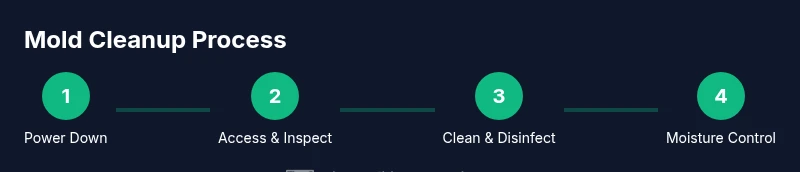
Power down and prep safety
Turn off the HVAC system at the breaker and unplug if accessible. Protect nearby electronics and wear appropriate PPE. This prevents electrical shocks and minimizes exposure to mold spores.
Tip: Take photos before disassembly to aid reassembly. - 2
Open access panel and locate mold
Remove the front access panel to reveal the evaporator coil and condensate pan. Look for discoloration, slimy residue, or musty odor that indicates mold.
Tip: Work in a well-ventilated area and keep a small container for debris. - 3
Inspect drain line and pan
Check the condensate drain line for blockages and inspect the pan for standing water. Blockages and water pooling are common mold enablers.
Tip: If you see standing water, dry the pan before proceeding. - 4
Prepare cleaning solution
Mix a mild detergent with warm water in a spray bottle. For tougher spots, use a non-ammonia cleaner. Avoid bleach on electrical components.
Tip: Test a small area first to ensure no material damage. - 5
Clean visible mold
Spray the affected surfaces and wipe with microfiber cloths. Scrub gentle spots with a soft brush to remove biofilm, then dry completely.
Tip: Focus on the coil fins and condensate pan where moisture collects. - 6
Disinfect the cleaned areas
Apply an EPA-registered disinfectant and allow the label’s dwell time. This kills residual mold spores and reduces regrowth risk.
Tip: Do not mix cleaners; follow label directions exactly. - 7
Rinse, dry, and reassemble
Wipe away residue and ensure all surfaces are completely dry before reassembling the panel. Turning the system back on should occur only after components are dry.
Tip: Use a dry microfiber cloth to remove moisture from crevices. - 8
Address moisture sources
Repair leaks, clear drainage, and reduce humidity to prevent recurrence. Consider a dehumidifier or a humidistat for climate control.
Tip: Schedule a quarterly check of the drain line and coil assembly. - 9
Schedule maintenance and documentation
Record the cleanup date, findings, and any parts replaced. This helps identify trends and plan future maintenance.
Tip: Keep a simple log with photos for future reference.
Common Questions
Is mold in an air conditioner dangerous to health?
Yes. Mold can trigger allergies, asthma symptoms, and respiratory irritation, especially for sensitive individuals or those with preexisting conditions.
Yes. Mold in your AC can affect air quality and may worsen allergy or asthma symptoms.
Can I clean mold in my AC myself?
Small, surface mold can often be addressed by homeowners using proper PPE and mild cleaners. Deeper growth behind coils or in ducts should be handled by a professional.
You can handle small surface mold, but large or hidden growth should be left to pros.
What cleaners are safe for mold in an AC?
Use mild detergents and EPA-registered disinfectants. Do not mix cleaners, and avoid bleach on electrical components unless the label explicitly permits it.
Stick to mild cleaners and approved disinfectants, and follow label instructions.
How can I prevent mold from returning?
Fix leaks, ensure proper drainage, maintain humidity below 50%, and schedule regular inspections of coils and pans.
Keep humidity down and drainage clear to stop mold from coming back.
When should I replace parts instead of cleaning?
If mold penetrates insulation, coils, or ductwork, or if the system is old and frequently failing, replacement can be more effective than cleaning.
Sometimes replacement is wiser than ongoing cleanups.
Watch Video
The Essentials
- Identify moisture sources to stop mold at the root.
- Use mild cleaners first; reserve disinfectants for after cleaning.
- Dry all surfaces thoroughly to prevent regrowth.
- Call a professional if mold covers large areas or recurs.