Bad Air Conditioner Compressor Symptoms: Troubleshooting Guide
Learn to identify common bad air conditioner compressor symptoms and follow a safe, step-by-step troubleshooting plan to diagnose, repair, or know when to call a pro.


The most likely cause behind bad air conditioner compressor symptoms is electrical issues or a seized compressor. Start by checking power, fuses, and the contactor; listen for buzzing, cycling, or a hard start. If the unit won’t run after basic checks, stop and call a licensed HVAC technician for a professional diagnosis.
Understanding bad air conditioner compressor symptoms
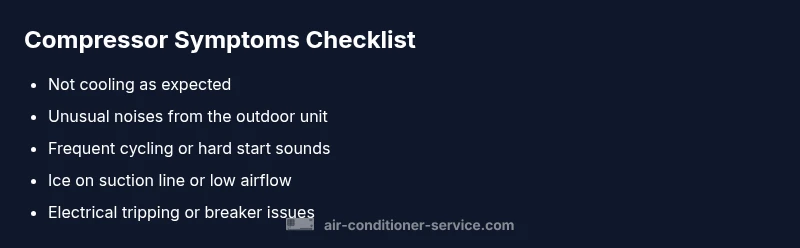
Recognizing bad air conditioner compressor symptoms early can save you from costly repairs and uncomfortable heat. The compressor is the heart of your AC system, circulating refrigerant and enabling cooling. When it starts failing, you might notice weak cooling, unusual noises, or short cycling. In many residential units, a few telltale signs—reduced airflow, warm air, or frequent trips of the circuit breaker—signal potential compressor trouble. The Air Conditioner Service team emphasizes that diagnosing compressor symptoms requires careful observation of both electrical and mechanical cues. According to Air Conditioner Service, the most common signals include: not starting, intermittent operation, loud hums, or ice forming on refrigerant lines. Addressing these symptoms promptly helps prevent compressor burnout and protects your entire HVAC system.
Beyond the obvious loss of cooling, listen for sounds that aren’t typical of normal operation. A grinding or metallic squeal can indicate worn bearings or internal damage, while a buzzing or clicking noise may point to a failing contactor or capacitor. Temperature inconsistencies—cool air that suddenly turns warm—or uneven cooling across rooms are also red flags. While some symptoms are harmless or temporary, many indicate the compressor is under abnormal stress and could fail if ignored. Proactive diagnosis and timely service protect the rest of the system and help maintain energy efficiency.
Brand note: The Air Conditioner Service team recommends logging symptom patterns over several days (time of day, humidity, and outdoor temperature) to improve accuracy when you speak with a technician. This data helps distinguish compressor issues from other parts of the system, such as the outdoor condenser or refrigerant lines.
Why compressors fail: common causes of symptoms
Compressor-related problems don’t appear in a vacuum. Several root causes can produce the symptoms described above. Understanding the most common culprits helps homeowners prioritize safe inspections and avoid unnecessary repairs:
- Electrical issues: Faulty wiring, a bad contactor, or a failing capacitor can prevent the compressor from starting or cause irregular cycling.
- Overheating and poor heat rejection: Clogged condenser coils, restricted airflow, or dirty fins reduce the system’s ability to reject heat, putting extra strain on the compressor.
- Refrigerant problems: Leaks or low refrigerant charge force the compressor to work harder, sometimes leading to ice buildup and reduced cooling capacity.
- Mechanical wear: Worn bearings, rotor damage, or internal seal failure can degrade performance, increase noise, and shorten compressor life.
- System design or age: Older units or mismatched components may stress the compressor, accelerating failure.
If you notice multiple signs—such as warm air, constant running, and unusual noises—treat it as a potential compressor problem and proceed with cautious diagnostics before attempting major repairs. Air Conditioner Service notes that early detection dramatically lowers repair costs and prolongs system life.
Safe diagnostic checks you can perform now
Before any disassembly, prioritize safety. Always cut power to the AC at the breaker and outdoor disconnect, then verify with a voltmeter if you have one. Start with the simplest checks and progress to more involved diagnostics only if you’re comfortable:
- Check the external power source: Ensure the unit is receiving power. Look for a tripped breaker or blown fuse in the main panel.
- Inspect the outdoor disconnect and wiring: Look for burned, frayed, or loose wires. If you see any damage, do not continue; call a pro.
- Listen and observe: A humming sound with the unit trying to start can indicate a stuck relay or capacitor. A loud bang or grinding is a red flag that needs professional attention.
- Check the condenser coil and fins: Clear obstructions like leaves or dirt; a dirty coil increases compressor workload and can lead to overheating.
- Look for ice: Ice on the suction line indicates improper refrigerant pressure or airflow issues. Do not thaw with a heat source—address the underlying cause first.
- Assess thermostat and controls: Ensure the thermostat is communicating with the outdoor unit and that the indoor blower is operating.
If you aren’t sure about any step, stop and contact a licensed HVAC technician. Refrigeration systems operate under high pressure, and improper handling can cause injury or further damage.
Step-by-step fixes for the most likely issue
The following steps cover the most common root causes of compressor symptoms—electrical faults and basic airflow problems. Perform these in order, turning off power before each step. If a step requires tools you don’t have, or if any repair seems risky, skip ahead to professional help.
- Reset power and check the breaker: Flip the main breaker off and on to reset. If the breaker trips again, there is an electrical fault that requires diagnosis by a pro.
- Inspect and replace faulty components: Test or visually inspect the capacitor and contactor. A swollen capacitor or pitted contactor should be replaced by a professional to prevent further damage.
- Improve condenser airflow: Clean the outdoor unit, remove debris around it, and ensure at least 2 feet of clearance. Poor airflow fans the coil and overheats the compressor.
- Address ice and refrigerant issues: If you see frost or ice on any line, turn off as soon as safely possible and let the unit thaw. Re-check for airflow restrictions and potential refrigerant leaks; do not attempt to recharge refrigerant yourself.
- Inspect refrigerant signs: Look for oily residue around fittings, which can indicate a refrigerant leak. If leakage is suspected, call a pro immediately.
- Reassemble and test: After replacements and cleaning, restore power and run a test cycle. If the unit runs but doesn’t cool adequately, plan a professional evaluation.
Tip: Keep a photo diary of wiring and components before disconnecting anything to help a technician reassemble correctly. Safety first: never work on energized electrical components.
Safety tips and common mistakes to avoid
When dealing with compressor symptoms, safety is non-negotiable. Electrical components carry high voltage, refrigerant pressures are dangerous, and improper handling can cause injuries or further system damage. Always shut off power at the breaker and outdoor disconnect before any inspection. Do not bypass safety devices like fuses or breakers to see if the unit works. Avoid using heat or torque tools on refrigerant lines; refrigerants require trained handling and recovery.
Common mistakes include guessing at capacitor values, spraying water on live electrical parts, or attempting to ‘top off’ refrigerant. These shortcuts can be hazardous and lead to expensive repairs or environmental harm. If the symptoms persist after basic safety checks, schedule a professional diagnostic. The Air Conditioner Service team notes that early, careful diagnosis reduces risk and downtime.
Prevention: how to reduce risk and extend compressor life
Prevention is better than repair when it comes to compressor health. Adopt a proactive maintenance routine and create simple habits that minimize stress on the compressor:
- Schedule annual professional maintenance to clean coils, test electrical components, and verify refrigerant charge.
- Keep outdoor unit clear: Remove leaves, mulch, and plants from around the unit to maintain airflow.
- Replace air filters regularly: A clogged filter makes the system work harder and can contribute to icing or reduced cooling efficiency.
- Monitor refrigerant lines: If you notice a drop in cooling or oily spots around connections, call a pro rather than attempting a recharge.
- Use a programmable thermostat: Avoid excessive on/off cycling, which adds stress to the compressor. A steady, moderate cooling cycle protects components over time.
Following these steps helps protect against sudden compressor failure and keeps your AC running efficiently.
When to replace versus repair and signs that require a pro
There are moments when replacement makes more sense than repair. If the compressor shows repeated failures, strange noises persist after fixes, or your unit is old and inefficient, replacement might save money and energy in the long run. A professional can assess refrigerant compatibility, system age, and the odds of a successful repair. If a refrigerant leak is present, or if the compressor is seized and not recoverable, replacement is typically the safer, more reliable option. The decision should factor in cost, energy efficiency, and willingness to manage ongoing maintenance.
Additional notes on the keyword and search intent
Throughout this guide, you’ll see references to bad air conditioner compressor symptoms as the central theme. Recognizing these symptoms early, understanding the common causes, and following a safe diagnostic flow can help homeowners make informed decisions. If you are unsure at any step, prioritize safety and call a licensed HVAC professional. Air Conditioner Service is here to help homeowners navigate the complexity of compressor issues with practical, actionable guidance.
Steps
Estimated time: 60-90 minutes
- 1
Power down and verify electrical supply
Shut off power at the main breaker and outdoor disconnect, then confirm no voltage is present with a multimeter before touching any components.
Tip: Use lockout-tagout if available to prevent accidental power restoration. - 2
Inspect contactor and capacitor
Remove the access panel and visually inspect the contactor for pitting or sticking. Test the capacitor with a capacitance meter if you have one; replace if bulging or leaking.
Tip: Replace both capacitor and contactor together when diagnosing electrical faults. - 3
Clean and check airflow around outdoor unit
Clear debris, trim vegetation, and rinse the condenser fins gently with a hose. Ensure at least 2 feet of clearance around the unit for proper airflow.
Tip: Never use high-pressure water directly on fins; it can bend them. - 4
Check for ice and refrigerant issues
If you see ice on the suction line, turn off the system and allow it to thaw. Inspect for airflow blockages and signs of a leak; refrigerant work requires a licensed tech.
Tip: Ice can indicate multiple issues—address the root cause rather than just melting the ice. - 5
Test operation and observe compressor behavior
Restore power and run a short cool cycle. Listen for abnormal noises and monitor compressor start-up and cycling. If issues persist, plan a professional evaluation.
Tip: Document any noises and duration to help the technician diagnose faster. - 6
Plan next steps with a professional
If symptoms remain after the above steps, schedule a diagnostic with a licensed HVAC technician to avoid voiding warranties or causing further damage.
Tip: Ask about replacement vs repair options and warranty coverage.
Diagnosis: AC won’t cool or compressor sounds abnormal
Possible Causes
- highElectrical issue (contactor, capacitor, fuse)
- mediumSeized compressor or internal motor failure
- lowRefrigerant leak or low charge
- lowDirty condenser coil or restricted airflow
Fixes
- easyVerify power at the service panel and reset tripped breakers; inspect outdoor disconnect.
- easyTest and replace faulty capacitor or contactor if safe to do so.
- easyClean condenser coils and improve airflow around the outdoor unit.
- mediumIf ice is present, turn off cooling and let system thaw; check for airflow issues.
- mediumIf refrigerant leak is suspected, do not attempt to recharge; call a licensed HVAC pro.
Common Questions
What are the most common bad air conditioner compressor symptoms?
Not cooling properly, unusual noises, and frequent cycling are typical signs of compressor trouble. You may also notice warm air from supply vents or a tripped breaker. If multiple symptoms appear together, treat it as a potential compressor issue and seek professional help.
Common signs include poor cooling, odd noises, and frequent cycling. If you see multiple symptoms, contact a pro.
Can I fix a bad compressor myself?
Compressors involve high pressure and refrigerants, which require specialized tools and training. DIY repairs can be dangerous and may void warranties. It’s safer to hire a licensed HVAC technician for diagnosis and replacement.
Repairing a compressor is not a DIY job; call a licensed HVAC technician.
What should I check first if the AC won't start?
Begin with power at the breaker, outdoor disconnect, and the thermostat signal. Listen for buzzing or clicking that might indicate a relay or capacitor issue, then inspect for obvious wiring faults.
First check power, breakers, and the thermostat signal; listen for buzzing to spot faulty relays.
Is a refrigerant leak always the compressor's fault?
A refrigerant leak leads to low pressure that strains the compressor. Leaks require professional handling and cannot be safely repaired by homeowners. If you suspect a leak, call a pro promptly.
Leaks stress the compressor and must be handled by a pro.
When should I replace versus repair the compressor?
If the compressor has repeatedly failed, or the unit is old and inefficient, replacement is often more cost-effective than ongoing repairs. A technician can evaluate age, refrigerant compatibility, and expected lifespan.
If it keeps failing or the unit is old, replacement may be cheaper in the long run.
How long does a compressor typically last?
Lifespan depends on usage and maintenance. With proper care, many systems operate for many years, but components wear at different rates. A pro can assess current condition and provide guidance.
With good maintenance, compressors can last many years; a pro can assess current condition.
Watch Video
The Essentials
- Identify symptoms early to prevent further damage
- Electrical faults are the top compressor culprit
- Do not refrigerant-handle; call a pro for leaks
- Regular outdoor unit maintenance reduces risk
- Know when to replace versus repair for cost efficiency