Aircon Not Cold: Step-by-Step Troubleshooting for 2026
Struggling with aircon not cold? This practical troubleshooting guide covers common causes, safe checks, and when to call a pro to restore cooling. Learn to diagnose dirty filters, refrigerant issues, thermostat mistakes, and more from Air Conditioner Service.


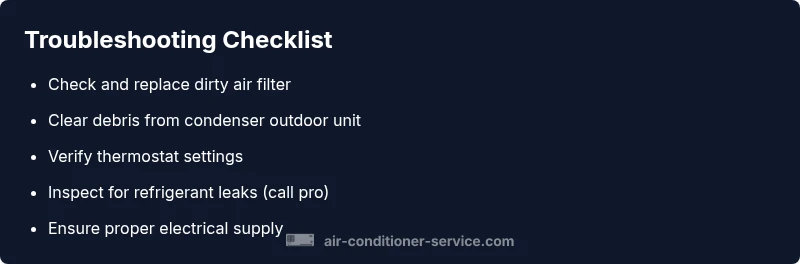
Most likely causes are a dirty air filter, low refrigerant, or a blocked outdoor condenser. Start with the simplest fix: replace or clean the filter, ensure airflow, and verify thermostat settings. If the problem persists, power down the unit and contact a licensed technician to inspect refrigerant levels and electrical components.
Why aircon not cold happens in homes
If your air conditioner isn’t delivering cool air, you’re not alone. The term aircon not cold describes a wide range of problems from simple airflow restrictions to larger refrigerant or electrical issues. According to Air Conditioner Service, the most common culprits are restricted airflow, refrigerant leaks, thermostat errors, and outdoor unit blockages. When airflow is restricted, the evaporator coil can struggle to absorb heat, leading to lukewarm air or a noticeable drop in cooling on hot days. In many cases, the fix is straightforward and safe: replace a dirty filter, clear debris around the outdoor condenser, and ensure the thermostat is set to cool and not auto-override. In 2026, routine maintenance remains the most effective defense against mid-summer cooling failures. Proactive care reduces unexpected breakdowns and can save energy, particularly for households relying on window or split-system air conditioners.
Quick diagnostic checks you can perform safely
Before calling for service, perform a few noninvasive checks. Start with the airflow: confirm vents aren’t blocked by furniture or curtains, and inspect the air filter for dirt or debris. A clogged filter is a frequent culprit for reduced cooling. Check the outdoor unit for obstructions like leaves, grass, or dirt; ensure there is at least 2 feet of clearance around the condenser. Finally, glance at the thermostat: confirm it’s set to the desired cooling level and that the display isn’t dim or flashing, which can indicate a simple control issue.
Common culprits: refrigerant, coils, and condensate
A refrigerant leak or low charge can cause a noticeable drop in cooling and may produce a hissing or bubbling sound. The evaporator coil should be clear of ice or frost; ice can indicate restricted airflow or insufficient refrigerant. Condensate drainage problems can also impact cooling efficiency, especially in high-humidity environments. If you notice unusual noises, sweating pipes, or frost on the coil, these signs warrant professional attention. Air Conditioner Service notes that refrigerant handling requires licensed technicians and safety precautions.
Thermostat and electrical components matter
Sometimes the issue isn’t the cooling hardware but the controls. A miscalibrated thermostat, a faulty sensor, or damaged wiring can prevent the system from reaching set temperatures. Check for tripped breakers or blown fuses tied to the outdoor unit. If the thermostat is a newer smart model, verify app connectivity and that it’s reporting the correct room temperature. Electrical issues can be hazardous; never poke around live electrical components without turning off power at the breaker.
Maintenance as a shield: prevention tips
Regular filter changes, annual professional inspections, and keeping the outdoor unit clean are the best defense against aircon not cold. Schedule maintenance in spring to catch problems before peak season. Keep the drain lines clear, seal leaks promptly, and consider upgrading to a higher-efficiency filter if you or your family members suffer from allergies. These proactive steps reduce energy use and prolong system life, delivering reliable cooling through hot summers.
Steps
Estimated time: 60-90 minutes
- 1
Power down safely
Switch off the thermostat and then cut power at the breaker to avoid shock while inspecting components. Wait a few minutes for capacitors to discharge before touching electrical parts.
Tip: Always prioritize personal safety and wear gloves when handling electrical panels. - 2
Inspect and replace the air filter
Locate the return air filter, remove it, and inspect for dirt. If dirty, replace with the correct size and style for your system. A clean filter can restore several degrees of cooling difference.
Tip: Note the filter type and replacement frequency for future maintenance. - 3
Check thermostat settings
Ensure the thermostat is set to cool, at a lower temperature than the room’s current temperature, and that any energy saver modes are disabled. If you use a smart thermostat, confirm syncing with the HVAC system.
Tip: Calibrate or replace a faulty thermostat if readings seem off. - 4
Inspect the outdoor unit
Clear leaves, grass, and dirt from around the condenser. Rinse gently from the outside with a hose, avoiding the fins, and ensure there’s ample airflow. Check for any visible damage to coils.
Tip: Do not use high-pressure water or tools near the fins. - 5
Check evaporator coil for ice
Look for frost or ice on the indoor evaporator coil. If present, turn the system off and let it thaw while continuing to monitor airflow. Ice typically signals restricted airflow or refrigerant issues.
Tip: Do not forcibly scrape ice; it can damage the coil. - 6
Call a professional if unresolved
If cooling hasn’t improved after these steps, schedule a service visit. A licensed technician can diagnose refrigerant leaks, electrical faults, and perform safe refrigerant recharge.
Tip: Document symptoms, noises, and any visible leaks to share with the tech.
Diagnosis: Air conditioner not cooling adequately
Possible Causes
- highDirty or clogged air filter causing restricted airflow
- highLow refrigerant due to a leak or charge loss
- highOutdoor condenser blocked or dirty
- mediumThermostat miscalibration or faulty sensor
- lowElectrical issues or tripped breakers
Fixes
- easyReplace or clean the air filter and ensure return air path is clear
- hardIf refrigerant is suspected, call a licensed technician for leak repair and recharge
- easyClear debris from around the outdoor unit and provide proper clearance
- mediumTest and recalibrate or replace the thermostat if needed
- mediumInspect electrical connections and breakers; call a pro if wiring is unsafe
Common Questions
What is the most common cause of an air conditioner not cooling?
A dirty air filter or blocked outdoor unit is typically the top culprit. These issues impede airflow and heat exchange, reducing cooling efficiency. Inspect and address these first before pursuing more complex fixes.
Most often, it's airflow problems like a dirty filter or blocked outdoor unit.
Can a dirty filter cause not cooling even when the unit runs?
Yes. A clogged filter restricts airflow, making the evaporator coil freeze up and preventing effective cooling. Replacing the filter usually restores proper performance.
Yes. A dirty filter can block airflow and stop the cooling from working well.
Is it safe to recharge refrigerant myself?
Recharging refrigerant requires a licensed technician. Handling refrigerants without training is dangerous and illegal in many areas. Schedule a professional inspection if you suspect a leak.
No. Refrigerant work should be done by a licensed professional.
What should I do if I hear buzzing or smell burning from the unit?
Turn off power at the breaker and call a professional. Electrical issues can pose shock or fire hazards and require immediate attention.
Turn off power and call a pro if you hear buzzing or smell burning.
When should I replace rather than repair an old unit?
If the unit is more than 10-15 years old and requires frequent repairs, replacement with a newer, efficient model may be more cost-effective in the long run.
If it’s old and often breaking, replacement might be smarter.
How often should I schedule professional maintenance?
Aim for an annual professional inspection, ideally in the spring, to ensure optimal cooling for the upcoming season.
Have a yearly professional check to keep cooling reliable.
Watch Video
The Essentials
- Start with a clean filter and clear outdoor area
- Check thermostat accuracy and calibration
- Look for ice on the evaporator coil and address airflow first
- Call a licensed tech for refrigerant or electrical issues